1.03 Both years: the tax note gives no movement analysis of the [amount] valuation allowance for the three years presented, Item 15 omits Schedule II, and the unrecognized-tax-benefit reconciliation stops at two years
Company D · a US-listed cloud communications software company · Compliance or disclosure gap
In brief
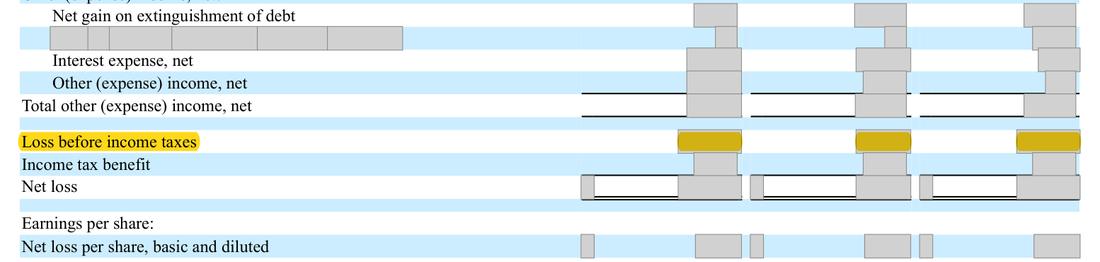
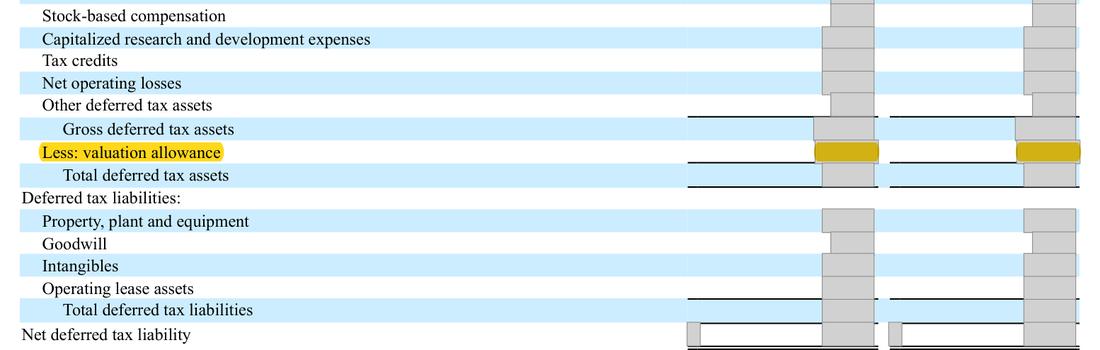
The 10-K presents three years of income statements, so the valuation allowance against deferred tax assets ([amount]) needs a movement analysis for each of 2025, 2024 and 2023, either as Schedule II or in the notes. Item 15 omits all schedules as 'otherwise included', but the tax note gives only the two year-end balances, a single sentence that the allowance rose by [amount] in 2025, and the percentage effect of the change on the 2024 and 2023 tax rates. The 2025 rate reconciliation charges [amount] for the change, and the note does not show how that relates to the [amount] movement in the balance. The unrecognized-tax-benefit reconciliation covers 2025 and 2024 only. The same gaps were in the prior-year 10-K.
The evidence, as filed

What the filing shows, and what the rule requires
| What the filing shows | What the rule requires |
|---|---|
Valuation allowance: balances [n] (2025) and [n] (2024), a sentence that it 'increased by [amount]' in 2025, and the percentage effect of the change on the 2024 and 2023 rates (([n]) and ([n])); no opening balance for 2023 and no additions and deductions for any year; Item 15: schedules omitted as 'otherwise included'. Unrecognized tax benefits: reconciliation for 2025 and 2024 only ([n] to [n]; [n] to [n]). | A valuation and qualifying accounts analysis of the deferred tax valuation allowance for each of 2025, 2024 and 2023 (opening balance, additions charged to income, additions charged to other accounts, deductions, closing balance), either as Schedule II or in Note 14; and the unrecognized-tax-benefit reconciliation for all three years. |
The rule
Regulation S-X Rule 5-04(a)(2)
Schedule II of this section shall be filed for each period for which an audited statement of comprehensive income is required to be filed for each person or group.
Version: Text in force at the date of this review · Source: Regulation S-X, 17 CFR 210.5-04 (eCFR, as amended)
Regulation S-X Rule 5-04(c), Schedule II
Schedule II—Valuation and qualifying accounts. The schedule prescribed by § [n]-09 shall be filed in support of valuation and qualifying accounts included in each balance sheet but not included in Schedule VI.
Version: Text in force at the date of this review · Source: Regulation S-X, 17 CFR 210.5-04 (eCFR, as amended)
Why it applies here. Rule 5-04 requires Schedule II for each period for which an audited income statement is filed, in support of every valuation account in the balance sheet; Rule 5-04(b) lets the schedule be omitted only if the notes show the same information, and here they show neither the 2024 and 2023 movements nor the split between amounts charged to income and to other accounts. Separately, the income-taxes standard asks a public business entity for a tabular reconciliation of unrecognized tax benefits for each annual period presented; the 2023 column is missing (MD&A gives only the year-end balances).
Why it matters
Readers cannot follow how a valuation allowance of [amount] has moved over the three years presented, or how much of the 2025 change went through income versus other accounts; the tax-position reconciliation is a year short. A staff comment asking for Schedule II or the expanded note in future filings is the realistic outcome.
Exposure
Staff comment letter and a future-filings undertaking (Schedule II or expanded note); no restatement.
Our workings
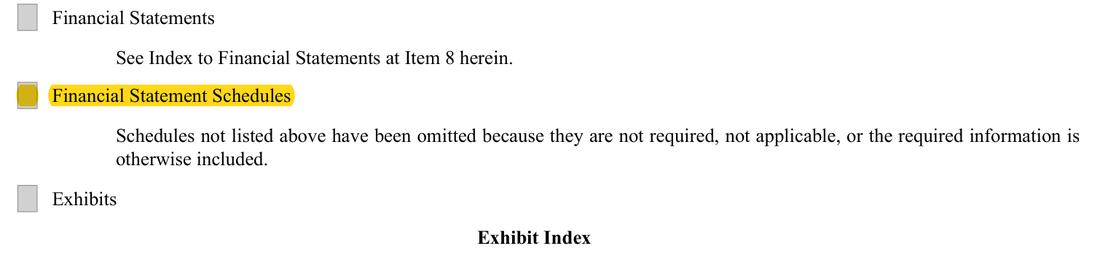
the statements of operations cover 2025, 2024 and 2023. Note 14 shows a valuation allowance of [n] and [n] at the two year ends and says it increased by [amount] in 2025; the 2025 rate reconciliation charges [n] for changes in valuation allowances, and the pre-adoption reconciliation gives only the percentage effect of the change on the 2024 and 2023 rates, ([n]) and ([n]). No 2023 opening balance and no additions and deductions for 2024 or 2023 appear in this 10-K. Item 15 says schedules not listed are omitted because they are not required, not applicable, or the required information is otherwise included. The unrecognized-tax-benefit table has two columns.
the balance movement is [n] - [n] = [n] against an income-statement charge of [n]; the difference of [n] went through other accounts or other adjustments that the note does not show. This is not an error in either figure; it is the split that Schedule II exists to show.
| Requirement | Given in this 10-K | Status |
|---|---|---|
| Income-statement years presented | 2025, 2024, 2023 (3 years) | basis for each analysis |
| Valuation allowance movement 2025 | [n] - [n] = [n]; text says [amount] | Partial: no split of additions and deductions |
| Rate-reconciliation charge vs balance movement 2025 | [n] - [n] = [n] | not explained: moved through other accounts |
| Valuation allowance 2024 and 2023 | rate effect only, ([n])% and ([n])%; no 2023 opening balance | Absent as a movement |
| Unrecognized tax benefits reconciliation 2025 | [n] + [n] + [n] = [n] | Given |
| Unrecognized tax benefits reconciliation 2024 | [n] + [n] + [n] = [n] | Given |
| Unrecognized tax benefits reconciliation 2023 | nothing | Absent |
| Item | 2024 10-K |
|---|---|
| Valuation allowance balances | [n] (2024), [n] (2023) |
| Movement 2024 from balances | [n] - [n] = [n] |
| Unrecognized tax benefits reconciliation | 2024 and 2023 only ([n] opening for 2024; [n] opening for 2023) |
Management’s best defense, and our reply
Management would say the information is 'otherwise included': the valuation allowance balances are in the deferred-tax table, the income-statement effect is in the rate reconciliations for all three years, and the 2023 figures are in the prior-year 10-K on EDGAR. They would add that unrecognized tax benefits of [amount] have no rate effect because of the valuation allowance. However, Rule 5-04 ties Schedule II to each year of income statements filed in this report, not to earlier filings, and Rule 5-04(b) allows omission only when the notes show the same information; the notes give neither the 2024 or 2023 movement of the balance nor the split between amounts charged to income and to other accounts, and the [n] difference in 2025 shows why the split matters. A rate effect in percentages is not a movement analysis.
The fix
- Add to Note 14 (or file as Schedule II) a three-year table for the valuation allowance: 'Balance at beginning of year / Charged to income tax expense / Charged to other accounts / Deductions / Balance at end of year', and extend the unrecognized-tax-benefit table to three years.
Evidence relied on
| # | What it shows | Type | Where |
|---|---|---|---|
| 1 | Three years of audited income statements are filed, so each analysis is due for three years | Document | Form 10-K 2025, page 85 |
| 2 | Only two year-end balances of the valuation allowance are given | Document | Form 10-K 2025, page 121 |
| 3 | The only movement given is a single sentence on the 2025 increase | Document | Form 10-K 2025, page 121 |
| 4 | The income-statement charge for 2025 ([n]) differs from the balance movement ([n]) | Document | Form 10-K 2025, page 119 |
| 5 | For 2024 and 2023 only the percentage effect of the change on the tax rate is given, not the movement of the balance | Document | Form 10-K 2025, page 120 |
| 6 | The unrecognized-tax-benefit reconciliation has two columns, 2025 and 2024 | Document | Form 10-K 2025, page 122 |
| 7 | Reconciliation line for 2025 and 2024 | Document | Form 10-K 2025, page 122 |
| 8 | Reconciliation line for 2025 and 2024 | Document | Form 10-K 2025, page 122 |
| 9 | Closing balances for 2025 and 2024 | Document | Form 10-K 2025, page 122 |
| 10 | Schedule II is omitted on the basis that the information is elsewhere | Document | Form 10-K 2025, page 128 |
Absence check
- Document
- Form 10-K 2025
- Where it would appear
- 2. Financial Statement Schedules
- What is missing
- Schedule II (valuation and qualifying accounts) for the deferred tax valuation allowance for 2025, 2024 and 2023, or the same analysis in the notes
- Pages looked at
- p.118-123 and [n] (images); whole 10-K text
- Result
- 'Schedule II', 'Valuation and Qualifying' and 'valuation allowance decreased' do not occur. 'valuation allowance increased' and 'Less: valuation' hit only p.121: the two year-end balances and the one- increase. 'Change in valuation allowance' hits only p.120: the percentage effect on the 2024 and 2023 rates. The wider term 'valuation allowance' also hits MD&A (p.64, [n]: policy, rate drivers, the non-GAAP tax rate and the rounded [amounts] balances) and the policy note (p.90, [n]). None gives a 2023 opening balance or additions and deductions for any year.
Absence check
- Document
- Form 10-K 2025
- Where it would appear
- A reconciliation of the beginning and ending amount of unrecognized tax benefits is as follows:
- What is missing
- the 2023 column of the unrecognized-tax-benefit reconciliation
- Pages looked at
- p.118-123 (images); whole 10-K text
- Result
- 'Unrecognized tax benefits—January' and 'reconciliation of the beginning and ending' hit only p.122 (the two-column table for 2025 and 2024). 'unrecognized tax benefit' also hits p.77 (MD&A: year-end balances of [amounts], no movement) and p.119 (the 2025 rate-reconciliation line). None gives the 2023 reconciliation.
Prepared by Pramanex from the company’s public SEC filings, without the company’s involvement, to show how a 10-K Pre-filing Check reads. The company is not named, and nothing on this page is a statement about any identifiable company. Observations are not an audit, review or other attestation or assurance engagement, and not legal advice. An SEC-style question is a question, not a conclusion.
Want this on your own 10-K, before you file?
Start with three free findings on your latest 10-K, or book a fixed-price 10-K Pre-filing Check.
Your next 10-K will be in draft before the audit is done.
Have it read before you file.
Start with three free findings on your latest 10-K, or book a fixed-price 10-K check. Drafts only under NDA, inside your insider trading policy.