1.11 The effect of exchange rates on cash equals the whole currency translation adjustment in 2022-2024 but not in 2025
Company C · a US-listed specialty healthcare products company · SEC-style question
In brief
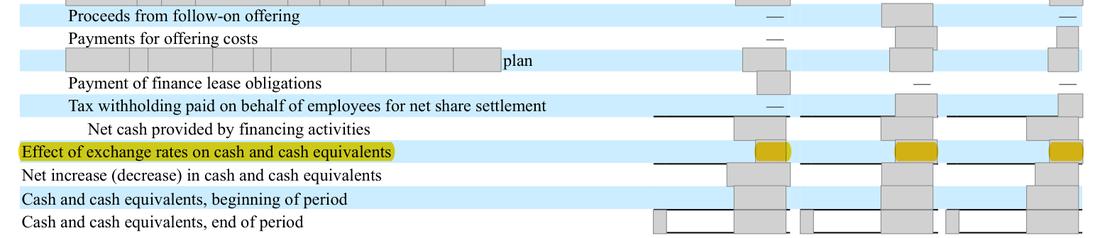
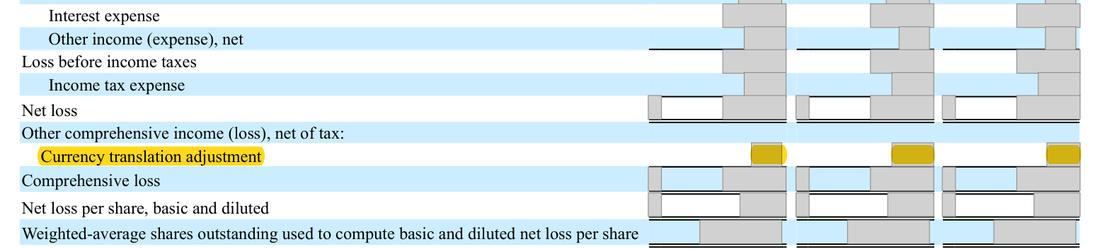
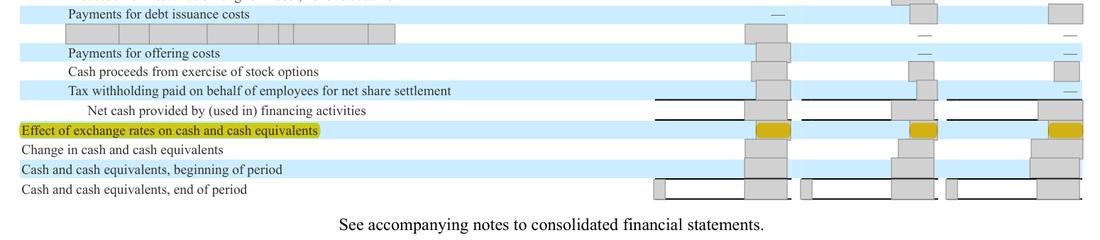
In the cash flow statement the line 'Effect of exchange rates on cash and cash equivalents' is ([n]) for 2024 and ([n]) for 2023, exactly the currency translation adjustment in other comprehensive income (OCI) for those years; the prior-year report shows the same equality for 2022 at ([n]). For 2025 the line is [n] against a translation adjustment of [n]. The report gives no reason for the change of relationship.
The evidence, as filed
What the filing shows, and what the rule requires
| What the filing shows | What the rule requires |
|---|---|
Effect on cash ([n]) and ([n]) for 2024 and 2023, equal to OCI translation ([n]) and ([n]); 2025 effect on cash [n] against OCI translation [n] (difference [n]) | The effect of exchange rates on cash limited to the translation of cash balances held in foreign currencies, computed on the same basis in every year presented, with comparatives revised or the change explained |
| What we checked. Cash flow statement (page 65), statement of operations and comprehensive loss (page 63), foreign currency policy; prior-year cash flow and comprehensive loss statements | |
The rule
Regulation S-X Rule 4-01(a)(1) (17 CFR 210.4-01(a)(1))
Financial statements filed with the Commission which are not prepared in accordance with generally accepted accounting principles will be presumed to be misleading or inaccurate, despite footnote or other disclosures, unless the Commission has otherwise provided.
Version: Text in force at the date of this review · Source: Regulation S-X, 17 CFR 210.4-01 (eCFR text as amended to the date of review)
Why it applies here. the translation adjustment covers all the net assets of the foreign subsidiaries (receivables, inventory, payables and intercompany balances as well as cash), so exact equality to the thousand in three consecutive years suggests the line was set equal to the OCI figure until 2024. If so, the comparative operating cash flows absorb the translation of the non-cash net assets, and the 2025 column is prepared on a different basis from the 2024 and 2023 columns beside it. The standard: ASC 830-230-45-1 (FASB Accounting Standards Codification) calls for the effect of exchange-rate changes on cash balances held in foreign currencies to be reported as a separate reconciling item, which covers cash only.
Why it matters
If the comparatives set the effect on cash equal to the whole translation adjustment, the 2024 and 2023 operating cash flows include translation of non-cash balances and are presented on a basis different from 2025, which impairs comparability of cash used in operating activities.
Exposure
No penalty; the realistic consequence is a staff comment on the method and, if the comparatives are affected, a revision of the comparative columns in the next Form 10-K.
Our workings
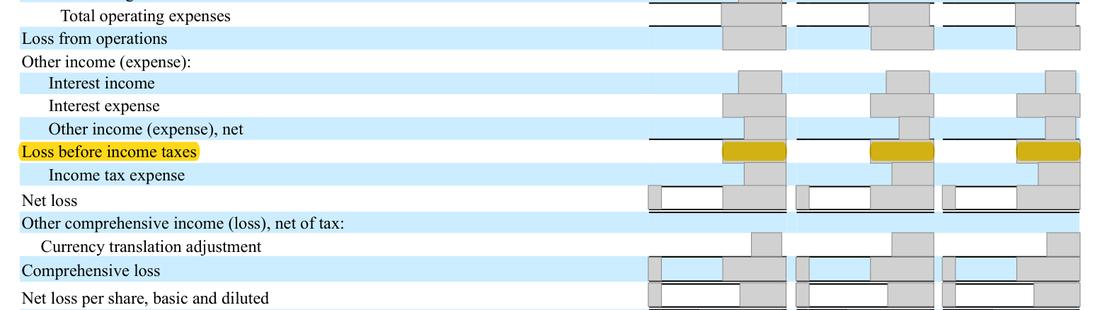
the 2025 cash flow statement shows the effect of exchange rates on cash as [n], ([n]) and ([n]) for 2025, 2024 and 2023 (page 65). The statement of operations and comprehensive loss shows the currency translation adjustment as [n], ([n]) and ([n]) (page 63). The prior-year report shows ([n]), ([n]) and ([n]) for both lines in 2024, 2023 and 2022, where the OCI line was then labelled 'Unrealized loss, net of tax'. The policy note says the foreign subsidiaries use their local currency and all their assets and liabilities are translated at year-end rates, with the gains and losses in accumulated other comprehensive loss.
2025 difference [n] - [n] = [n]; 2024 and 2023 differences nil; the 2024 line is [n] / [n] = 0.96% of that year's pre-tax loss.
| Year | Effect on cash | OCI translation | Difference |
|---|---|---|---|
| 2025 | [n] | [n] | [n] - [n] = [n] |
| 2024 | ([n]) | ([n]) | [n] - [n] = 0 |
| 2023 | ([n]) | ([n]) | [n] - [n] = 0 |
| 2022 (prior-year report) | ([n]) | ([n]) | [n] - [n] = 0 |
| 2024 effect as % of 2024 pre-tax loss | [n] / [n] = 0.96% |
Management’s best defense, and our reply
The finance team could say the foreign subsidiaries held little but cash until 2025, so translating their net assets and translating their cash gave the same answer, and the 2025 difference reflects receivables and inventory built for the European launch. The amounts are below 1% of the pre-tax loss in each comparative year. However, exact equality to the thousand in three successive years, while the subsidiaries were already trading in Europe and [country], is unlikely unless the line was taken from OCI, and only management can confirm the basis.
The fix
- Compute the effect of exchange rates on cash from the foreign-currency cash balances only, apply it to every year presented, and add a sentence on any revision of the 2024 and 2023 columns.
Question for the company
In 2024, 2023 and 2022 the effect of exchange rates on cash equals the whole currency translation adjustment in OCI, while in 2025 it is [n] against [n]. How is the effect on cash computed, did the method change in 2025, and if so were the 2024 and 2023 comparatives considered for revision?
Evidence relied on
| # | What it shows | Type | Where |
|---|---|---|---|
| 1 | effect on cash: [n] in 2025, ([n]) in 2024, ([n]) in 2023 | Document | Form 10-K 2025, page 65 |
| 2 | OCI translation adjustment: [n], ([n]), ([n]) - equal to the effect on cash in 2024 and 2023 only | Document | Form 10-K 2025, page 63 |
| 3 | 2024 pre-tax loss [n] used for the percentage | Document | Form 10-K 2025, page 63 |
| 4 | prior-year report: effect on cash ([n]), ([n]), ([n]) for 2024, 2023, 2022 | Document | Form 10-K 2024 (prior year), page 67 |
| 5 | prior-year report: OCI ([n]), ([n]), ([n]) - identical to the effect on cash in each year | Document | Form 10-K 2024 (prior year), page 65 |
Prepared by Pramanex from the company’s public SEC filings, without the company’s involvement, to show how a 10-K Pre-filing Check reads. The company is not named, and nothing on this page is a statement about any identifiable company. Observations are not an audit, review or other attestation or assurance engagement, and not legal advice. An SEC-style question is a question, not a conclusion.
Want this on your own 10-K, before you file?
Start with three free findings on your latest 10-K, or book a fixed-price 10-K Pre-filing Check.
Your next 10-K will be in draft before the audit is done.
Have it read before you file.
Start with three free findings on your latest 10-K, or book a fixed-price 10-K check. Drafts only under NDA, inside your insider trading policy.