1.15 2024 depreciation and amortization differs between the cash-flow statement and the notes
Company H · a US-listed aerospace services company · SEC-style question
In brief
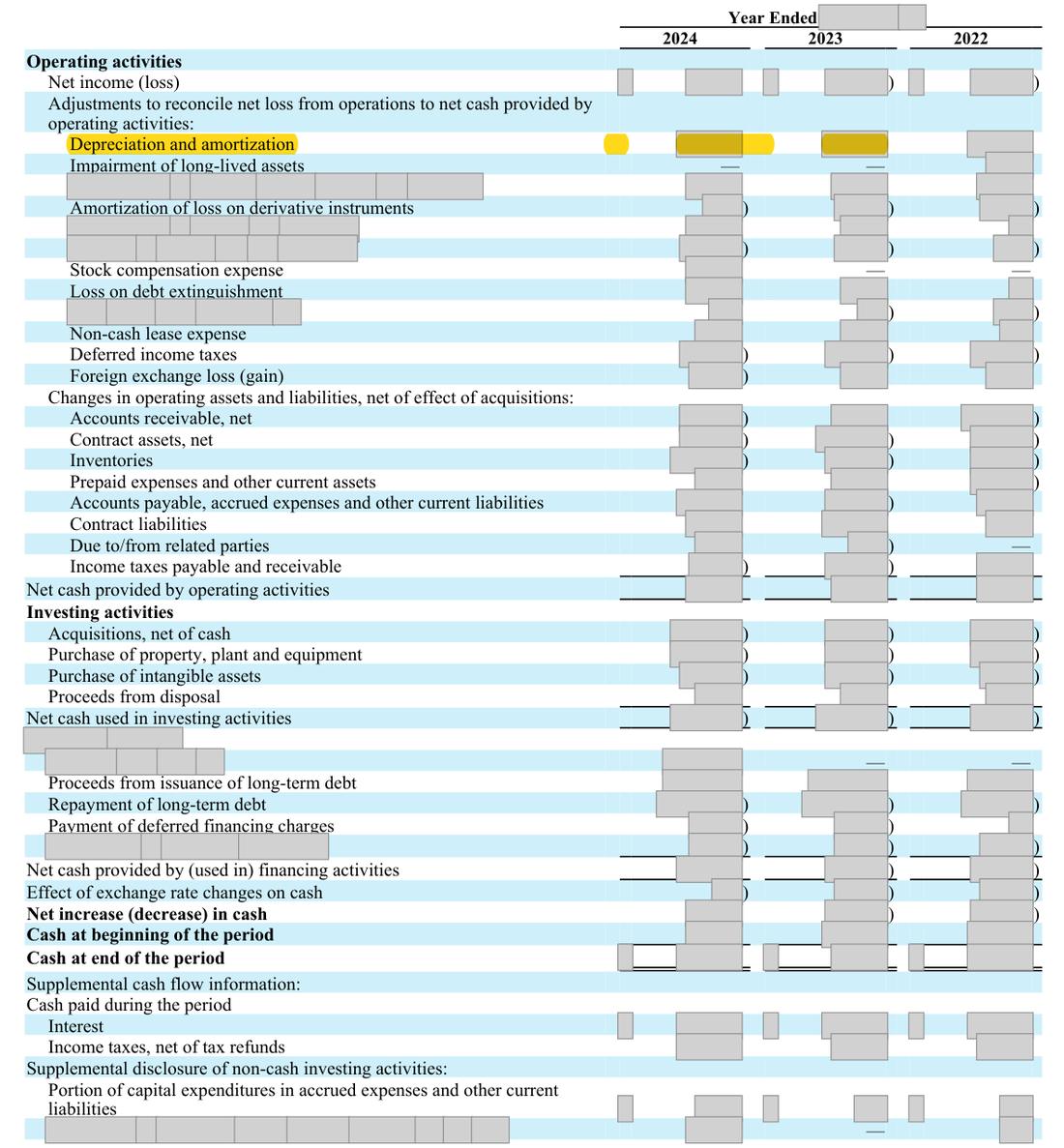
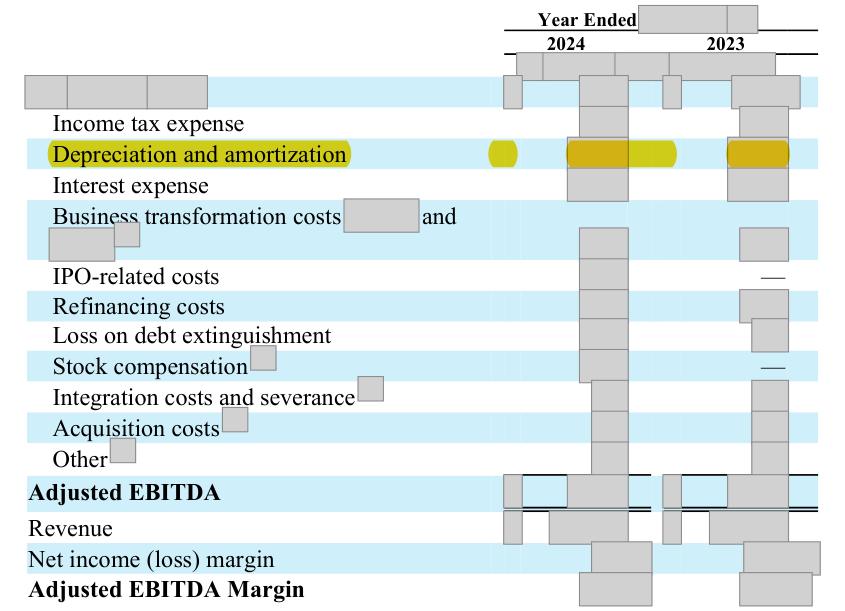
For 2024 the notes give depreciation of [amount] and amortization of [amount], and the management's discussion and analysis (MD&A) reconciliation of Adjusted EBITDA and the segment note add back [n] (thousands). The cash-flow statement adds back [n] for the same year, [n] less. For 2025 and 2023 the notes and the cash-flow statement agree, and neither Form 10-K explains the 2024 gap. The prior-year Form 10-K's MD&A itself used both 2024 amounts without reconciling them: depreciation and amortization of [amount] in the Adjusted EBITDA reconciliation (page 56) and [amount] in the operating cash flow discussion.
The evidence, as filed
What the filing shows, and what the rule requires
| What the filing shows | What the rule requires |
|---|---|
2024 depreciation and amortization: notes [amount] + [amount] = [amount]; MD&A and segment note [n]; cash-flow statement [n] (USD thousands); no reconciling item disclosed. | One 2024 depreciation and amortization figure across the notes, the cash-flow statement and the non-GAAP and segment reconciliations, or a stated reason for the difference. |
The rule
Regulation S-X Rule 4-01(a)
The information required with respect to any statement shall be furnished as a minimum requirement to which shall be added such further material information as is necessary to make the required statements, in the light of the circumstances under which they are made, not misleading.
Version: Text in force at the date of this review · Source: 17 CFR 210.4-01 (Regulation S-X Rule 4-01), eCFR text as at the law pack date
Why it applies here. the indirect-method reconciliation required by the cash-flow topic of the FASB Codification removes every non-cash item from net income, so the whole period charge should be added back somewhere; either part of the 2024 charge sits on another line of the cash-flow reconciliation, or one of the two figures is not the period charge; the report does not say which.
Why it matters
A reader cannot reconcile the 2024 non-cash add-back to the charge disclosed in the notes, and the higher figure is the one used in the non-GAAP reconciliation.
Exposure
No penalty; at most a staff question if the next Form 10-K is reviewed.
Our workings
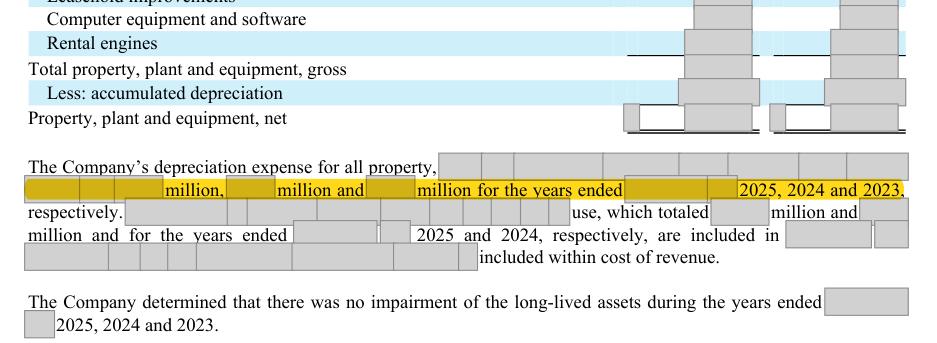
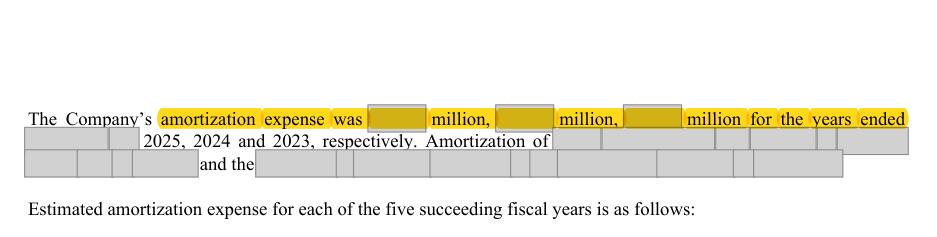
Note 8 gives depreciation of [amounts] and Note 9 amortization of [amounts] for 2025, 2024 and 2023. The cash-flow statement adds back [n]; the MD&A reconciliation of Adjusted EBITDA (adjusted earnings before interest, taxes, depreciation and amortization) and the segment reconciliation add back [n] for 2024. The prior Form 10-K printed the same [n] in its cash-flow statement.
[n] + [n] = [n] and [n] + [n] = [n] agree with the cash-flow add-backs; [n] + [n] = [n] does not: [n] - [n] = [n], which is 1.33% of 2024 pre-tax income of [n].
| Year | Notes: depreciation + amortization ($ million) | Cash-flow add-back | MD&A / segment add-back | Result |
|---|---|---|---|---|
| 2025 | [n] + [n] = [n] | [n] | [n] | agrees |
| 2024 | [n] + [n] = [n] | [n] | [n] | [n] - [n] = [n] |
| 2023 | [n] + [n] = [n] | [n] | n/a | agrees |
| Weight | [n] / [n] = 1.33% of 2024 pre-tax income | [n] / [n] = 0.29% of 2025 pre-tax income |
Management’s best defense, and our reply
The finance team would say the cash-flow add-back is built from the non-cash charges recorded in the ledger and can properly differ from the depreciation and amortization disclosed in the notes, for example where part of the 2024 charge related to assets disposed of or reclassified and is captured in the loss on disposals or non-cash lease expense lines. They would add that the gap is small, 1.33% of 2024 and 0.29% of 2025 pre-tax income, in a comparative carried unchanged from an audited prior Form 10-K. The answer: neither Form 10-K identifies such a line, and the higher figure is the one added back in the Adjusted EBITDA and segment reconciliations, so the reader cannot tell which is the period charge; that is a question only management can settle, not a proven error.
The fix
- In the next Form 10-K align the 2024 add-back with the notes, or footnote it: 'The 2024 depreciation and amortization add-back excludes [amount] presented within [line]'.
Question for the company
Which is the 2024 depreciation and amortization charge, [n] (notes, MD&A, segment note) or [n] (cash-flow statement)? If the [n] difference is presented on another line of the operating cash-flow reconciliation, which line, and why is it outside the depreciation and amortization add-back?
Evidence relied on
| # | What it shows | Type | Where |
|---|---|---|---|
| 1 | Note 8 depreciation for 2025, 2024 and 2023 | Document | Form 10-K 2025, page 97 |
| 2 | Note 9 amortization for 2025, 2024 and 2023 | Document | Form 10-K 2025, page 98 |
| 3 | Cash-flow statement add-back: [n] for 2024 | Document | Form 10-K 2025, page 79 |
| 4 | MD&A Adjusted EBITDA reconciliation adds back [n] for 2024 | Document | Form 10-K 2025, page 57 |
| 5 | Segment note reconciliation adds back [n] for 2024 | Document | Form 10-K 2025, page 124 |
| 6 | Pre-tax income used to weigh the difference | Document | Form 10-K 2025, page 104 |
| 7 | Prior-year MD&A Adjusted EBITDA reconciliation: 2024 depreciation and amortization of [n] ($ million) | Document | Form 10-K 2024 (prior year), page 56 |
| 8 | Prior-year MD&A operating cash flow discussion: 2024 depreciation and amortization of [amount] | Document | Form 10-K 2024 (prior year), unnumbered page |
| 9 | Prior-year segment reconciliation adds back [n] for 2024 | Document | Form 10-K 2024 (prior year), page 119 |
| 10 | Prior-year cash flow statement adds back [n] for 2024 | Document | Form 10-K 2024 (prior year), page 77 |
Prepared by Pramanex from the company’s public SEC filings, without the company’s involvement, to show how a 10-K Pre-filing Check reads. The company is not named, and nothing on this page is a statement about any identifiable company. Observations are not an audit, review or other attestation or assurance engagement, and not legal advice. An SEC-style question is a question, not a conclusion.
Want this on your own 10-K, before you file?
Start with three free findings on your latest 10-K, or book a fixed-price 10-K Pre-filing Check.
Your next 10-K will be in draft before the audit is done.
Have it read before you file.
Start with three free findings on your latest 10-K, or book a fixed-price 10-K check. Drafts only under NDA, inside your insider trading policy.