4.04 MD&A attributes the effective tax rate above 21% to the valuation allowance, but the rate reconciliation shows the allowance lowers the rate and research credits raise it
Company D · a US-listed cloud communications software company · Presentation point
In brief
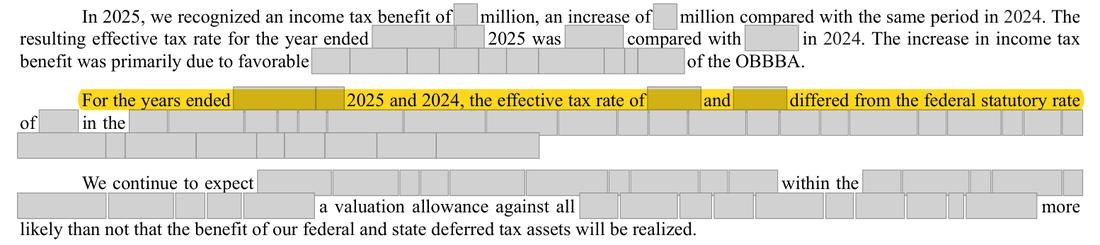
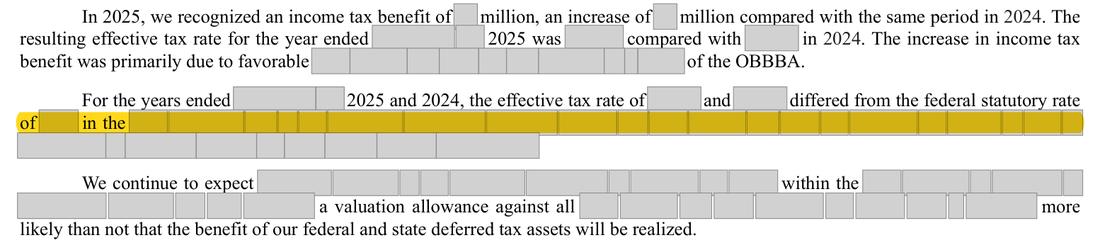
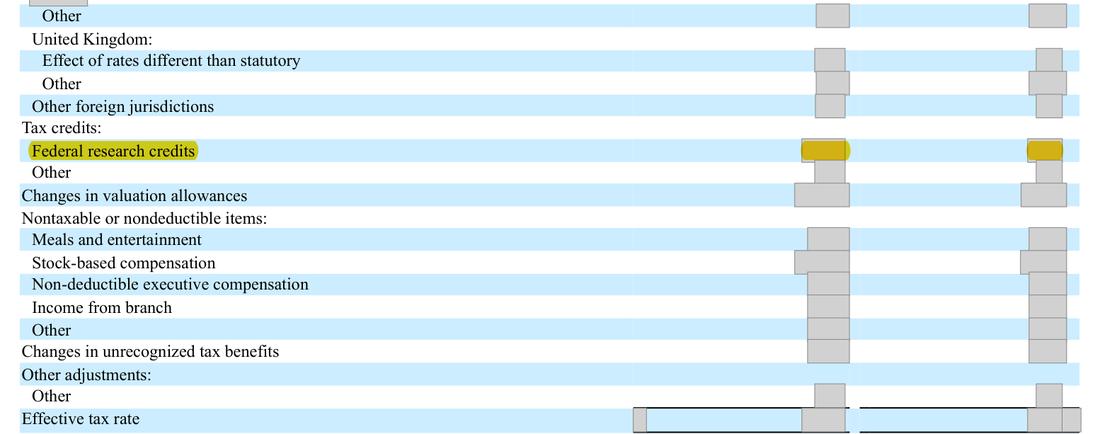
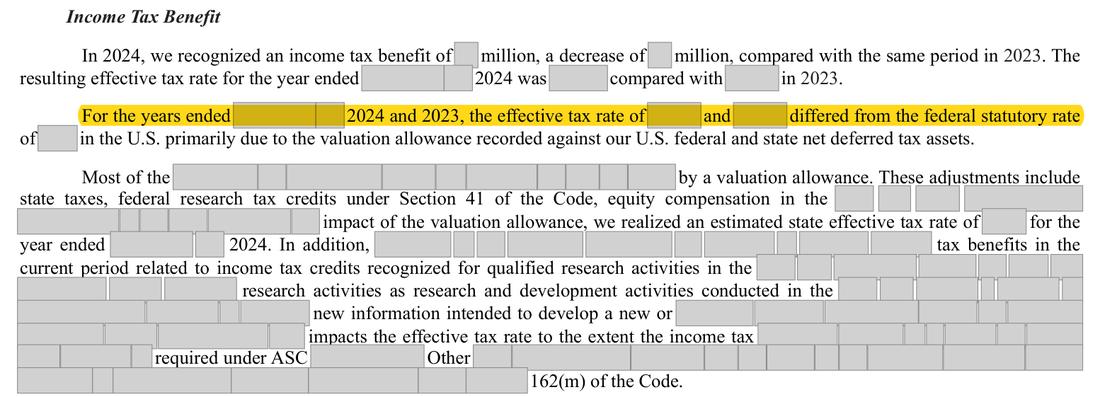
Management's discussion and analysis (MD&A) says the effective tax rates of [n]% (2025) and [n]% (2024) differ from the 21% statutory rate primarily because of the valuation allowance, but the rate reconciliation in the income tax note shows the allowance reduced the rate (by [n] and [n] points) and federal research credits raised it (by [n] and [n] points); without the credits the 2025 rate would be negative. The 2024 Form 10-K went on to describe the research credits; the 2025 MD&A drops that paragraph.
The evidence, as filed
What the filing shows, and what the rule requires
| What the filing shows | What the rule requires |
|---|---|
MD&A: [n]% and [n]% differ from 21% 'primarily due to the valuation allowance ... as well as' foreign rates; the reconciliation: research credits +[n] and +[n] points, valuation allowance -[n] and -[n] points | An explanation that matches the reconciliation: the rate exceeds 21% because federal research credits (+[n] points in 2025) more than offset the valuation allowance (-[n] points), stock-based compensation (-[n] points) and non-deductible executive compensation (-[n] points) |
The rule
Exchange Act Rule 12b-20
there shall be added such further material information, if any, as may be necessary to make the required statements, in the light of the circumstances under which they are made not misleading.
Version: Text in force at the date of this review · Source: 17 CFR 240.12b-20 (eCFR current text)
Why it applies here. on a pre-tax loss, a benefit rate above 21% means the reconciling items added to the benefit; the valuation allowance subtracted from it. The MD&A sentence therefore names as the main cause an item that moved the rate the other way and leaves out the item that explains the difference; the foreign rate lines in the reconciliation do raise the rate, so that limb of the sentence points the right way but is secondary to the credits.
Why it matters
Readers are told the wrong reason for the tax line and cannot see that the reported benefit depends on research credits; the staff comments frequently on effective-rate explanations, especially in the first year of the new rate reconciliation.
Exposure
Staff comment and a corrected explanation in future filings; no fine
Our workings
MD&A states that the effective tax rates of [n]% and [n]% differed from the 21% federal rate primarily because of the valuation allowance against United States deferred tax assets, as well as foreign statutory rate differences. The 2025 reconciliation shows federal research credits of 25.6% and changes in valuation allowances of -[n]% against an effective rate of [n]%; the 2024 reconciliation shows research tax benefits of 49.4% and change in valuation allowance of -22.8% against [n]. The 2024 Form 10-K (Form 10-K 2024 (prior year) p.67) gave the same valuation-allowance sentence for 2024 but followed it with a paragraph on the research credits.
removing the research credits leaves rates of -3.4% (2025) and -22.3% (2024).
| Item | 2025 (points) | 2024 (points) |
|---|---|---|
| Effective rate | [n] | [n] |
| Research credits / valuation allowance | +[n] / -[n] | +[n] / -[n] |
| Rate without research credits | [n] - [n] = -[n] | [n] - [n] = -[n] |
Management’s best defense, and our reply
Management would say that the valuation allowance is the reason the rate is not much further from 21%: without it the credits and losses would produce a far larger benefit, so calling it the primary reason for the difference is a fair summary, and the full reconciliation is in the note. It would add that the explanation has been used for years without staff comment. That does not answer the direction: the sentence explains why the rate differs from 21%, and the rate is above 21% because of the credits, which the sentence omits, while the allowance pushes the rate below 21%; a reader of MD&A is left with the wrong cause.
The fix
- Replace the sentence with: 'Our effective tax rate of [n]% exceeded the 21% federal rate primarily because of federal research credits ([n] percentage points), partly offset by the valuation allowance ([n] points), stock-based compensation ([n] points) and non-deductible executive compensation ([n] points).'
Evidence relied on
| # | What it shows | Type | Where |
|---|---|---|---|
| 1 | MD&A explanation of the difference from 21% | Document | Form 10-K 2025, page 67 |
| 2 | The valuation allowance named as the main cause | Document | Form 10-K 2025, page 67 |
| 3 | Research credits add [n] points in 2025 | Document | Form 10-K 2025, page 119 |
| 4 | The valuation allowance takes [n] points off the 2025 rate | Document | Form 10-K 2025, page 119 |
| 5 | 2025 effective rate | Document | Form 10-K 2025, page 119 |
| 6 | Research benefits add [n] points in 2024 | Document | Form 10-K 2025, page 120 |
| 7 | The valuation allowance takes [n] points off the 2024 rate | Document | Form 10-K 2025, page 120 |
| 8 | The 2024 Form 10-K gave the same explanation for 2024 | Document | Form 10-K 2024 (prior year), page 67 |
Prepared by Pramanex from the company’s public SEC filings, without the company’s involvement, to show how a 10-K Pre-filing Check reads. The company is not named, and nothing on this page is a statement about any identifiable company. Observations are not an audit, review or other attestation or assurance engagement, and not legal advice. An SEC-style question is a question, not a conclusion.
Want this on your own 10-K, before you file?
Start with three free findings on your latest 10-K, or book a fixed-price 10-K Pre-filing Check.
Your next 10-K will be in draft before the audit is done.
Have it read before you file.
Start with three free findings on your latest 10-K, or book a fixed-price 10-K check. Drafts only under NDA, inside your insider trading policy.