1.08 MD&A credits the higher 2025 tax benefit to the 2025 federal tax law, but the new-format rate reconciliation has no line for the effect of tax law changes
Company D · a US-listed cloud communications software company · SEC-style question
In brief
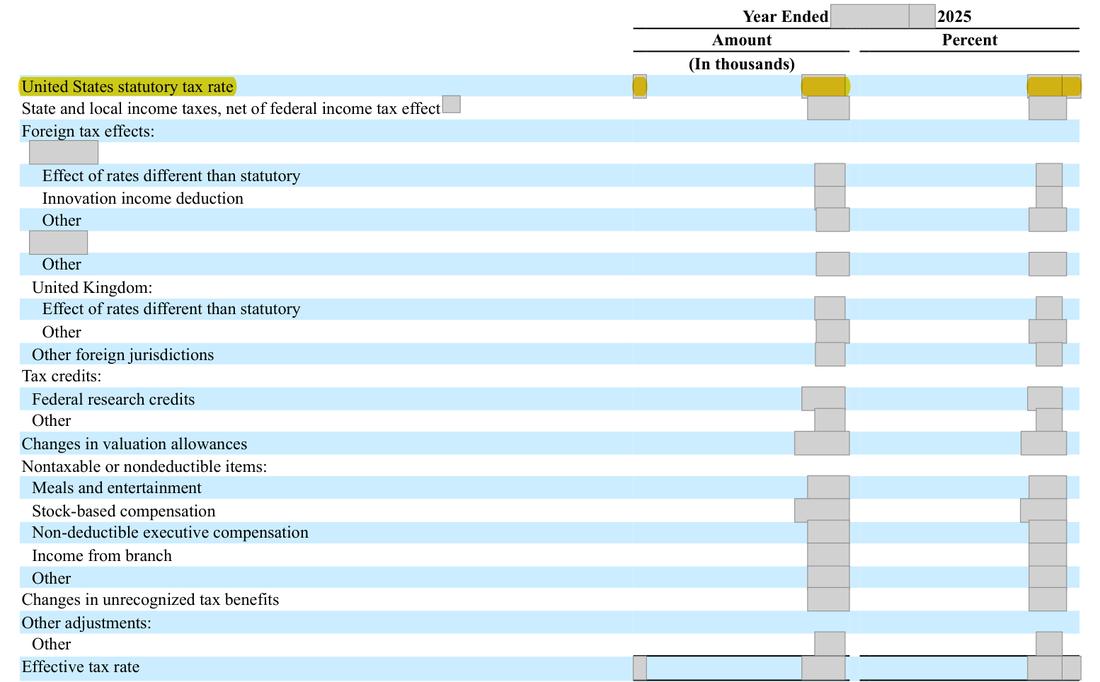
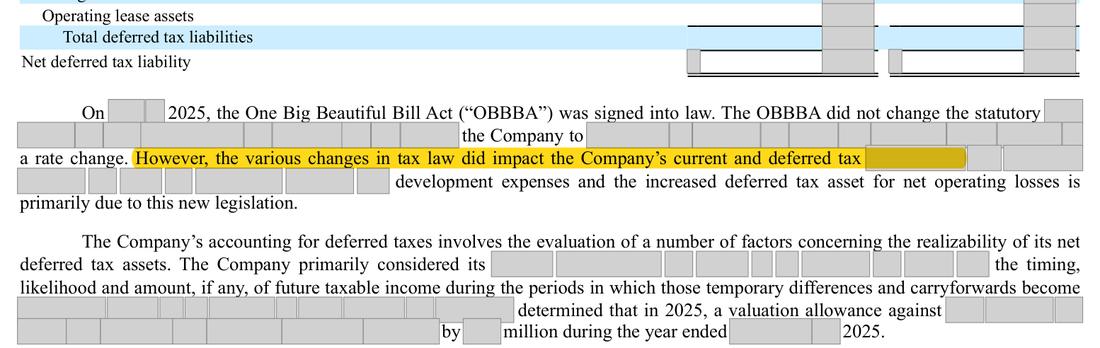
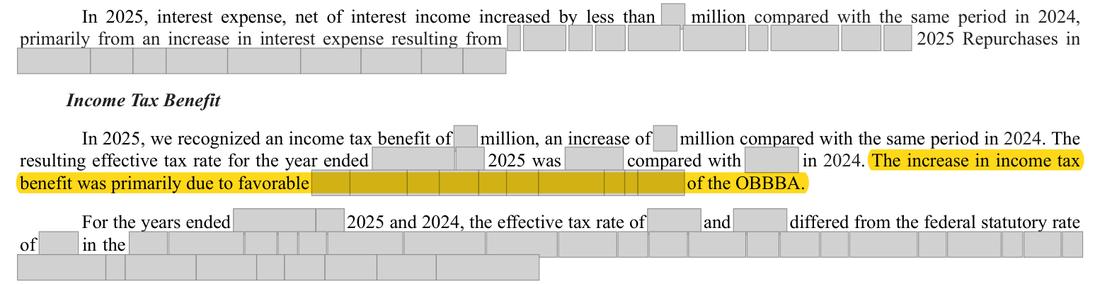
The 2025 rate reconciliation is the first under the new standard, which lists 'effect of changes in tax laws or rates enacted in the current period' as one of its prescribed categories. It shows no such line. Yet MD&A says the increase in the income tax benefit to [amount] was primarily due to favorable federal and state tax law changes under the 2025 federal tax act, and the tax note says those changes affected the current and deferred tax calculations. Either the effect sits inside other lines or the category has not been applied.
The evidence, as filed
What the filing shows, and what the rule requires
| What the filing shows | What the rule requires |
|---|---|
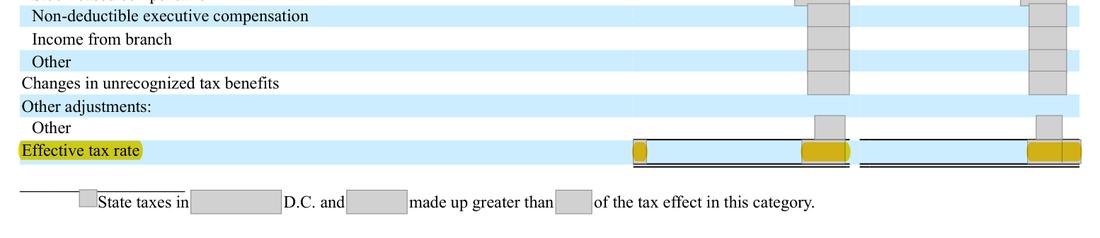
Rate reconciliation for 2025 (statutory [n] to effective [n]) with categories for state, foreign, credits, valuation allowance, nondeductible items, unrecognized tax benefits and other; no 'changes in tax laws' line. MD&A: increase in benefit 'primarily due to favorable U.S. federal and state tax law changes'. | If the tax law changes enacted in 2025 moved the effective rate by 5% or more of the statutory-rate tax ([n]), a separate 'Effect of changes in tax laws or rates enacted in the current period' line in amount and percentage; if they did not, MD&A's explanation of the change in the benefit should name the drivers that the reconciliation does show. |
The rule
FASB ASC 740-10-50-12A(a) (ASU 2023-09): specified categories, incl. effect of changes in tax laws or rates enacted in the current period
Summary; FASB/IFRS text is copyrighted PBEs disclose annually a tabular rate reconciliation in percentages and amounts with specified categories, separately itemising qualifying reconciling items, and explaining state and local effects.
Version: Text in force at the date of this review · Source: FASB Accounting Standards Codification, ASC 740-10-50-12A (as amended by ASU 2023-09), paraphrased
Why it applies here. the new standard requires a public business entity to show, among its specified categories, the effect of tax law changes enacted in the period. Changes that only move amounts between current and deferred tax (such as the restored expensing of research costs) produce no reconciling item, which may be management's reading; but MD&A then attributes the rise in the benefit to a cause the reconciliation does not show. Only management can say which is right.
Why it matters
Either the first new-format reconciliation does not apply one of its prescribed categories, or MD&A explains the change in the tax benefit by a cause the audited note does not show; both would draw a staff question.
Exposure
A question for management; any correction would be made in future filings.
Our workings
the 2025 reconciliation runs from [n] at the 21.0% statutory rate to the [n] benefit at [n]%, with no line for tax law changes. The note says the 2025 federal tax act did not change the statutory rate but its changes 'did impact the Company's current and deferred tax calculations'. MD&A says the benefit rose because of favorable federal and state tax law changes under that act.
5% of the statutory-rate tax is [n] x 5% = [n], the threshold for separate disclosure; the benefit rose by [n] - [n] = [n].
| Item | Amount |
|---|---|
| Statutory-rate tax on the 2025 loss | [n] |
| 5% threshold for separate disclosure | [n] x 5% = [n] |
| Income tax benefit 2025 | [n] |
| Income tax benefit 2024 | [n] |
| Increase in benefit | [n] - [n] = [n] |
| Line for 'effect of changes in tax laws or rates enacted in the current period' | none |
Management’s best defense, and our reply
Management can argue that the 2025 act changed the timing of deductions (research cost expensing, bonus depreciation), which moves amounts between current and deferred tax but leaves the effective rate untouched, so there is nothing to show in the category. Under a full U.S. valuation allowance, any residual effect would also be offset within the valuation allowance line. That reading is tenable, which is why this is a question; but it sits uneasily with MD&A's statement that the law changes were the primary cause of the higher benefit.
The fix
- If material, add 'Effect of changes in tax laws or rates enacted in the current period: $X (Y%)' to the 2025 reconciliation in future filings; otherwise align the MD&A explanation with the reconciling items shown.
Question for the company
Did the federal and state tax law changes enacted in 2025 have an effect on the 2025 effective tax rate of [n] or more (5% of the statutory-rate tax)? If so, in which lines of the rate reconciliation is it included, and will it be shown under 'Effect of changes in tax laws or rates enacted in the current period'? If not, what drove the [n] increase in the income tax benefit that MD&A attributes to those changes?
Evidence relied on
| # | What it shows | Type | Where |
|---|---|---|---|
| 1 | The reconciliation starts from [n] at 21.0% | Document | Form 10-K 2025, page 119 |
| 2 | It ends at the [n] benefit with no tax-law-change line in between | Document | Form 10-K 2025, page 119 |
| 3 | The note says the 2025 tax law changes affected the tax calculations | Document | Form 10-K 2025, page 121 |
| 4 | MD&A attributes the higher benefit to the tax law changes | Document | Form 10-K 2025, page 67 |
| 5 | Income tax benefit for the three years | Document | Form 10-K 2025, page 85 |
Prepared by Pramanex from the company’s public SEC filings, without the company’s involvement, to show how a 10-K Pre-filing Check reads. The company is not named, and nothing on this page is a statement about any identifiable company. Observations are not an audit, review or other attestation or assurance engagement, and not legal advice. An SEC-style question is a question, not a conclusion.
Want this on your own 10-K, before you file?
Start with three free findings on your latest 10-K, or book a fixed-price 10-K Pre-filing Check.
Your next 10-K will be in draft before the audit is done.
Have it read before you file.
Start with three free findings on your latest 10-K, or book a fixed-price 10-K check. Drafts only under NDA, inside your insider trading policy.