1.15 All payments of the founders' royalty are financing cash flows, although fair-value increases are charged to operating expenses
Company C · a US-listed specialty healthcare products company · SEC-style question
In brief
The company pays its founders a low single-digit royalty on Product 1 net sales under an obligation assumed at its initial public offering, carried at fair value with changes in operating expenses. Every payment ([amount] in 2025) is shown in financing activities. Since 2022 fair-value increases of [amount] net have been expensed while [amount] has been paid; the report does not give the amount first recognized, so a reader cannot tell whether payments now include amounts that should be operating.
The evidence, as filed
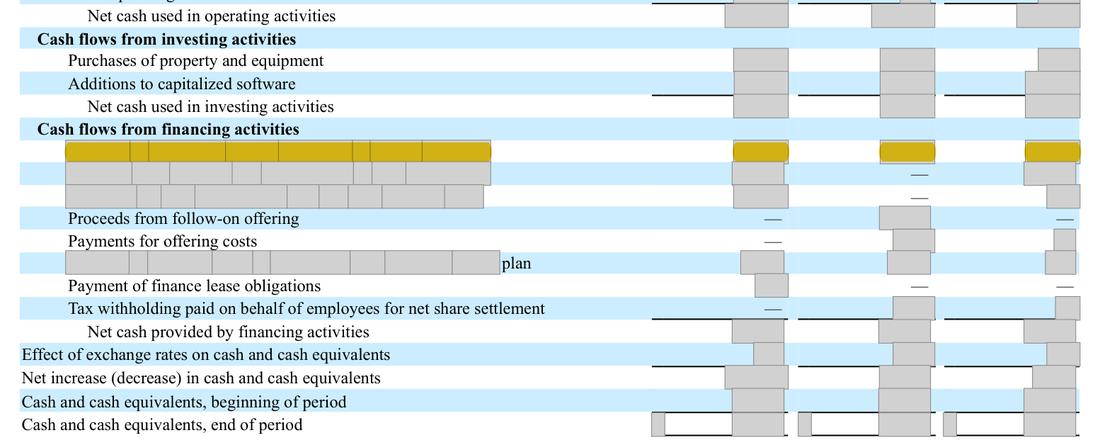

1 further page extract: screenshot withheld to protect the company’s identity. The rows below say what each shows.
What the filing shows, and what the rule requires
| What the filing shows | What the rule requires |
|---|---|
Payment of contingent royalty obligation to the Company founders of [n] (2025), [n] (2024) and [n] (2023) wholly in financing activities; fair-value changes in operating expenses; no amount given for the obligation as first recognized | Payments presented as financing only up to the amount of the liability first recognized (with any later additions treated as a financing liability), and amounts paid above that presented in operating activities, by analogy to the guidance for contingent consideration paid after an acquisition; or a stated basis for financing classification |
| What we checked. Statements of cash flows, Note 2 policy, Note 3 roll-forward in both years | |
The rule
FASB ASC 230-10-45-15(f) and 230-10-45-17(ff) (contingent consideration payments after an acquisition; paraphrase, Codification text not reproduced)
Summary; FASB/IFRS text is copyrighted Classify cash receipts and payments as operating, investing or financing by their nature, present gross flows, include restricted cash, and disclose significant noncash activities.
Version: Text in force at the date of this review · Source: FASB Accounting Standards Codification, ASC 230-10-45 (as amended by ASU 2016-15)
Why it applies here. under the cash-flow guidance for contingent consideration (paragraph 230-10-45-15(f) and paragraph 230-10-45-17(ff), added by Accounting Standards Update 2016-15), payments made long after an acquisition are financing only up to the liability first recognized and operating for the excess. The company is not the acquirer here, so the guidance applies only by analogy, but the economics are similar: payments above the initial fair value are the cost of a royalty on sales that has already passed through operating expenses. Whether cumulative payments have reached the initial amount cannot be told from the report.
Why it matters
If cumulative payments exceed the amount first recognized, operating cash outflow is understated and financing outflow overstated by the excess in each year.
Exposure
A question for management; classification of contingent consideration payments is a recurring subject of staff comments.
Our workings
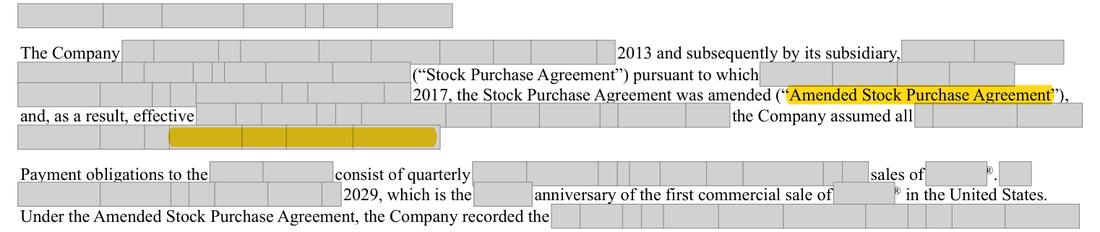
the obligation originated in the 2013 acquisition of the company by its former parent and was assumed by the company when it went public, when the company recorded the fair value of all revised payment obligations. It is remeasured each period with changes in operating expenses, and all payments are presented in financing activities.
from 2022 to 2025 the fair-value changes total [n] ([n] + [n] + [n] - [n]) and payments total [n] ([n] + [n] + [n] + [n]); the 2025 payments equal 14.67% of the operating cash outflow ([n] / [n]).
| Item | Computation | Result |
|---|---|---|
| Fair-value changes 2022-2025 | [n] + [n] + [n] - [n] = [n] | [n] |
| Payments 2022-2025 | [n] + [n] + [n] + [n] = [n] | [n] |
| Roll-forward check | [n] + [n] - [n] = [n] | agrees to year-end fair value |
| 2025 payments vs operating cash outflow | [n] / [n] = 14.67% | 14.67% |
Management’s best defense, and our reply
Management can argue that the obligation was assumed from the former parent in a capital transaction rather than in a business combination of its own, so the contingent-consideration guidance does not apply. It can argue that settling a liability assumed in that way is by nature a financing outflow. It can add that cumulative payments may still be below the fair value first recognized, so even under the analogy all payments to date would be financing. The answer: these are reasonable positions, but the report does not give the figures that would settle them, so the point stays a question.
The fix
- Disclose the amount at which the obligation was first recognized and the cumulative payments, and classify payments above that amount in operating activities, or state why financing classification applies to the whole payment.
Question for the company
At what amount was [wording masked] first recognized when the company assumed it, how much has been paid in total since then, and on what basis are payments that exceed the initially recognized amount (and so correspond to fair-value increases charged to operating expenses) presented in financing activities?
Evidence relied on
| # | What it shows | Type | Where |
|---|---|---|---|
| 1 | All payments in financing activities | Document | Form 10-K 2025, page 65 |
| 2 | Operating cash outflow used for the proportion | Document | Form 10-K 2025, page 65 |
| 3 | Initial recognition at fair value; amount not given | Document | Form 10-K 2025, page 73 |
| 4 | The obligation is a royalty on sales | Document | Form 10-K 2025, page 73 |
| 5 | Fair-value changes go through operating expenses | Document | Form 10-K 2025, page 79 |
| 6 | Year-end fair value | Document | Form 10-K 2025, page 79 |
| 7 | Prior-year roll-forward: opening 2022 fair value | Document | Form 10-K 2024 (prior year), page 81 |
| 8 | Prior-year roll-forward: 2022 payments | Document | Form 10-K 2024 (prior year), page 81 |
| 9 | Prior-year roll-forward: 2022 fair-value change | Document | Form 10-K 2024 (prior year), page 81 |
Absence check
- Document
- Form 10-K 2025
- Where it would appear
- Contingent Royalty Obligation Payable to the Company founders
- What is missing
- the amount at which the obligation was first recognized when assumed, and cumulative payments since
- Pages looked at
- p.65-66 (cash flows), [n] (policy), [n] (Level 3 roll-forward)
- Result
- 'Amended Stock Purchase Agreement' hits only p.73, the policy, which says the fair value was recorded but gives no amount; 'initially recorded' hits p.57 and [n], about deferred revenue for loyalty rewards and co-branded advertising, unrelated; 'initial fair value' and 'cumulative payments' have no hits.
Prepared by Pramanex from the company’s public SEC filings, without the company’s involvement, to show how a 10-K Pre-filing Check reads. The company is not named, and nothing on this page is a statement about any identifiable company. Observations are not an audit, review or other attestation or assurance engagement, and not legal advice. An SEC-style question is a question, not a conclusion.
Want this on your own 10-K, before you file?
Start with three free findings on your latest 10-K, or book a fixed-price 10-K Pre-filing Check.
Your next 10-K will be in draft before the audit is done.
Have it read before you file.
Start with three free findings on your latest 10-K, or book a fixed-price 10-K check. Drafts only under NDA, inside your insider trading policy.