1.08 Segment expense lines were re-cut from last year: stock-based compensation and the royalty revaluation are no longer shown separately
Company C · a US-listed specialty healthcare products company · SEC-style question
In brief
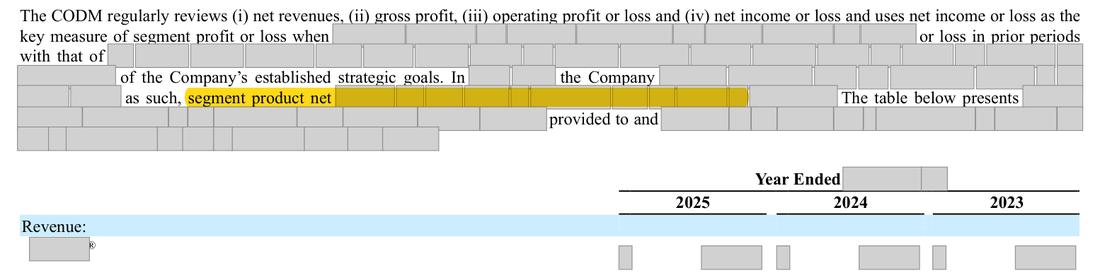
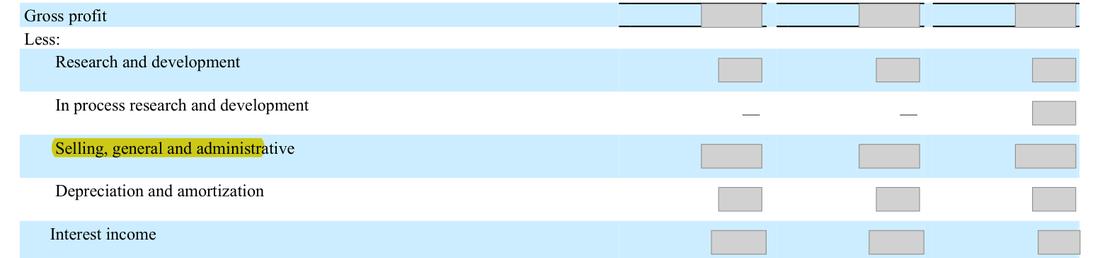
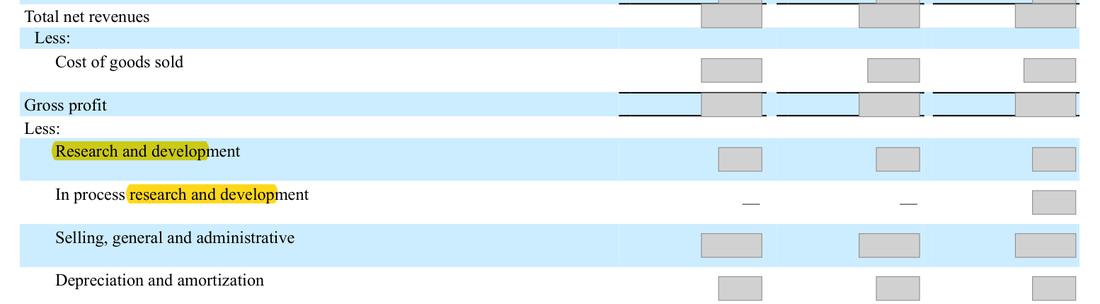
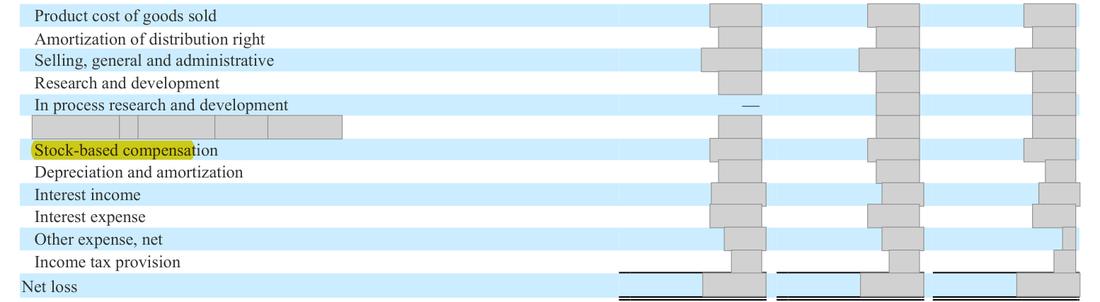
In the 2024 Form 10-K the table of significant expenses regularly provided to the chief operating decision maker (CODM) showed stock-based compensation ([amount] for 2024) and [wording masked] ([amount]) as lines of their own. The 2025 note folds stock-based compensation into selling, general and administrative and research and development (2024 selling, general and administrative becomes [amount] against [amount] last year) and moves the royalty revaluation into 'other segment items', yet explains a recast only for product revenue. It does not say whether the information the CODM receives has changed.
The evidence, as filed
What the filing shows, and what the rule requires
| What the filing shows | What the rule requires |
|---|---|
2025 note: selling, general and administrative [n] / [n] / [n] and research and development [n] / [n] / [n], each including stock-based compensation; other segment items ([n]) / [n] / [n], which now include the royalty revaluation; no separate stock-based compensation or royalty revaluation line; the recast sentence covers product revenue only. | Significant expense categories as regularly provided to the CODM; where those categories changed from the prior year, a sentence saying so and that comparatives were recast to match. |
The rule
FASB ASC 280-10-50-26A to 50-26C (as amended by ASU 2023-07)
Summary; FASB/IFRS text is copyrighted Per reportable segment, disclose significant expense categories regularly provided to the CODM within segment profit, plus the amount and nature of other segment items.
Version: Text in force at the date of this review · Source: FASB Accounting Standards Codification, ASC 280-10-50-26A to 50-26C (as amended by ASU 2023-07), paraphrased (Codification text is copyrighted)
Why it applies here. the categories presented changed. Because the significant expense categories are defined by what the CODM regularly receives, the change means either the CODM package changed (which the note should say) or the presentation changed while the package did not (in which case stock-based compensation, which the company itself presented as significant last year, would still be a required line). The measure of segment profit (net loss) is unchanged, so this is a question about the categories, not about the measure.
Why it matters
Readers comparing the two years cannot tell whether the CODM's view of the business changed; segment disclosures are a frequent SEC staff comment theme, and the staff commonly asks for the CODM reporting package when categories shift.
Exposure
None until the company answers; if the CODM package did not change, a staff comment asking for the category in future filings is the realistic outcome.
Our workings
the 2024 Form 10-K described its table as the significant segment items regularly provided to and reviewed by the CODM and listed product cost of goods sold, amortization of distribution right, selling, general and administrative, research and development, revaluation of contingent royalty obligation and stock-based compensation as separate lines. The 2025 note lists cost of goods sold, research and development, selling, general and administrative and other captions that match the statement of operations, adds an 'other segment items' line whose footnote says it includes [wording masked], restructuring costs and other (income) expense, recasts 2024 and 2023 into these captions, and explains the recast only for product revenue (the Product line 2 launch).
the 2024 figures rebuild exactly from last year's lines once stock-based compensation is added back by function, distribution right amortization is added to cost of goods sold, and the royalty revaluation is netted with other expense (workings), so no amount has changed.
| Caption (2024 column) | Prior-year report | Added | 2025 report |
|---|---|---|---|
| Selling, general and administrative | [n] | [n] stock-based compensation | [n] + [n] = [n] |
| Research and development | [n] | [n] stock-based compensation | [n] + [n] = [n] |
| Cost of goods sold | [n] | [n] distribution right amortization | [n] + [n] = [n] |
| Other segment items | [n] royalty revaluation | ([n]) other expense, net | [n] - [n] = [n] |
| Selling, general and administrative (2023 column) | [n] | [n] stock-based compensation | [n] + [n] = [n] |
| Research and development (2023 column) | [n] | [n] stock-based compensation | [n] + [n] = [n] |
Management’s best defense, and our reply
The company can say the CODM's package was redesigned in 2025, when Product line 2 launched, and now mirrors the statement of operations, so the 2025 table correctly shows the categories now provided and recasts 2024 and 2023 to match, which is what comparability requires. That is a tenable reading of the standard, and the amounts all rebuild from last year's lines. The answer: the note explains only the revenue recast, so a reader cannot tell whether the change reflects a new CODM package or a presentation choice; only the company can say which, so the point stays a question.
The fix
- Add to Note 14: 'Beginning in 2025 the information regularly provided to the CODM presents expenses by function including stock-based compensation; prior periods have been recast to conform', or restore stock-based compensation as a separate significant segment expense.
Question for the company
Did the expense information regularly provided to the CODM change in 2025 so that stock-based compensation is no longer a separate category? If so, can the note say so; if not, why is it no longer shown as a significant segment expense?
Evidence relied on
| # | What it shows | Type | Where |
|---|---|---|---|
| 1 | The only recast explanation given covers product revenue | Document | Form 10-K 2025, page 94 |
| 2 | 2025 note: selling, general and administrative for three years, including stock-based compensation | Document | Form 10-K 2025, page 94 |
| 3 | 2025 note: research and development for three years, including stock-based compensation | Document | Form 10-K 2025, page 94 |
| 4 | 2025 note: cost of goods sold now includes distribution right amortization | Document | Form 10-K 2025, page 94 |
| 5 | Stock-based compensation in selling, general and administrative, by year | Document | Form 10-K 2025, page 90 |
| 6 | Stock-based compensation in research and development, by year | Document | Form 10-K 2025, page 90 |
| 7 | Prior-year table showed stock-based compensation as a separate significant segment item | Document | Form 10-K 2024 (prior year), page 96 |
| 8 | Prior-year selling, general and administrative excluding stock-based compensation | Document | Form 10-K 2024 (prior year), page 96 |
| 9 | Prior-year research and development excluding stock-based compensation | Document | Form 10-K 2024 (prior year), page 96 |
| 10 | Prior-year product cost of goods sold | Document | Form 10-K 2024 (prior year), page 96 |
| 11 | Prior-year separate amortization of distribution right | Document | Form 10-K 2024 (prior year), page 96 |
| 12 | 2025 note: other segment items for three years, the 2024 figure equal to last year's royalty revaluation net of other expense | Document | Form 10-K 2025, page 94 |
| 13 | Footnote: the royalty revaluation now sits inside other segment items | Document | Form 10-K 2025, page 95 |
| 14 | Prior-year other expense, net, netted with the royalty revaluation in the 2025 other segment items | Document | Form 10-K 2024 (prior year), page 96 |
| 15 | SBC inside SG&A: [n] + [n] = [n], the 2024 SG&A now shown in the segment table | Document | Form 10-K 2025, page 90 |
| 16 | SBC inside research and development: [n] + [n] = [n], the 2024 line now shown | Document | Form 10-K 2025, page 90 |
| 17 | The prior-year table also showed the royalty revaluation as its own significant item; the 2025 table moves it into other segment items | Document | Form 10-K 2024 (prior year), page 96 |
Prepared by Pramanex from the company’s public SEC filings, without the company’s involvement, to show how a 10-K Pre-filing Check reads. The company is not named, and nothing on this page is a statement about any identifiable company. Observations are not an audit, review or other attestation or assurance engagement, and not legal advice. An SEC-style question is a question, not a conclusion.
Want this on your own 10-K, before you file?
Start with three free findings on your latest 10-K, or book a fixed-price 10-K Pre-filing Check.
Your next 10-K will be in draft before the audit is done.
Have it read before you file.
Start with three free findings on your latest 10-K, or book a fixed-price 10-K check. Drafts only under NDA, inside your insider trading policy.