1.05 Shares issued under the incentive plan and ESPP in 2025 exceed the cash shown in financing activities by [n]
Company C · a US-listed specialty healthcare products company · SEC-style question
In brief
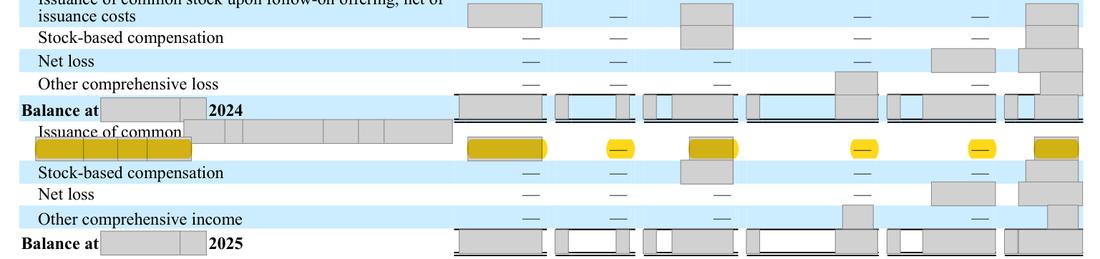
The equity statement records [n] for common stock issued in 2025 under the incentive equity plan and the employee stock purchase plan (ESPP). The financing section of the cash flow statement shows [n] received and no withholding payment, a gap of [n]. The option table shows [n] options exercised at a weighted average [n] dollars, about [n], so the financing line covers the option exercises only and the [n] is the first ESPP purchase ([n] shares), which no financing line or non-cash schedule shows. In 2024 the two statements agree once the withholding line is taken into account.
The evidence, as filed
What the filing shows, and what the rule requires
| What the filing shows | What the rule requires |
|---|---|
Equity issued [n]; financing cash received [n], equal to the option exercises ([n] x [n] = [n]); gap [n] (all USD thousand); the non-cash schedule lists only capital expenditures in payables and the 2023 [supplier 2] shares | Cash withheld from employees for ESPP shares shown as a financing inflow from issuing equity, or any non-cash part listed in the non-cash investing and financing schedule |
| What we checked. Equity statement (page 64), cash flow statement and supplemental schedule (pages 65-66), ESPP note (page 86), option activity table (page 88); 2024 tie | |
The rule
Regulation S-X Rule 4-01(a)(1) (17 CFR 210.4-01(a)(1))
Financial statements filed with the Commission which are not prepared in accordance with generally accepted accounting principles will be presumed to be misleading or inaccurate, despite footnote or other disclosures, unless the Commission has otherwise provided.
Version: Text in force at the date of this review · Source: Regulation S-X, 17 CFR 210.4-01 (eCFR text as amended to the date of review)
Why it applies here. the most likely explanation is that the payroll deductions used to buy ESPP shares were left inside operating cash flows (through accrued payroll) rather than shown as financing proceeds. Neither the cash flow statement nor its non-cash schedule shows where the [n] sits. The standard: under the cash-flow topic of the FASB Accounting Standards Codification, proceeds from issuing equity instruments are financing inflows, and the same topic calls for non-cash investing and financing activities to be shown in narrative or a schedule; Regulation S-X presumes statements that depart from these principles to be misleading.
Why it matters
If the ESPP deductions sit in operating cash flows, 2025 cash used in operating activities is understated, and financing inflows understated, by about [n]; if part is a receivable, the non-cash schedule is incomplete. Either way a reader cannot tie the two primary statements.
Exposure
No penalty; the realistic consequence is a staff comment asking for the classification and a correction in future filings.
Our workings
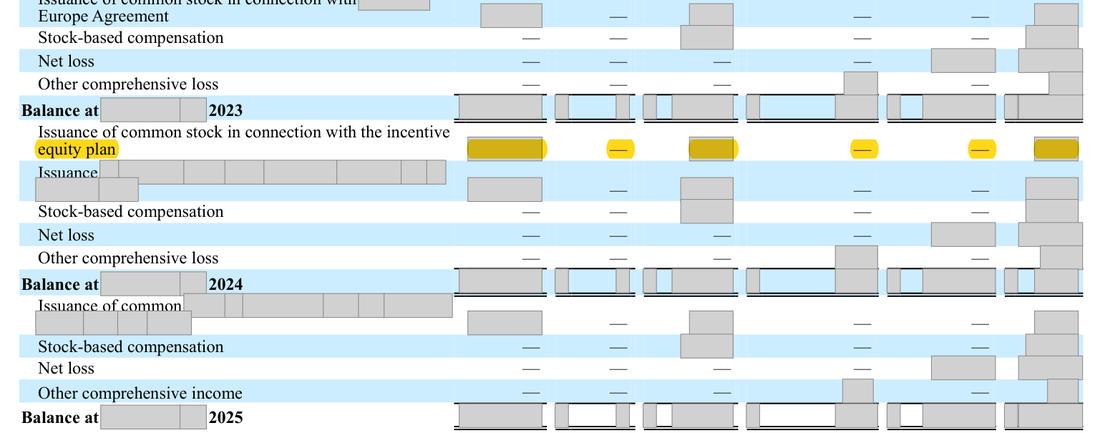
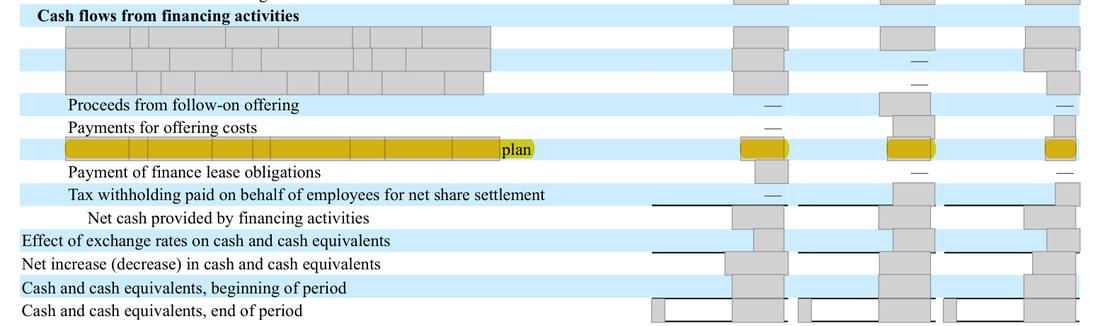
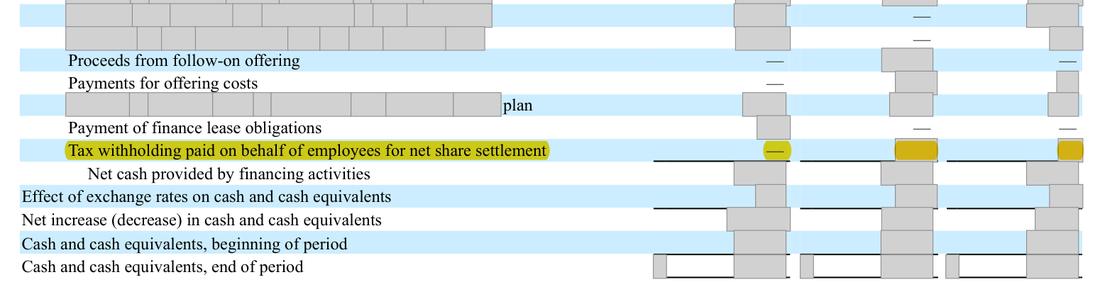
the equity statement shows 'Issuance of common [wording masked]' of [n] for 2025 (page 64). The cash flow statement shows 'Issuance of common stock in connection with incentive equity plan' of [n] and a nil 'Tax withholding paid on behalf of employees for net share settlement' for 2025 (page 65). The supplemental schedule (page 66) lists capital expenditures in payables ([n]) and, for 2023, the [supplier 2] share issuance. Note 10 (page 86) says the first ESPP offering period began on [date], with purchases made by payroll deductions, and [n] shares had been issued by year-end. The option activity table (page 88) shows [n] options exercised at a weighted average exercise price of [n] dollars.
[n] - [n] = [n]. Option exercise proceeds are [n] x [n] = [n], which rounds to the [n] financing line, so that line carries the option exercises and nothing for the ESPP. For 2024 the equity figure equals cash received less withholding ([n] - [n] = [n]), so the gap arises only in 2025. The implied ESPP price is [n] / [n] = [n] dollars a share, a plausible figure for a discounted ESPP purchase, though the report does not confirm it.
| Item | Amount (USD thousand) | Where |
|---|---|---|
| Equity issued, incentive plan and ESPP, 2025 | [n] | page 64 |
| Financing cash received, incentive equity plan, 2025 | [n] | page 65 |
| Option exercise proceeds per option table | [n] x [n] = [n] | page 88; rounds to the [n] line |
| Gap | [n] - [n] = [n] | computed |
| 2024 tie: cash received less withholding | [n] - [n] = [n] | equals equity [n] |
| Implied price per ESPP share if the gap is the ESPP purchase | [n] / [n] = [n] | computed, dollars |
| Gap as % of pre-tax loss; of financing inflow | [n] / [n] = 0.60%; [n] / [n] = 1.75% | computed |
Management’s best defense, and our reply
The finance team could say the [n] represents employee payroll deductions that formed part of compensation cash flows and were therefore left within operating activities through accrued payroll, a practice some preparers follow. It could add that the amount is only 0.60% of the pre-tax loss and that the total cash change is unaffected, so no reader is misled about liquidity. That case has some force, which is why the point is put as a question rather than as an error. However, cash an issuer keeps in exchange for its own shares is a financing inflow from issuing equity, and the option table shows the financing line covers the option exercises only, so the ESPP amount appears as a financing inflow nowhere; only management can confirm where it sits.
The fix
- Show ESPP payroll deductions applied to share purchases as 'Proceeds from issuance of common stock under the ESPP' in financing activities (or list any non-cash part in the non-cash schedule), starting with the next Form 10-Q.
Question for the company
The equity statement records [n] for shares issued under the incentive equity plan and the ESPP in 2025, while financing activities show [n] received, which matches the option exercises in the option table ([n] at [n] dollars). Where is the difference of [n] for the first ESPP purchase ([n] shares) presented: payroll deductions kept within operating cash flows, or another item? If it is cash withheld for ESPP shares, will it be shown as a financing inflow from issuing equity?
Evidence relied on
| # | What it shows | Type | Where |
|---|---|---|---|
| 1 | 2025 equity statement: [n] recorded for shares issued under the incentive plan and ESPP | Document | Form 10-K 2025, page 64 |
| 2 | 2024 equity statement issuance [n], which ties to cash received less withholding | Document | Form 10-K 2025, page 64 |
| 3 | financing cash received: [n] in 2025, [n] in 2024 | Document | Form 10-K 2025, page 65 |
| 4 | no withholding payment in 2025; [n] in 2024 | Document | Form 10-K 2025, page 65 |
| 5 | 2025 financing inflow [n], the line used for the percentage | Document | Form 10-K 2025, page 65 |
| 6 | 2025 pre-tax loss [n] used for the percentage | Document | Form 10-K 2025, page 63 |
| 7 | the non-cash schedule lists capital expenditures in payables and the 2023 [supplier 2] shares only | Document | Form 10-K 2025, page 66 |
| 8 | 2025 is the first year of ESPP purchases, made by payroll deductions | Document | Form 10-K 2025, page 86 |
| 9 | [n] ESPP shares issued by [date] | Document | Form 10-K 2025, page 86 |
| 10 | [n] options exercised in 2025 at a weighted average [n] dollars: proceeds of about [n], the whole financing line | Document | Form 10-K 2025, page 88 |
Prepared by Pramanex from the company’s public SEC filings, without the company’s involvement, to show how a 10-K Pre-filing Check reads. The company is not named, and nothing on this page is a statement about any identifiable company. Observations are not an audit, review or other attestation or assurance engagement, and not legal advice. An SEC-style question is a question, not a conclusion.
Want this on your own 10-K, before you file?
Start with three free findings on your latest 10-K, or book a fixed-price 10-K Pre-filing Check.
Your next 10-K will be in draft before the audit is done.
Have it read before you file.
Start with three free findings on your latest 10-K, or book a fixed-price 10-K check. Drafts only under NDA, inside your insider trading policy.