1.15 The 2025 cash-flow adjustment for disposals is a [n] gain, while the statement of operations shows a [n] loss
Company B · a US-listed transportation and logistics company · SEC-style question
In brief
The statement of operations reports a net loss of [amount] on disposition of property and equipment for 2025. The cash-flow statement, under the caption '(Loss) gain on disposition of property and equipment', deducts [amount], which is the treatment of a gain. In 2024 and 2023 the two statements carry the same figure, and the operating section still foots in 2025, so another operating line must hold the other [amount].
The evidence, as filed
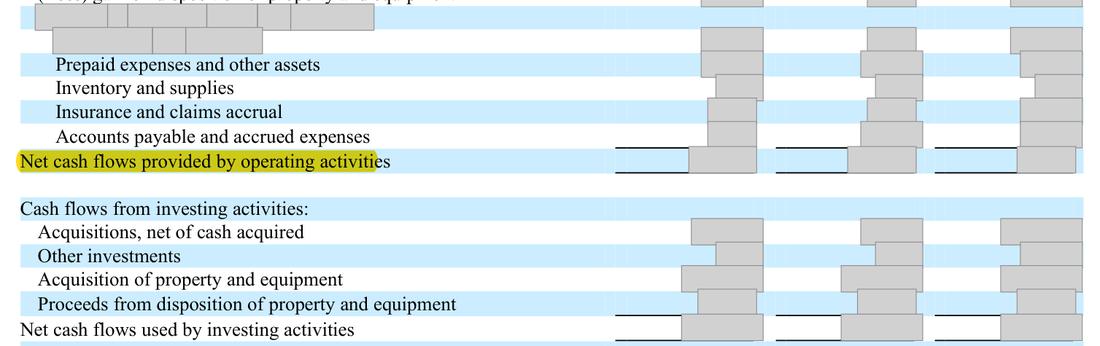
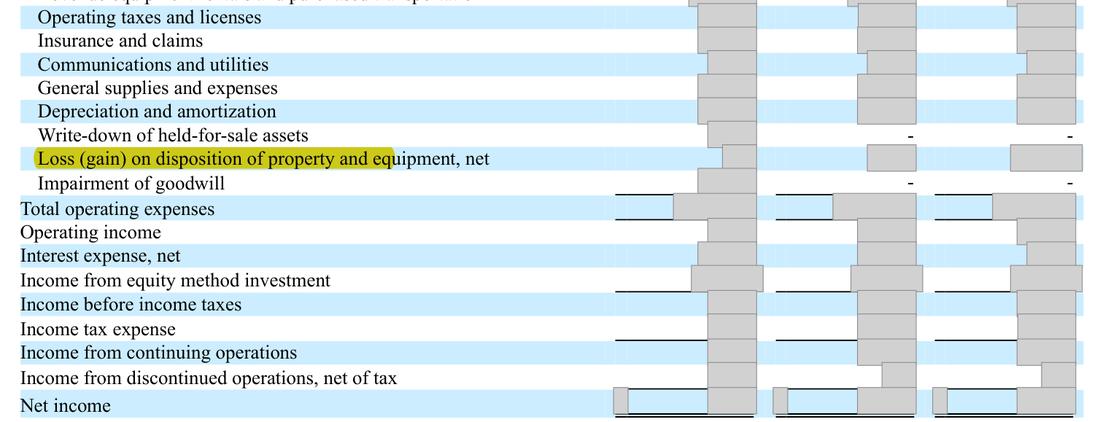
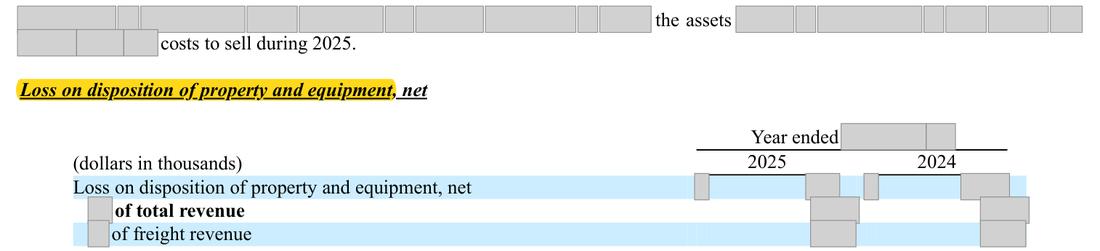
1 further page extract: screenshot withheld to protect the company’s identity. The rows below say what each shows.
What the filing shows, and what the rule requires
| What the filing shows | What the rule requires |
|---|---|
Statement of operations 2025: 'Loss (gain) on disposition of property and equipment, net' [n]. Statement of cash flows 2025: '(Loss) gain on disposition of property and equipment' ([n]). The nine-month Form 10-Q to [date] showed the same pattern (loss of [n] against a cash-flow deduction of [n]). | A cash-flow adjustment that removes the same disposal gain or loss that is in net income (an add-back of [n] for 2025), or a caption and note that explain what the [n] contains and where the rest of the non-cash disposal result is presented. |
The rule
Cash flow presentation (indirect method)
Why it applies here. either the caption is not the item it adjusts, or non-cash disposal losses are presented as working-capital movements. The Form 10-Q for the nine months to [date] already showed a loss of [n] against a cash-flow deduction of ([n]), a gap of [n], so the difference built up during the year rather than arising from a year-end adjustment. The indirect-method guidance of the cash-flow standard requires net income to be adjusted to remove the effects of items whose cash flows are investing cash flows, such as gains and losses on sales of property and equipment, with the related proceeds in investing activities. The point cannot be settled from the report: it does not disclose gross gains and losses on disposals.
Why it matters
A reader reconciling net income to operating cash flow cannot trace the disposal result between the two statements, and an operating working-capital line may be carrying a non-cash loss.
Exposure
A question for management; if the classification proves wrong, the correction is to the cash-flow presentation in the next periodic report, with operating, investing and financing totals unchanged.
Our workings
the 2025 statement of operations shows a net loss on disposition of property and equipment of [n]; MD&A repeats [n] for 2025 and [n] for 2024. The cash-flow statement adjusts net income by ([n]) for 2025 on a line captioned '(Loss) gain on disposition of property and equipment', by [n] for 2024 and by ([n]) for 2023; the 2024 and 2023 adjustments equal the statement-of-operations amounts, the 2025 one does not. The operating section foots as printed to [n].
an add-back of the [n] loss would differ from the printed deduction by [n] - (-[n]) = [n] (workings). Because the section foots, the [n] must sit in another operating line (for example within the changes in prepaid expenses and other assets, or the receivables line) or the [n] is a gross gain whose matching losses appear elsewhere.
| Period | Statement of operations: loss (gain) on disposition | Cash-flow adjustment printed | Difference: income-statement amount less cash-flow adjustment |
|---|---|---|---|
| 2025 | [n] | ([n]) | [n] - (-[n]) = [n] |
| 2024 | [n] | [n] | [n] - [n] = 0 |
| 2023 | ([n]) | ([n]) | -[n] - (-[n]) = 0 |
| Nine months to [date] (Form 10-Q) | [n] | ([n]) | [n] - (-[n]) = [n] |
| 2025 operating section as printed | [n] net income plus adjustments and working-capital changes | [n] | foots: 0 difference |
Management’s best defense, and our reply
Management could say the [n] is the gross gain on equipment sold, and that losses on other disposals and on trade-ins are non-cash items it presents within the operating working-capital lines, so operating cash flow in total is correct and the caption describes what the line contains. It could add that the amounts are small against operating cash flow of [n]. However, the caption is the same as the statement-of-operations line, which nets to a loss, and the prior two years use that line's amount exactly; whether the residual [n] belongs in working-capital changes can only be answered from the company's disposal ledger, so the point is put as a question.
The fix
- Present the disposal adjustment equal to the gain or loss in net income, and if gross gains and losses are shown separately, caption them accordingly (for example 'Gain on disposition of property and equipment' and 'Loss on disposition and write-down of property and equipment').
Question for the company
For 2025 the statement of operations reports a net loss of [amount] on disposition of property and equipment, while the cash-flow statement deducts [amount] under the same caption. What does the [amount] comprise (gross gains only, or gains net of some losses), in which operating line are the remaining [amount] of non-cash disposal losses presented, and will the caption, the classification or the disclosure of gross gains and losses be changed?
Evidence relied on
| # | What it shows | Type | Where |
|---|---|---|---|
| 1 | The cash-flow statement deducts [n] for 2025 (a gain) and carries [n] and ([n]) for 2024 and 2023 | Document | Form 10-K 2025, unnumbered page |
| 2 | The operating section foots as printed, so the difference sits inside the section | Document | Form 10-K 2025, unnumbered page |
| 3 | The statement of operations shows a 2025 net loss of [n] on disposals; 2024 and 2023 match the cash-flow statement | Document | Form 10-K 2025, page 55 |
| 4 | MD&A repeats the [n] net loss for 2025 | Document | Form 10-K 2025, page 34 |
| 5 | Nine-month cash-flow statement in the Form 10-Q to [date]: a deduction of [n] | Document | |
| 6 | The same Form 10-Q statement of operations: nine-month net loss of [n] | Document |
Prepared by Pramanex from the company’s public SEC filings, without the company’s involvement, to show how a 10-K Pre-filing Check reads. The company is not named, and nothing on this page is a statement about any identifiable company. Observations are not an audit, review or other attestation or assurance engagement, and not legal advice. An SEC-style question is a question, not a conclusion.
Want this on your own 10-K, before you file?
Start with three free findings on your latest 10-K, or book a fixed-price 10-K Pre-filing Check.
Your next 10-K will be in draft before the audit is done.
Have it read before you file.
Start with three free findings on your latest 10-K, or book a fixed-price 10-K check. Drafts only under NDA, inside your insider trading policy.