6.09 The exhibit index has a '^' footnote on omitted schedules that no exhibit number carries
Company H · a US-listed aerospace services company · Drafting slip
In brief
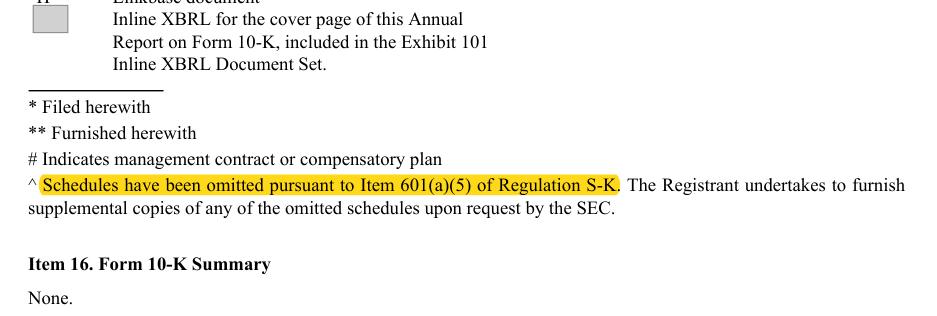
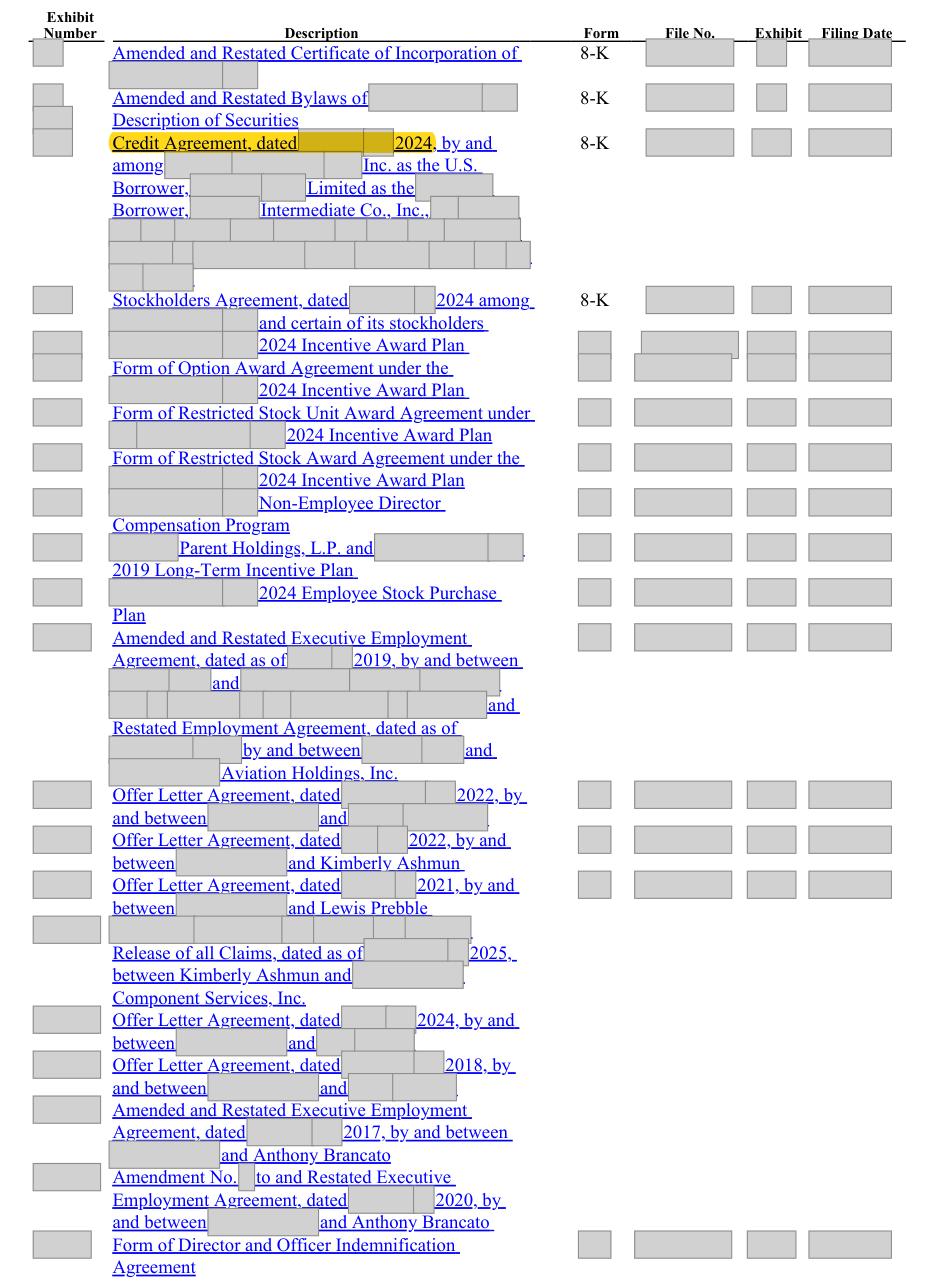
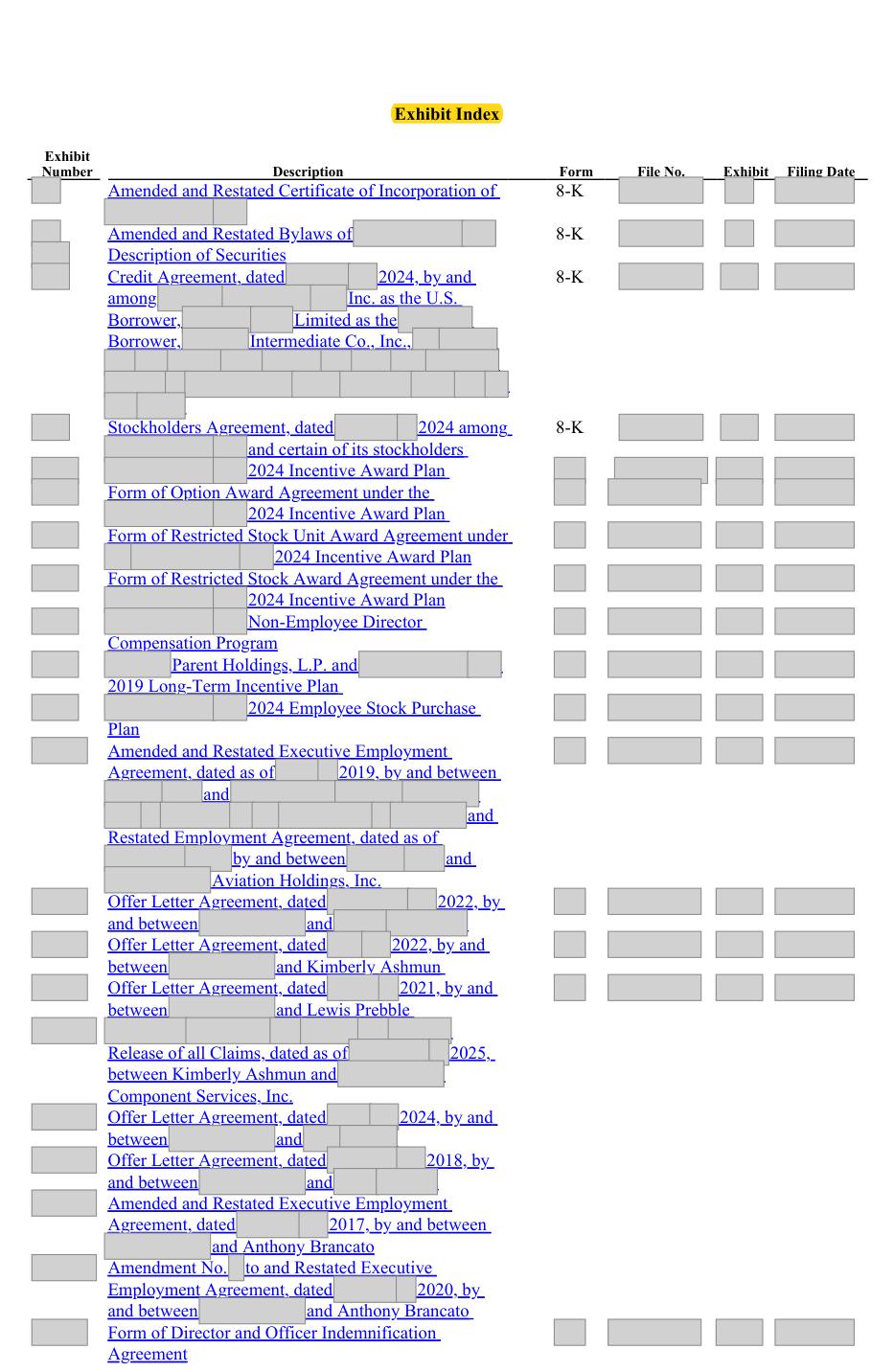
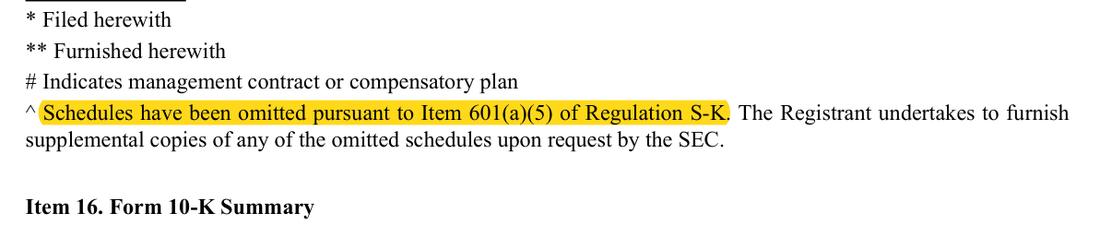
The exhibit index ends with a '^' footnote saying schedules were left out of an exhibit under Item 601(a)(5) of Regulation S-K, but no exhibit number in the index carries the '^' mark, so the reader cannot tell which agreement it refers to. The 2024 Form 10-K had the same unattached footnote.
The evidence, as filed
What the filing shows, and what the rule requires
| What the filing shows | What the rule requires |
|---|---|
Footnote '^ Schedules have been omitted pursuant to Item 601(a)(5)' with no '^' against any exhibit number | The '^' mark placed against the exhibit whose schedules were left out (for example the credit agreement, if that is the one), or the footnote deleted |
Why it matters
A reader cannot tell which filed agreement is incomplete.
Exposure
Drafting only.
Our workings
the footnote list under the exhibit index includes a '^' note on schedules left out under Item 601(a)(5) of Regulation S-K, and no exhibit row on the two index pages carries the '^' mark. The 2024 Form 10-K's index had the same footnote, also unattached.
the mark was dropped from the relevant exhibit row when the index was rolled forward.
Management’s best defense, and our reply
The company would say the omission statement and list of schedules sit in the exhibit itself as originally filed, so nothing is hidden. That may be so, but the index footnote still points at nothing.
The fix
- Place '^' against the exhibit concerned (or delete the footnote).
Evidence relied on
| # | What it shows | Type | Where |
|---|---|---|---|
| 1 | The '^' footnote under the exhibit index | Document | Form 10-K 2025, page 142 |
| 2 | The exhibit index rows, none of which carries a '^' mark | Document | Form 10-K 2025, page 141 |
Absence check
- Document
- Form 10-K 2025
- Where it would appear
- Exhibit Index
- What is missing
- a '^' mark against the exhibit whose schedules were left out
- Pages looked at
- p.141-142
- Result
- Each term hits the footnote itself on p.142; 'Schedules have been omitted' also hits p.140, the Item 15(a)(2) statement that financial statement schedules are omitted, which is unrelated; the '^' character occurs only once in the filed text, so no exhibit row on p.141-142 carries the mark
Prepared by Pramanex from the company’s public SEC filings, without the company’s involvement, to show how a 10-K Pre-filing Check reads. The company is not named, and nothing on this page is a statement about any identifiable company. Observations are not an audit, review or other attestation or assurance engagement, and not legal advice. An SEC-style question is a question, not a conclusion.
Want this on your own 10-K, before you file?
Start with three free findings on your latest 10-K, or book a fixed-price 10-K Pre-filing Check.
Your next 10-K will be in draft before the audit is done.
Have it read before you file.
Start with three free findings on your latest 10-K, or book a fixed-price 10-K check. Drafts only under NDA, inside your insider trading policy.