1.03 [acquired business]'s acquired U.S. tax assets were fully reserved at the [date] acquisition and released in the third quarter: the evidence weighed at acquisition is not explained
Company G · a US-listed specialty pharmaceutical company · SEC-style question
In brief
The company bought [acquired business] in [date] for its brain-tumour drug, booked the acquired U.S. deferred tax assets with a full valuation allowance, and expensed [n] as acquired in-process research and development (IPR&D). After U.S. Food and Drug Administration (FDA) approval in August, it released the allowance in the third quarter and recognized a deferred tax asset of [amount] as a tax benefit. Had the assets been judged realizable at acquisition, about that amount would have reduced the IPR&D expense instead, so the acquisition-date evidence matters to the pre-tax loss.
The evidence, as filed
What the filing shows, and what the rule requires
| What the filing shows | What the rule requires |
|---|---|
Acquisition ([date]): IPR&D [n] expensed; acquired U.S. deferred tax assets carried with a full valuation allowance (Schedule II 'other additions'). Third quarter 2025: allowance released; deferred tax asset of [amount] and an equal U.S. tax benefit. The note gives the reason for the release (FDA approval and launch) but not the evidence that supported the allowance at acquisition. | An explanation of the positive and negative evidence weighed at the acquisition date, why the expected approval that underpinned the price did not support realizability then, and the effect of the judgment on acquired IPR&D expense, pre-tax loss and the tax benefit. |
| What we checked. Note 3 allocation, Note 21 (rate reconciliation, valuation allowance narrative), Schedule II, MD&A acquired IPR&D and critical accounting estimates | |
The rule
ASC 740-10-30-5(e) and 740-10-30-16 to 30-25 (valuation allowance; paraphrase, the Codification text is copyrighted)
Summary; FASB/IFRS text is copyrighted Record a valuation allowance if deferred tax assets are more likely than not unrealisable, weighing all evidence, including cumulative recent losses.
Version: Text as amended up to [date] · Source: FASB Accounting Standards Codification, ASC 740-10-30-5 and 30-16 to 30-25; paraphrase
ASC 805-10-55-5A (asset acquisition screen; paraphrase)
Summary; FASB/IFRS text is copyrighted A set is not a business if substantially all acquired gross-asset fair value is concentrated in one identifiable asset or group of similar assets.
Version: Text in force at the date of this review · Source: FASB Accounting Standards Codification, ASC 805-10-55-3A to 55-6 (as amended by ASU 2017-01); paraphrase
Why it applies here. In an asset acquisition the acquired deferred tax assets are recognized at the acquisition date net of any allowance, and a later release goes to income tax; so the acquisition-date judgment, not the later approval, decides where about [amount] falls. A price of [n] in cash for a single unapproved compound implies that management expected approval and future income, which sits uneasily with an allowance that treated the same income as not more likely than not, and the reversal came within about four months. The judgment may be right, but the filing should show the evidence.
Why it matters
If the acquired tax assets were realizable at acquisition, the allocation and the split between acquired IPR&D expense and the tax benefit would differ by about [amount], changing the operating and pre-tax loss but not net loss; if the allowance was right, a short explanation would close the point.
How often the SEC staff raises this. In 1,100 SEC staff comment letters on fiscal 2023 and 2024 Forms 10-K, released January 2025 to October 2026, income taxes drew 23 of the 1,774 numbered comments (1.3%): topic 17 of 25 by frequency.
The SEC staff has raised this with other companies
The staff asked Penguin Solutions for the positive and negative evidence behind a [amount] valuation allowance release, and Cimpress why a valuation allowance increased one year was mostly released the next.
Exposure
A question for management and the auditor; if the acquisition-date judgment cannot be supported, the realistic consequence is a correction of the classification and a staff comment on the valuation allowance reversal.
Our workings
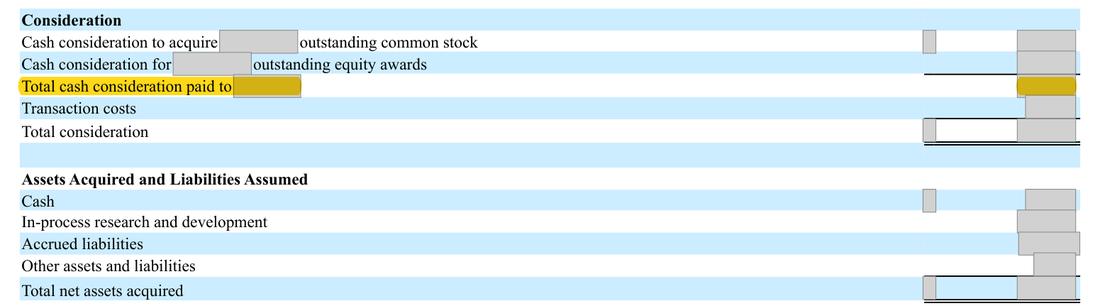
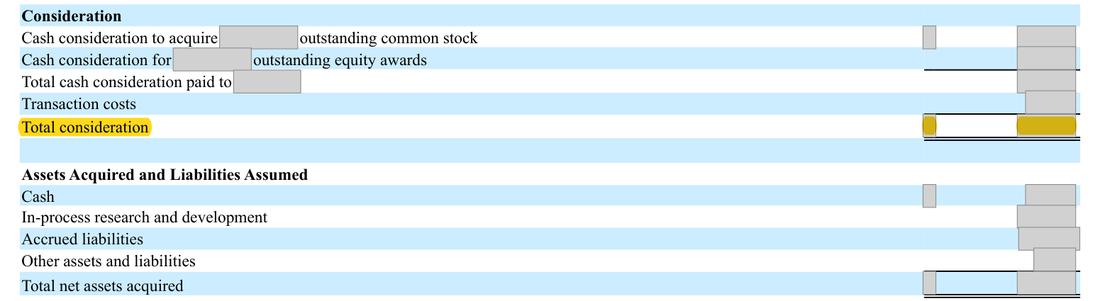
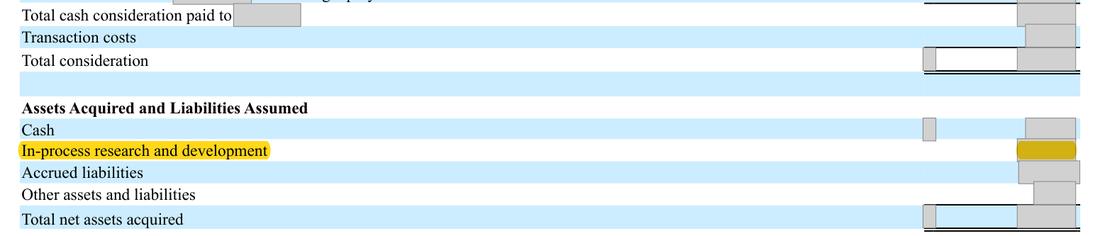
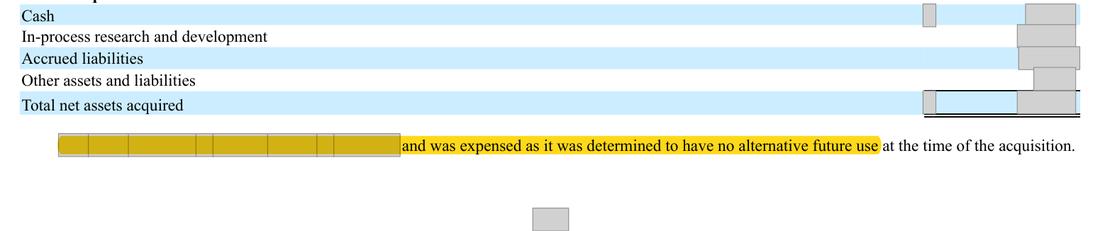
Note 3: total consideration [n], of which [n] was allocated to IPR&D for the drug now sold as [product] and expensed because it had no alternative future use. Schedule II says the 2025 'other additions' to the valuation allowance include an allowance against deferred tax assets acquired with [acquired business]. Note 21 says FDA approval and launch in [date] supplied sufficient positive evidence, the allowance recorded at acquisition was released in the third quarter, and a deferred tax asset of [amount] was recognized with a matching U.S. tax benefit; the rate reconciliation shows a U.S. valuation allowance change of ([n]). The critical accounting estimates say IPR&D valuations rest on projected regulatory approvals and probability rates.
The released amount equals [n] / [n] = 33.85% of the fiscal 2025 pre-tax loss. Ignoring the gross-up that the asset-acquisition tax rules can require, recognizing the asset at acquisition would have left IPR&D at [n] - [n] = [n], a pre-tax loss of [n] - [n] = [n] and a tax benefit of [n] - [n] = [n] (workings).
| Line | Arithmetic (thousands) | Source |
|---|---|---|
| Deferred tax asset recognized on release | [n] x [n] = [n] | Note 21, financial-statement pages (printed F-n; see folios) |
| Share of fiscal 2025 pre-tax loss | [n] / [n] = 33.85% | p.122, [n] |
| IPR&D if recognized at acquisition (illustrative) | [n] - [n] = [n] | Note 3, financial-statement pages (printed F-n; see folios) |
| Pre-tax loss on that basis (illustrative) | [n] - [n] = [n] | financial-statement pages (printed F-n; see folios) |
| Income tax benefit on that basis (illustrative) | [n] - [n] = [n] | financial-statement pages (printed F-n; see folios) |
| IPR&D share of total consideration | [n] / [n] = 94.57% | Note 3, financial-statement pages (printed F-n; see folios) |
Management’s best defense, and our reply
Management would say that at acquisition [product] was unapproved, [acquired business] had a long record of cumulative losses that the standard treats as strong negative evidence, and regulatory approval is outside the company's control; the company's own policies treat approval-dependent outcomes as not probable until received. On that view a full allowance at acquisition and its release on approval and launch is the textbook pattern, and the release is correctly a tax benefit. That case is tenable; the answer turns on the evidence management weighed in [date], which only management holds, so this is a question rather than a finding.
The fix
- Add to Note 21 (and the critical accounting estimates) a short account of the evidence at acquisition, the trigger for release and the amounts, for example: 'At acquisition we recorded a full valuation allowance of $X million because [acquired business] had cumulative losses and [product]'s approval was not assured; on approval in [date] we released [amount].'
Question for the company
At the [date] acquisition date, what positive and negative evidence led management to conclude that [acquired business]'s acquired U.S. deferred tax assets (about [amount] when recognized) were not more likely than not to be realized, given that the price paid assumed [product]'s approval and launch? What, other than the [date] approval, changed by the third quarter, and had the assets been recognized at acquisition, how would acquired IPR&D expense and the income tax benefit each have differed?
Evidence relied on
| # | What it shows | Type | Where |
|---|---|---|---|
| 1 | Note 3 (F-16): cash paid for [acquired business] | Document | Form 10-K 2025, financial-statement pages (printed F-n; see folios) |
| 2 | Total cost including transaction costs | Document | Form 10-K 2025, financial-statement pages (printed F-n; see folios) |
| 3 | Cost allocated to IPR&D | Document | Form 10-K 2025, financial-statement pages (printed F-n; see folios) |
| 4 | IPR&D expensed at acquisition | Document | Form 10-K 2025, financial-statement pages (printed F-n; see folios) |
| 5 | Schedule II (F-49): full allowance at acquisition | Document | Form 10-K 2025, financial-statement pages (printed F-n; see folios) |
| 6 | Note 21 (F-47): reason for the release | Document | Form 10-K 2025, financial-statement pages (printed F-n; see folios) |
| 7 | Release and amount | Document | Form 10-K 2025, financial-statement pages (printed F-n; see folios) |
| 8 | Rate reconciliation (F-44): U.S. allowance change | Document | Form 10-K 2025, financial-statement pages (printed F-n; see folios) |
| 9 | Statement of income (F-4): pre-tax loss | Document | Form 10-K 2025, financial-statement pages (printed F-n; see folios) |
| 10 | Tax benefit | Document | Form 10-K 2025, financial-statement pages (printed F-n; see folios) |
| 11 | Critical accounting estimates: IPR&D values rest on projected approvals and cash flows | Document | Form 10-K 2025, page 103 |
| 12 | Revenue policy (F-14): the company's own view of approval uncertainty, relevant to the defense | Document | Form 10-K 2025, financial-statement pages (printed F-n; see folios) |
Prepared by Pramanex from the company’s public SEC filings, without the company’s involvement, to show how a 10-K Pre-filing Check reads. The company is not named, and nothing on this page is a statement about any identifiable company. Observations are not an audit, review or other attestation or assurance engagement, and not legal advice. An SEC-style question is a question, not a conclusion.
Want this on your own 10-K, before you file?
Start with three free findings on your latest 10-K, or book a fixed-price 10-K Pre-filing Check.
Your next 10-K will be in draft before the audit is done.
Have it read before you file.
Start with three free findings on your latest 10-K, or book a fixed-price 10-K check. Drafts only under NDA, inside your insider trading policy.