1.07 The tax note no longer says that no deferred tax is provided on outside basis differences of foreign subsidiaries, though a risk factor still relies on indefinite reinvestment
Company F · a US-listed networking equipment company · SEC-style question
In brief
Last year the tax note said the company had not provided for the tax effect of outside basis differences of its foreign subsidiaries because of plans for future reinvestment, and that the tax consequences were not practicable to determine. This year the first sentence is gone and only the 'not practicable' sentence remains, so the note no longer says which temporary differences carry no deferred tax liability or why. A risk factor still refers to the company's [wording masked].
The evidence, as filed
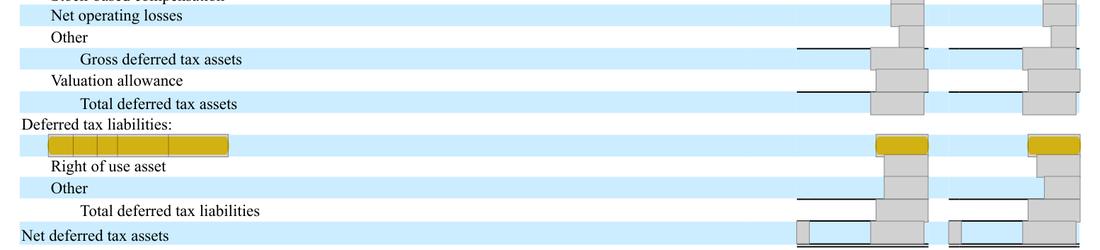

6 further page extracts: screenshot withheld to protect the company’s identity. The rows below say what each shows.
What the filing shows, and what the rule requires
| What the filing shows | What the rule requires |
|---|---|
The note says most undistributed foreign earnings are previously taxed and that the future tax consequences of remitting them are not practicable to determine; it does not say that a deferred tax liability has not been recognized on outside basis differences or on what basis. | A description of the temporary differences of foreign subsidiaries on which no deferred tax liability is recognized (outside basis differences), the event that would make them taxable (remittance or sale), and the unrecognised liability or the statement that its determination is not practicable. |
The rule
ASC 740-30-25-17 and 740-30-50-2 (as amended by ASU 2023-09)
ASC 740-30-25-17; ASU 2023-09
Summary; FASB/IFRS text is copyrighted A description of the temporary differences of foreign subsidiaries on which no deferred tax liability is recognized (outside basis differences), the event that would make them taxable (remittance or sale), and the unrecognised liability or the statement that its determination is not practicable.
Paragraphs: ASC 740-30-25-17, ASU 2023-09, as codified for the fiscal year under review.
Why it applies here. the income-tax topic of the Accounting Standards Codification (ASC), as amended by the 2023 income-tax disclosure update, still requires a description of the types of temporary differences on which a deferred tax liability is not recognized under the foreign-subsidiary exception and of the events that would make them taxable, and the amount of the unrecognised liability or a statement that it is not practicable; the update removed only the cumulative amount of those differences. Without the dropped sentence, the 'not practicable' statement has nothing to attach to, and a reader cannot tell whether the exception is still claimed or whether the [n] liability now covers all foreign earnings.
Why it matters
Readers cannot tell whether the company still applies the indefinite-reinvestment exception, and the remaining 'not practicable' sentence reads as unsupported.
How often the SEC staff raises this. In 1,100 SEC staff comment letters on fiscal 2023 and 2024 Forms 10-K, released January 2025 to October 2026, income taxes drew 23 of the 1,774 numbered comments (1.3%): topic 17 of 25 by frequency.
Exposure
A question for management; if the exception is still applied, the realistic consequence is restoring the sentence in the next Form 10-K.
Our workings
the fiscal 2024 Form 10-K tax note read that the company had not provided for any remaining tax effect of limited outside basis differences of its foreign subsidiaries based upon plans of future reinvestment, followed by the 'not practicable' sentence. The fiscal 2025 note keeps the sentences on previously taxed earnings and on practicability but omits the reinvestment sentence. The deferred tax table still carries a liability for US tax on foreign earnings of [n] (2024: [n]), and the income-tax risk factor still mentions a change in the [wording masked]. Foreign pre-tax income was [n] in 2025.
none is possible; no amount of unrecognised liability or of outside basis difference is given in either year.
| Item | Fiscal 2024 note (Form 10-K 2024 (prior year)) | Fiscal 2025 note (Form 10-K 2025) |
|---|---|---|
| Previously taxed earnings sentence | Given | Given |
| No deferred tax provided on outside basis differences, based on reinvestment plans | Given (Form 10-K 2024 (prior year) p.100) | Absent |
| Unrecognised liability not practicable to determine | Given | Given |
| Deferred tax liability: US tax on foreign earnings | ([n]) at [date] | ([n]) at [date]; [n] - [n] = [n] decrease |
| Foreign pre-tax income | [n] (2024) | [n] (2025) |
Management’s best defense, and our reply
Management would say that after the 2017 tax reform almost all foreign earnings are previously taxed, so the remaining outside basis differences are limited and their tax effect immaterial. They would point out that the deferred tax liability on foreign earnings already captures the main US tax on those earnings. They would add that the 2023 disclosure update removed the cumulative-amount requirement and that the note still states that the tax consequences of remittance are not practicable to determine, which tells readers no liability is recorded. The defense is tenable, which is why this is a question. However, the description of the unrecognised differences is still required, the company gave it last year, and its own risk factor still relies on indefinite reinvestment.
The fix
- Restore: 'We have not provided for the tax effect, if any, of the outside basis differences of our foreign subsidiaries, which we intend to reinvest indefinitely; these would become taxable on a distribution or sale. The determination of the unrecognised deferred tax liability is not practicable.'
Question for the company
Does the company still assert indefinite reinvestment for the outside basis differences of its foreign subsidiaries? If so, why was the sentence removed from the tax note; if not, does the [n] deferred tax liability now cover all taxes expected on remittance, and how does that fit the risk factor's reference to indefinite reinvestment?
Evidence relied on
| # | What it shows | Type | Where |
|---|---|---|---|
| 1 | This year's note keeps the previously-taxed sentence | Document | Form 10-K 2025, page 92 |
| 2 | The 'not practicable' statement remains, with nothing before it saying no liability is recognized | Document | Form 10-K 2025, page 92 |
| 3 | Deferred tax liability on foreign earnings | Document | Form 10-K 2025, page 92 |
| 4 | Risk factor still relies on indefinite reinvestment | Document | Form 10-K 2025, page 39 |
| 5 | Foreign pre-tax income | Document | Form 10-K 2025, page 90 |
| 6 | Prior-year sentence now dropped | Document | Form 10-K 2024 (prior year), page 100 |
Absence check
- Document
- Form 10-K 2025
- Where it would appear
- U.S. tax law generally requires
- What is missing
- the statement that no deferred tax liability is recognized on outside basis differences of foreign subsidiaries because of reinvestment plans, and the event that would make them taxable
- Pages looked at
- p.39 (risk factors), 56-66 (MD&A), [n], 94-97 (tax policy and note)
- Result
- 'outside basis' and 'not provided' have no hits. 'reinvest' and 'indefinite' hit only the risk factor on p.39 and, for 'indefinite', the state credit carryforward sentence on p.92. 'permanently' hits a cybersecurity risk factor on p.35. 'foreign earnings' hits the risk factor, the MD&A tax description, the GILTI policy, the 2024 rate reconciliation and the deferred-tax table; none states whether a liability is recognized on outside basis differences.
Prepared by Pramanex from the company’s public SEC filings, without the company’s involvement, to show how a 10-K Pre-filing Check reads. The company is not named, and nothing on this page is a statement about any identifiable company. Observations are not an audit, review or other attestation or assurance engagement, and not legal advice. An SEC-style question is a question, not a conclusion.
Want this on your own 10-K, before you file?
Start with three free findings on your latest 10-K, or book a fixed-price 10-K Pre-filing Check.
Your next 10-K will be in draft before the audit is done.
Have it read before you file.
Start with three free findings on your latest 10-K, or book a fixed-price 10-K check. Drafts only under NDA, inside your insider trading policy.