1.12 Share-based payment note: no tax benefit, capitalized cost or liability-award amounts are given to explain why equity credits differ from expense by [amount] over three years
Company D · a US-listed cloud communications software company · SEC-style question
In brief
Note 10 gives stock-based compensation expense of [amounts] for 2025, 2024 and 2023, but not the income tax benefit recognized on it or any amount capitalized into software. The equity statement credits additional paid-in capital with [amounts], a net [amount] less than the expense over the three years, and the note says only that some performance awards are liability-classified in accrued expenses. Management is asked for the amounts, or for its view that they are immaterial.
The evidence, as filed
What the filing shows, and what the rule requires
| What the filing shows | What the rule requires |
|---|---|
Expense [n] / [n] / [n] (note and cash-flow add-back); paid-in capital credited [n] / [n] / [n] (equity statement); no tax benefit, no capitalized amount, no liability-award amounts disclosed. | For each of the three years: the total income tax benefit recognized on share-based compensation, the compensation cost capitalized (e.g. into internal-use software), and the amount of liability-classified awards accrued, settled in shares or cash and outstanding, so that the expense reconciles to the equity credit. |
The rule
FASB ASC 718-10-50-1 to 50-2 (incl. 50-2(h)(1): compensation cost, related tax benefit, cost capitalized)
Summary; FASB/IFRS text is copyrighted Disclose share-based arrangement terms, fair-value methods and assumptions, award activity, compensation cost and tax effects, and unrecognised cost with weighted-average recognition period.
Version: Text in force at the date of this review · Source: FASB Accounting Standards Codification, ASC 718-10-50 (as amended to 2025), paraphrased
Why it applies here. the share-based payment standard asks, for each year an income statement is presented, for the total compensation cost recognized, the related tax benefit and the cost capitalized as part of an asset, and for share-based liabilities paid. The gap between expense and equity credit is consistent with liability-classified awards accrued but not yet settled in shares and with capitalization, which are the items not quantified. Whether the omitted amounts are material is a matter only management can show: with a full valuation allowance on United States deferred tax assets the recognized tax benefit may be close to nil, so the point is put as a question.
Why it matters
Readers cannot reconcile the [amount] expense to the [amount] equity credit (or the 2023 gap of [amount]), or see the tax effect of the Company's largest non-cash cost; at most a staff comment asking for the amounts in future filings.
Exposure
A question for management; the realistic consequence, if the amounts are material, is a staff comment and expanded disclosure in future filings, with no restatement.
Our workings
Note 10 shows total stock-based compensation expense of [n] (2025), [n] (2024) and [n] (2023); the cash-flow statement adds back the same amounts. The equity statement credits additional paid-in capital for stock-based compensation with [n]. Note 10 says certain performance-contingent awards are liability-classified and recorded in accrued expenses; Note 4 says capitalized software costs are mainly engineers' salaries and benefits. Neither note gives an amount for the tax benefit on share-based compensation, the cost capitalized, or the liability awards.
expense less equity credit is [n] (2024) and [n] (2023); in 2025 the equity credit exceeds the expense by [n]; over three years [n] of expense has not reached equity.
| Year | Expense (Note 10) | Equity credit (APIC) | Expense less equity credit |
|---|---|---|---|
| 2025 | [n] | [n] | [n] - [n] = -413 |
| 2024 | [n] | [n] | [n] - [n] = [n] |
| 2023 | [n] | [n] | [n] - [n] = [n] |
| Three years | [n] + [n] - [n] = [n] | ||
| Tax benefit recognized on share-based compensation | not given | Absent | |
| Compensation cost capitalized | not given | Absent | |
| Liability-classified awards accrued / settled / outstanding | not given | Absent |
Management’s best defense, and our reply
Management would say that with a full valuation allowance on United States deferred tax assets the recognized tax benefit is close to nil, that the rate reconciliation already shows the stock-based compensation effect, and that capitalized amounts are immaterial within about [amount] of capitalized software a year. They would add that liability-classified awards are a bonus mechanism disclosed by policy, and that disclosure requirements do not apply to immaterial items. That is a credible position for the tax benefit and the capitalized cost, which is why this is a question. However, a nil or small amount is usually stated so that readers know it was considered, the rate-reconciliation line is a different measure, and the three-year gap of [n] between expense and equity credit is not explained anywhere in the report.
The fix
- Add to Note 10, for each year: 'Income tax benefit recognized related to stock-based compensation: $X'; 'Stock-based compensation capitalized in internal-use software: $Y'; and a short roll of liability-classified awards (accrued, settled in shares, settled in cash, outstanding at year end) reconciling expense to the paid-in capital credit.
Question for the company
For 2023 to 2025, what were the income tax benefit recognized on stock-based compensation, the stock-based compensation capitalized into internal-use software, and the liability-classified awards accrued, settled in shares or cash, and outstanding; do these explain the [n] difference between expense and the paid-in capital credit, and does management consider them immaterial?
Evidence relied on
| # | What it shows | Type | Where |
|---|---|---|---|
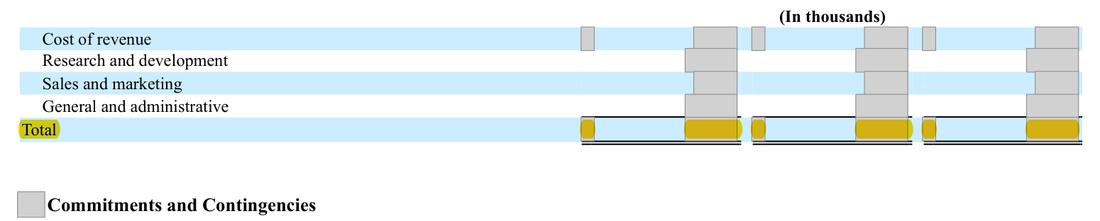
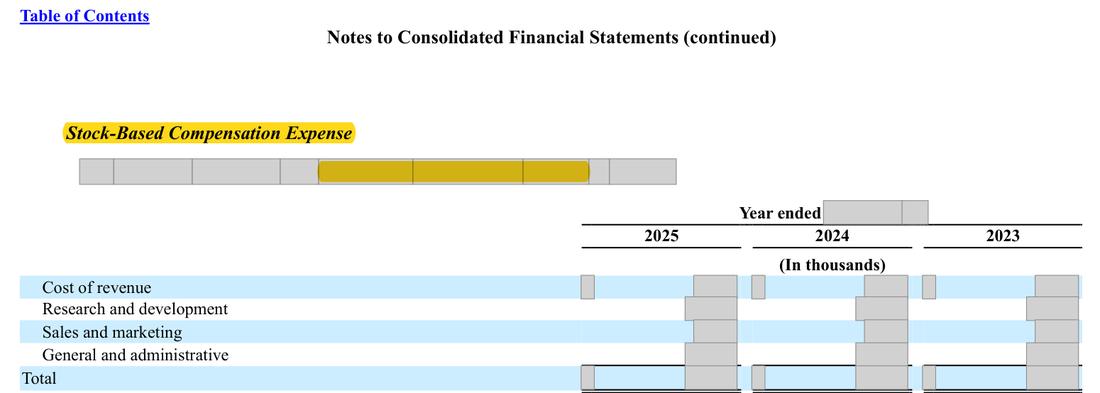
| 1 | Stock-based compensation expense for the three years; no tax benefit or capitalized amount follows | Document | Form 10-K 2025, page 116 |
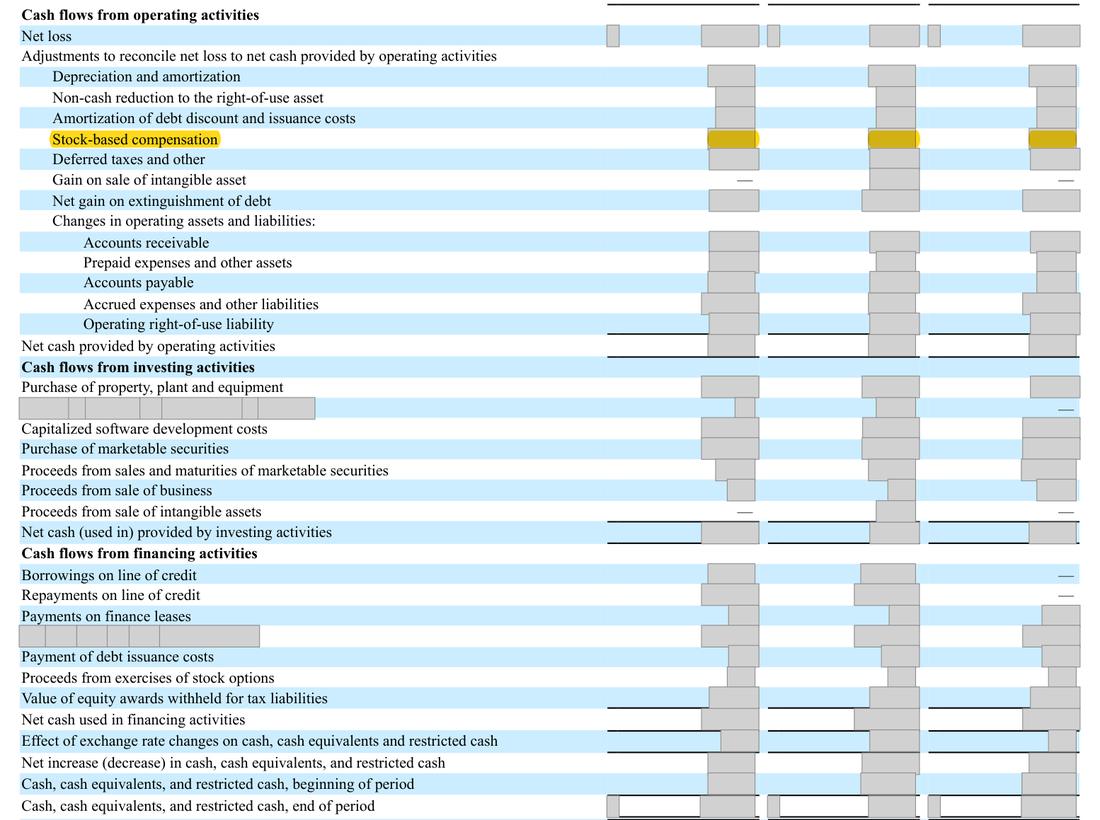
| 2 | The cash-flow add-back equals the expense | Document | Form 10-K 2025, page 88 |
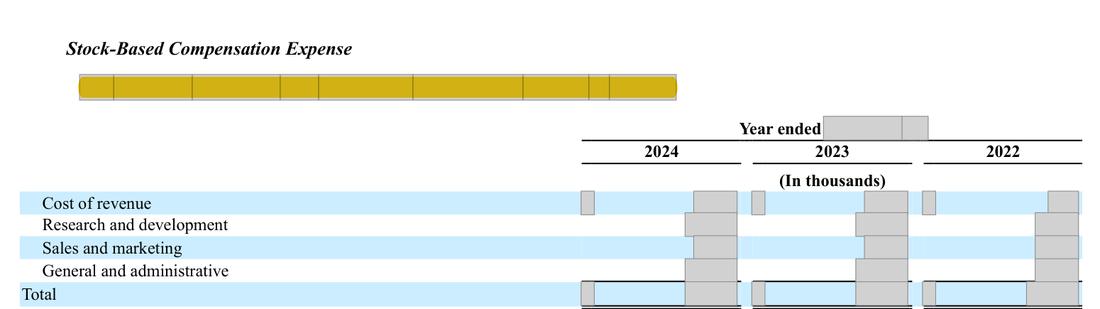
| 3 | 2025 credit to additional paid-in capital for stock-based compensation: [n] | Document | Form 10-K 2025, page 87 |
| 4 | 2024 credit to additional paid-in capital: [n] | Document | Form 10-K 2025, page 87 |
| 5 | 2023 credit to additional paid-in capital: [n] | Document | Form 10-K 2025, page 87 |
| 6 | Some awards are liability-classified, but no amounts are given | Document | Form 10-K 2025, page 115 |
| 7 | Capitalized software costs are mainly staff costs, which may include share-based pay | Document | Form 10-K 2025, page 105 |
Absence check
- Document
- Form 10-K 2025
- Where it would appear
- Stock-Based Compensation Expense
- What is missing
- the income tax benefit recognized on share-based compensation, the cost capitalized, and the amounts of liability-classified awards, for each of the three years
- Pages looked at
- p.87, [n], 114-116 (images); whole 10-K text
- Result
- 'capitalized stock-based', 'stock-based compensation capitalized' and 'share-based liabilities' do not occur. 'liability-based awards' hits p.97 and [n], the policy sentences, with no amounts. 'tax benefit' hits p.64, [n] (MD&A and income-tax discussion), [n] and [n] (income tax benefit caption and policy), 119-124 (income-tax note: rate reconciliation line for stock-based compensation and the deferred tax asset, not the recognized tax benefit on share-based compensation).
Prepared by Pramanex from the company’s public SEC filings, without the company’s involvement, to show how a 10-K Pre-filing Check reads. The company is not named, and nothing on this page is a statement about any identifiable company. Observations are not an audit, review or other attestation or assurance engagement, and not legal advice. An SEC-style question is a question, not a conclusion.
Want this on your own 10-K, before you file?
Start with three free findings on your latest 10-K, or book a fixed-price 10-K Pre-filing Check.
Your next 10-K will be in draft before the audit is done.
Have it read before you file.
Start with three free findings on your latest 10-K, or book a fixed-price 10-K check. Drafts only under NDA, inside your insider trading policy.