4.04 The MD&A names the cost increases that turned venue revenue growth into a lower Adjusted EBITDA but gives no amounts for them
Company A · a US-listed consumer leisure company · SEC-style question
In brief
Venue revenues before cost reimbursements rose by [amount] in fiscal 2025, yet venue Adjusted EBITDA fell by [amount]. The management's discussion and analysis (MD&A) puts this down to 'increased labor, advertising, benefits, insurance, and other costs' with no amounts, while the segment note shows venue operations costs up [n] and advertising up [n]. Item 303(b) of Regulation S-K asks for the reasons for material changes in quantitative and qualitative terms, so the question is what each named cost contributed.
The evidence, as filed
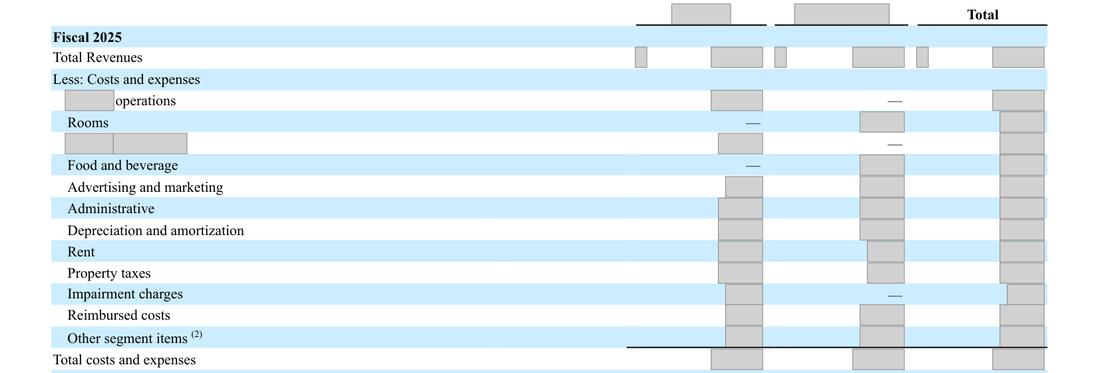
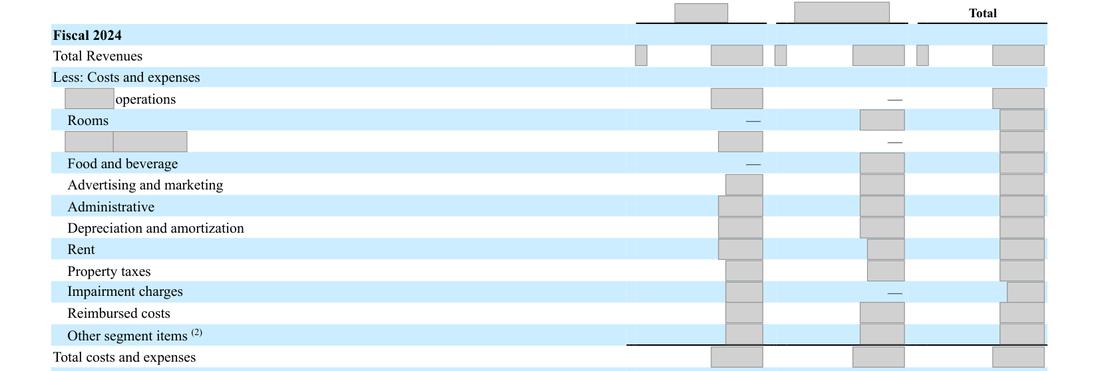
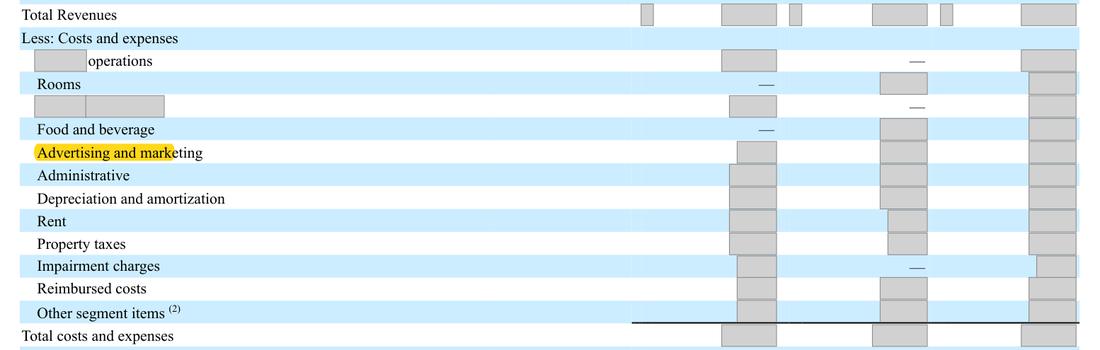
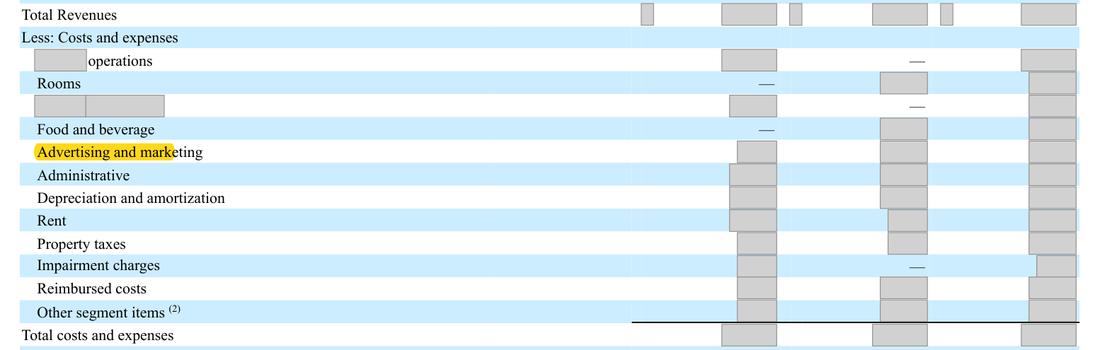
5 further page extracts: screenshot withheld to protect the company’s identity. The rows below say what each shows.
What the filing shows, and what the rule requires
| What the filing shows | What the rule requires |
|---|---|
Revenue drivers quantified (Admission price, ancillary spend per visitor, extra operating days), but the cost increases that offset them described only by category: 'increased labor, advertising, benefits, insurance, and other costs'. | The principal cost drivers quantified to the extent material, for example the increase in venue labor and benefits costs and in insurance, so that the change from [amount] of revenue growth to a [amount] fall in Adjusted EBITDA can be followed. |
The rule
Regulation S-K Item 303(b) (full fiscal years)
Where the financial statements reflect material changes from period-to-period in one or more line items, including where material changes within a line item offset one another, describe the underlying reasons for these material changes in quantitative and qualitative terms.
Version: Text in force at the date of this review · Source: 17 CFR 229.303(b), Regulation S-K Item 303 (eCFR, as amended to 2026)
Why it applies here. the cost growth is the decisive, offsetting change in the venue result, which Item 303(b) asks to be explained in quantitative as well as qualitative terms. Whether the amounts are material individually, and available, is for management to answer; hence a question.
Why it matters
Results discussion that names offsetting factors without amounts is the most frequent subject of staff comments on MD&A; a comment would ask for quantification in future filings.
Exposure
A question for management; a staff comment, if any, would ask for added disclosure in future filings.
Our workings
the venue table on p.34 shows revenues before cost reimbursements of [n] against [n] ($ million); the segment table on p.40 shows venue Adjusted EBITDA of [n] against [n]. The text on printed pages 34-35 and 40 quantifies revenue drivers and the depreciation, rent and impairment movements, but describes the offsetting cost growth only as increased labor, advertising, benefits, insurance and other costs. The segment note (printed pages 82-83) shows venue operations costs of [n] against [n] and advertising and marketing of [n] against [n] ($ thousand); labor, benefits and insurance are not shown separately anywhere. The risk factors call wages and benefits two of the company's most significant costs.
the costs inside venue Adjusted EBITDA grew by about [amount] against revenue growth of [amount].
| Venues | Fiscal 2025 | Fiscal 2024 | Change |
|---|---|---|---|
| Revenues before cost reimbursements ($ million) | [n] | [n] | [n] - [n] = [n] |
| Adjusted EBITDA ($ million) | [n] | [n] | [n] - [n] = -[n] |
| Cost growth inside Adjusted EBITDA ($ million) | [n] + [n] = [n] | ||
| Venue operations costs ($ thousand) | [n] | [n] | [n] - [n] = [n] |
| Advertising and marketing ($ thousand) | [n] | [n] | [n] - [n] = [n] |
Management’s best defense, and our reply
The MD&A quantifies the main revenue drivers in detail (Admission price, ancillary spend, extra operating days) as well as depreciation, rent and impairment, and the segment note under the new segment-reporting standard sets out each significant venue expense category, so a reader can see where costs rose. Labor, benefits and insurance are spread across several expense lines and are each individually modest, and the staff reviewed this 10-K in [date] without an MD&A comment.
The fix
- Add, for example: 'Venue operating costs increased $X million, including $Y million of higher hourly wages and benefits, $Z million of higher insurance costs and [amount] of higher advertising, partially offset by ...'.
Question for the company
What did the increases in venue labor, benefits, insurance, advertising and other costs each contribute to the [amount] fall in venue Adjusted EBITDA in fiscal 2025, and will future filings quantify the principal cost drivers where material?
Evidence relied on
| # | What it shows | Type | Where |
|---|---|---|---|
| 1 | Venue revenues before cost reimbursements rose by [amount] | Document | Form 10-K 2025, page 34 |
| 2 | The cost drivers are named without amounts | Document | Form 10-K 2025, page 40 |
| 3 | Venue Adjusted EBITDA fell by [amount] | Document | Form 10-K 2025, page 40 |
| 4 | Venue operations costs, fiscal 2025 (segment note) | Document | Form 10-K 2025, page 82 |
| 5 | Venue operations costs, fiscal 2024 (segment note) | Document | Form 10-K 2025, page 83 |
| 6 | Venue advertising and marketing, fiscal 2025 | Document | Form 10-K 2025, page 82 |
| 7 | Venue advertising and marketing, fiscal 2024 | Document | Form 10-K 2025, page 83 |
| 8 | The risk factors identify wages and benefits as among the largest costs | Document | Form 10-K 2025, page 13 |
Absence check
- Document
- Form 10-K 2025
- Where it would appear
- Our venue division Adjusted EBITDA decreased
- What is missing
- amounts for the increased labor, benefits, insurance and other costs named as the cause of the fall in venue Adjusted EBITDA
- Pages looked at
- p.32-41 (results, venues, Adjusted EBITDA) and p.82-83 (segment note)
- Result
- 'labor costs' hits p.4, [n] (Item 1 and risk factors: general statements) and p.36 (Ancillary pricing in response to food and labor costs, no amount); 'insurance costs' hits p.13 (risk factor, no amount). 'increase in labor' and 'benefit costs' do not hit. No hit gives an amount for fiscal 2025.
Prepared by Pramanex from the company’s public SEC filings, without the company’s involvement, to show how a 10-K Pre-filing Check reads. The company is not named, and nothing on this page is a statement about any identifiable company. Observations are not an audit, review or other attestation or assurance engagement, and not legal advice. An SEC-style question is a question, not a conclusion.
Want this on your own 10-K, before you file?
Start with three free findings on your latest 10-K, or book a fixed-price 10-K Pre-filing Check.
Your next 10-K will be in draft before the audit is done.
Have it read before you file.
Start with three free findings on your latest 10-K, or book a fixed-price 10-K check. Drafts only under NDA, inside your insider trading policy.