1.20 Inventories note: the circumstances of the 2024 reversal of [amount] of write-downs are not given
UK Company C · an AIM-quoted scientific instruments group · Regulator-style question
In brief
The inventories note in the 2024 report, repeated as the comparative in 2025, says [amount] of earlier inventory write-downs was reversed in 2024 but does not say why. IAS 2 paragraph 36(g) asks for the circumstances or events that led to a reversal, while IAS 1 paragraph 31 lets a company omit a specific disclosure that is not material; the [amount] is below the auditor's 2024 group materiality of [amount]. The question is what caused the reversal and whether the Board judged the explanation immaterial.
The evidence, as filed
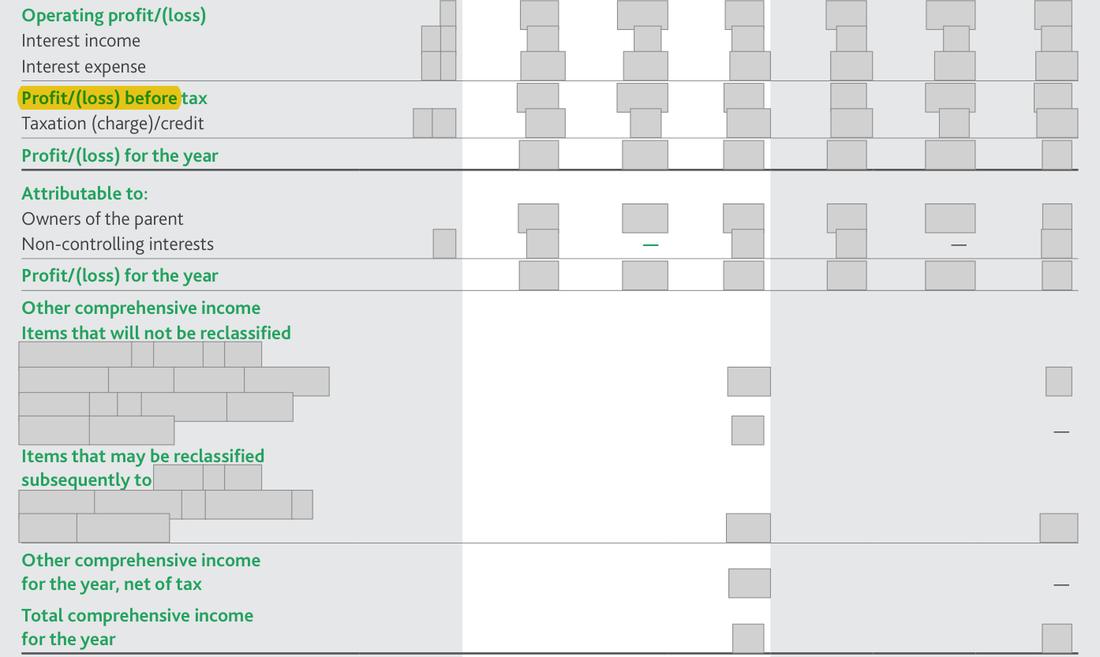
Further pages withheld to protect the company’s identity (three): Annual Report 2024, page 84; Annual Report 2025, page 85; Annual Report 2024, page 59. Their wording or layout could lead back to the company even with names and figures masked; the evidence list below records what each page shows.
Names, figures, dates, logos and any wording that could be searched back to the company are boxed out in grey; the point is highlighted in yellow.
What the report shows, and what the rule requires
| What the annual report shows | What the rule requires |
|---|---|
| What the annual report shows Note 18: 'an amount of [amount] ... [wording masked]' (2024); no reason given in either report. | What the rule requires Either one sentence giving the events that led to the 2024 reversal, or a Board judgement that the explanation is not material under IAS 1 paragraph 31. |
What we checked: The inventories note and accounting policy in both reports and a search of both reports for the reversal.
The rule
IAS 2 paragraph 36(g)
Version relied on: UK-adopted international accounting standards (UK Endorsement Board), as in force for financial years beginning in or after January 2025
The accounts must explain the circumstances or events that led to the reversal of an inventory write-down.
IAS 1 Presentation of Financial Statements, paragraph 31
Version relied on: UK-adopted international accounting standards (UK Endorsement Board), as in force for financial years beginning in or after January 2025
A specific disclosure need not be given if the information it would provide is not material.
Why it applies here: the omission is real, but at this size the company can fairly rely on IAS 1 paragraph 31, so the point is put as a question rather than as a breach.
Why it matters
Readers cannot tell whether the reversal reflects recovered prices, the sale or use of stock previously written off, or a change of estimate; at [amount] the effect on the reading of the accounts is small.
Exposure
A question on a small disclosure; no penalty applies.
Our workings
the 2024 report's inventories note says the [amount] of inventories expensed included [amount] of write-downs and [amount] '[wording masked]'; the 2025 report repeats '(2024: [amount])' as the comparative and reports no reversal in 2025. Neither report says why the write-downs reversed. The auditor's 2024 report sets group materiality at [amount]. Law: IAS 2 paragraph 36(g) requires disclosure of 'the circumstances or events that led to the reversal'; IAS 1 paragraph 31 states that an entity need not provide a specific disclosure required by an IFRS if the information is not material, even where the IFRS lists it.
[n] / [n] = [n]% of 2024 profit before tax; the reversal was half the year's write-downs ([n] / [n] = 50%); the reversal is below that [amount] materiality.
| Item | Computation | Result |
|---|---|---|
| Reversal against 2024 profit before tax | [n] / [n] = [n]% | [n]% |
| Reversal against 2024 write-downs | [n] / [n] = 50% | 50% |
| Reversal against auditor's 2024 group materiality | [n] < [n] | below |
Management’s best defence, and our reply
The finance team will say the reversal is immaterial - [amount] against inventories of [amount], an inventory expense of [amount] and the auditor's group materiality of [amount] - and that IAS 1 paragraph 31 expressly relieves a specific IFRS disclosure that is not material, even one listed in the standard. They may add that reversals arise routinely when old stock is sold. That defence is credible at this size, which is why the point is a question: the requirement in paragraph 36(g) is explicit and one sentence would meet it, but the Board may properly have judged it immaterial.
The fix
- If the explanation is judged useful, add to note [n]: 'The 2024 reversal of [amount] arose because [previously written-down items were sold or used / net realisable values recovered].'
Question for the company
What circumstances or events led to the 2024 reversal of [amount] of inventory write-downs, and did the Board judge that explanation immaterial under IAS 1 paragraph 31?
Evidence relied on
| # | What it shows | Type | Where |
|---|---|---|---|
| 1 | 2024 reversal of write-downs [n], no reason given | Document | Annual Report 2024, page 84 |
| 2 | 2024 write-downs [n] | Document | Annual Report 2024, page 84 |
| 3 | 2025 report repeats the 2024 reversal as comparative, still without circumstances | Document | Annual Report 2025, page 85 |
| 4 | 2024 profit before tax [n] | Document | Annual Report 2024, page 67 |
| 5 | The auditor's 2024 group materiality, against which the [amount] reversal is small | Document | Annual Report 2024, page 59 |
Absence check
- Document
- Annual Report 2025
- Where it would appear
- [n]. Inventories
- What is missing
- the circumstances or events that led to the 2024 reversal of inventory write-downs
- Pages looked at
- Annual Report [amount].73, [n]; p.73, [n]
- Result
- In the 2025 report 'reversal' hits p.19 (restatement narrative), [n] and [n] (deferred tax wording), [n] ([wording masked] [n] (the 2024 amount only); 'write-down' hits p.85 only (amounts); 'obsole' hits p.42 (risk of products becoming obsolete) and [n] (development spend on obsolete parts); 'net realisable' hits p.73 (the policy definition). None explains the reversal. The 2024 report gives the equivalent hits (p.73, [n]; [n]) with no explanation either.
Prepared by Pramanex from the company’s published annual reports, without the company’s involvement, to show how an annual report review reads. The company is not named, and nothing on this page is a statement about any identifiable company. Observations are not an audit, review or other assurance engagement, and not legal advice. A regulator-style question is a question, not a conclusion.
Want this on your own annual report, before it is published?
Start with three free findings on your latest published annual report, or talk to us about a fixed-fee pre-publication review.
Your annual report will be in draft before the year-end audit.
Have it read before it is published.
Under NDA, with our reviewer on your insider list under UK MAR.