1.19 Acquisition payables ([n]; 2024: [n]): are they measured at fair value, and if so at which level and on what inputs?
UK Company C · an AIM-quoted scientific instruments group · Regulator-style question
In brief
Note 24 lists payables relating to acquisitions of [n] (2024: [n]) under financial liabilities at fair value, but the fair-value hierarchy paragraph gives a level only to the interest rate swaps and currency hedges, in both years. The key-judgements note says such consideration is recorded at present value and the discount is then unwound, and the 2024 report explained the [n] [subsidiary] balance that way. The 2025 balance includes a [subsidiary] do [place] earn-out capped at [n] with no forecast earnings or discount rate given. Which measurement basis applies, and if it is fair value, at which level?
The evidence, as filed
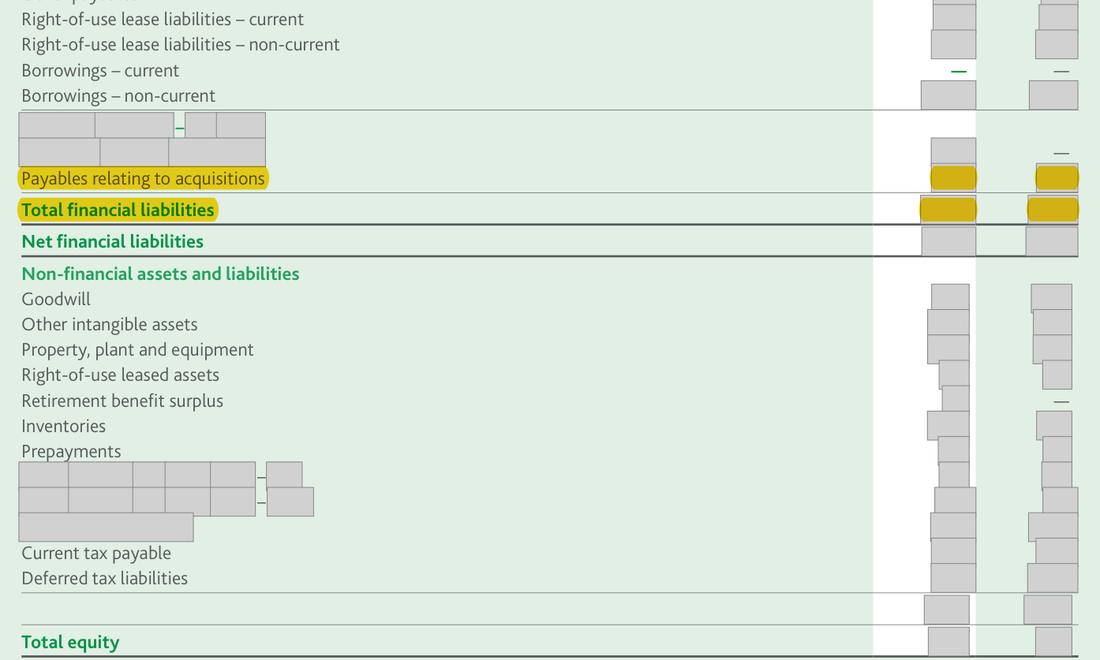
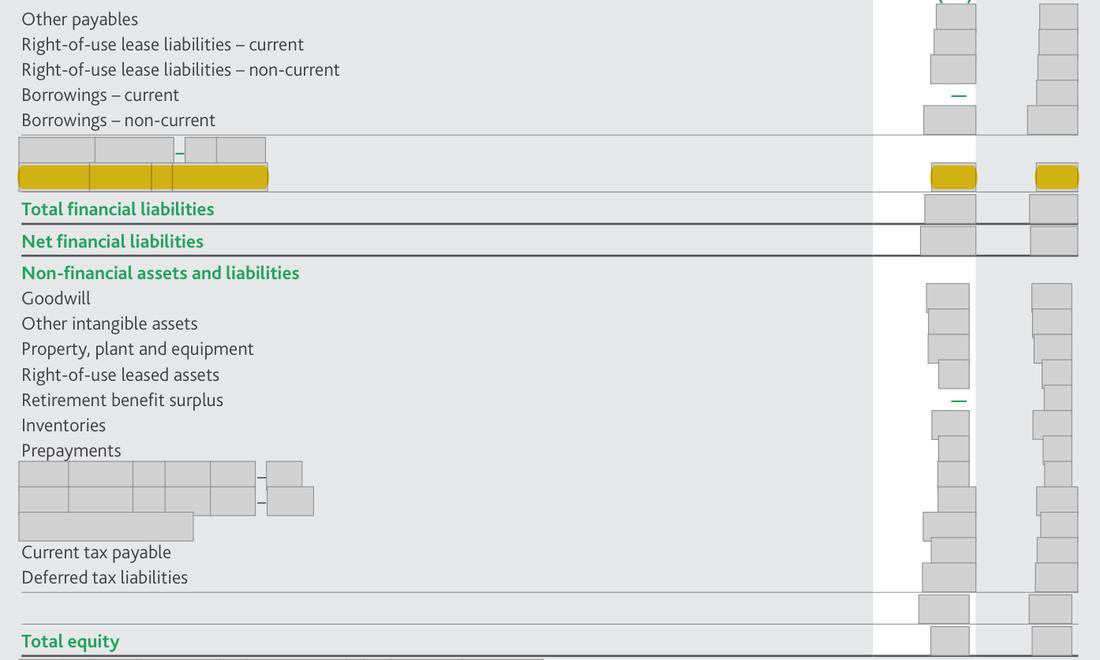
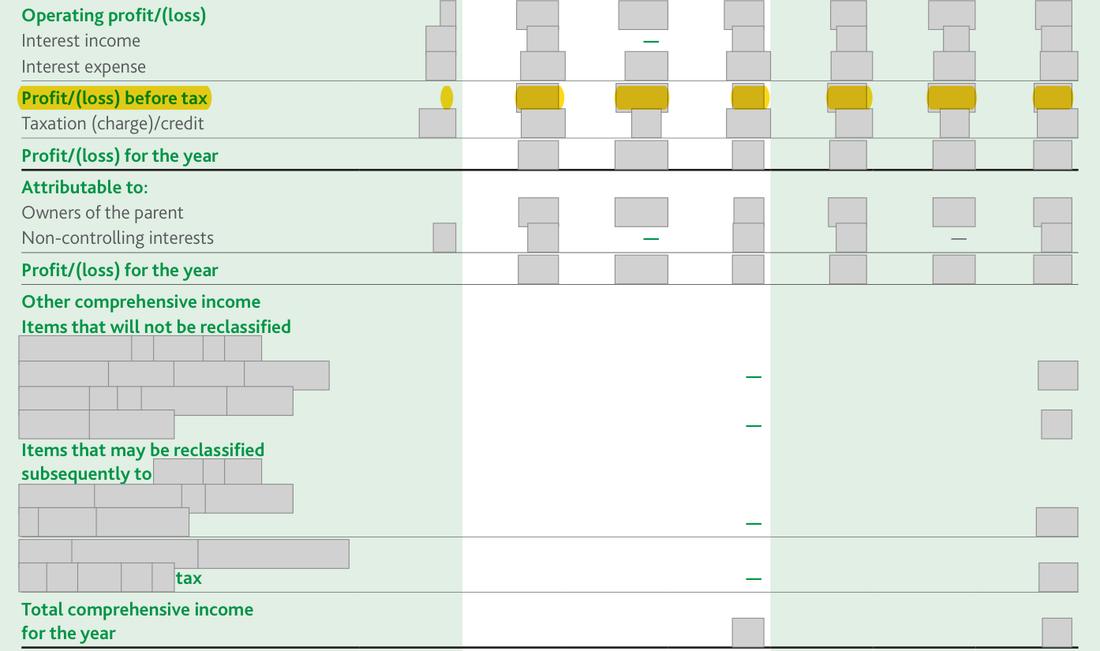
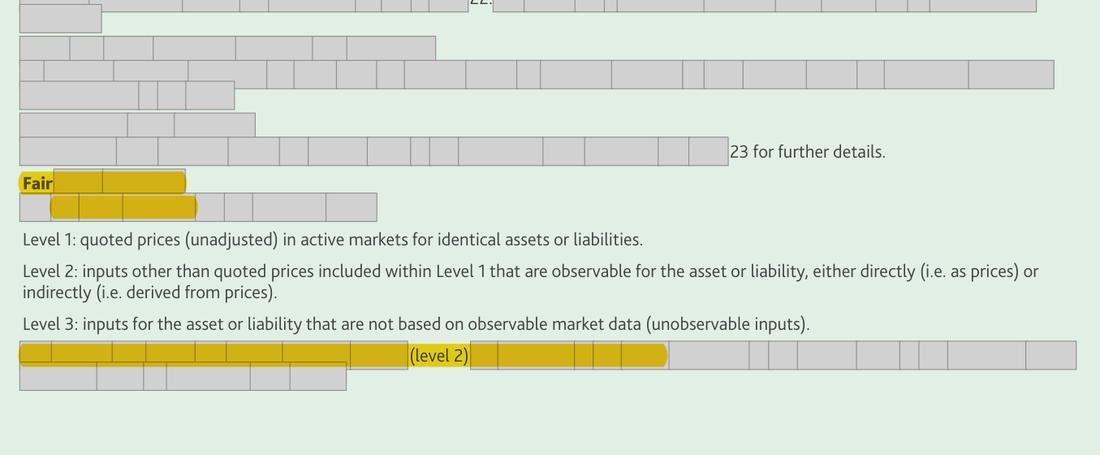

Annual Report 2024, page 88 · Prior year: The 2024 report carried the [subsidiary] earn-out of [n] with the same hierarchy paragraph, assigning a level only to swaps and hedges, but its acquisitions note gave the earn-out formula, the discounting and a sensitivity.
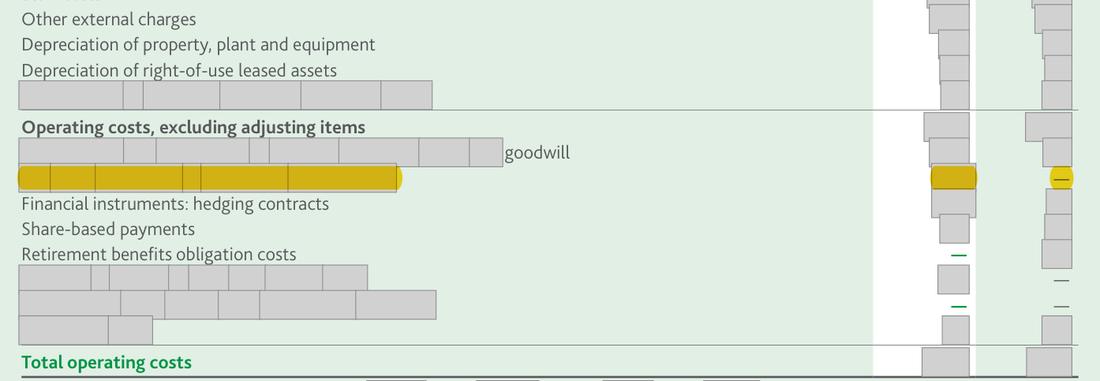
Further pages withheld to protect the company’s identity (three): Annual Report 2024, page 94; Annual Report 2025, page 70; Annual Report 2025, page 95. Their wording or layout could lead back to the company even with names and figures masked; the evidence list below records what each page shows.
Names, figures, dates, logos and any wording that could be searched back to the company are boxed out in grey; the point is highlighted in yellow.
What the report shows, and what the rule requires
| What the annual report shows | What the rule requires |
|---|---|
| What the annual report shows Payables relating to acquisitions ([n]) (2024: ([n])) shown under 'Financial liabilities - fair value'; hierarchy level given only for swaps and hedges; key-judgements note: present value at acquisition, discount then unwound; no quantified inputs for the 2025 earn-out estimate. | What the rule requires Either a statement that the acquisition payables are carried at amortised cost (present value with the discount unwound) and a matching category in note [n], or, if they are remeasured at fair value, their level in the hierarchy and, for a level 3 measurement, the valuation technique and quantified significant inputs (forecast earnings, discount rate) for the earn-out. |
The rule
IFRS 13 Fair Value Measurement, paragraph 93(b)
Version relied on: UK-adopted international accounting standards (UK Endorsement Board), as in force for financial years beginning in or after January 2025
Every fair value measurement must be placed in the fair value hierarchy (Level 1, 2 or 3) and that level disclosed.
IFRS 13, paragraph 93(d)
Version relied on: UK-adopted international accounting standards (UK Endorsement Board), as in force for financial years beginning in or after January 2025
For Level 3 measurements, the accounts must give quantitative information about the significant unobservable inputs used.
IFRS 3 Business Combinations, paragraph 58(b)(i)
Version relied on: UK-adopted international accounting standards (UK Endorsement Board), as in force for financial years beginning in or after January 2025
Contingent consideration within the scope of IFRS 9 is remeasured at fair value at each reporting date, with changes taken to profit or loss.
Why it applies here: the report describes both bases; if the liabilities are remeasured at fair value the level and the 2025 inputs are missing, and if they are carried at amortised cost the note [n] category is mislabelled.
Why it matters
A reader cannot tell whether the acquisition payables are remeasured to fair value each year (and on what inputs) or carried at a discounted amount, although the release of one such payable added [n] to 2025 profit.
Exposure
None while the point is a question; if the payables are remeasured at fair value, the level and inputs would be added in the next report.
Our workings
note [n] places payables relating to acquisitions of [n] (2024: [n]) under financial liabilities at fair value and then assigns level 2 only to [wording masked]; the 2024 report has the same paragraph. The key-judgements note says contingent consideration is [wording masked] acquisition date and 'the discount will be unwound', and the 2024 acquisitions note says the [subsidiary] balance rose by [n] to [n] through the unwinding of the discount and gives a sensitivity ([n] of 2025 EBIT changes the payable by [n] after discounting). In 2025 the [subsidiary] payable was released to profit (note 5 calls it a '[wording masked]'); the new [n] balance includes an earn-out on [subsidiary] do [place]'s future earnings capped at [n]. Law: contingent consideration in a business combination that is a financial liability is measured at fair value at each reporting date (IFRS 3 paragraph 58(b)(i)), and each class measured at fair value after initial recognition needs its hierarchy level and, for level 3, quantified significant unobservable inputs (IFRS 13 paragraph 93(b) and (d)).
Only the company can say which, so this is put as a question.
| Item | Figures | Result |
|---|---|---|
| [subsidiary] payable released to profit in 2025 | [n] / [n] = [n]% | of profit before tax |
| Acquisition payables at [date] (note [n]) | [n] + [n] = [n] | current plus non-current |
| Share of total financial liabilities | [n] / [n] = [n]% | |
| [subsidiary] payable in 2024 (2024 report) | [n] + [n] = [n] | discount unwound, not remeasured |
| [subsidiary] sensitivity (2024 report) | [n] x 6 = [n] undiscounted; [n] after discounting | change in payable per [n] of 2025 EBIT (6:1 ratio) |
| [subsidiary] do [place] earn-out (note [n]) | [n]% x [n] x (average adjusted EBIT - BRL16.1m), capped at [n] | maximum earn-out [n] |
Management’s best defence, and our reply
The company could say the payables are carried at the present value of expected payments with the discount unwound, as its key-judgements note says, so they are not recurring fair value measurements and IFRS 13 paragraph 93 does not apply; the 'fair value' heading in note [n] is a loose label. It could add that the amounts are small ([n] of [n] financial liabilities), that the 2024 report gave the formula, the discounting and a sensitivity, and that the 2025 note gives the earn-out formula and cap. The answer: contingent consideration from a business combination must be remeasured at fair value at each reporting date, and the release of the [subsidiary] payable was presented as a fair value movement of [n], [n]% of profit before tax; the report therefore describes two bases, which only the company can reconcile. The defence is credible enough that the point is a question, not a finding.
The fix
- State in note [n] the measurement basis of payables relating to acquisitions; if fair value, add 'Payables relating to acquisitions are level 3 measurements, estimated as the present value of expected payments using forecast adjusted EBIT of [x] and a discount rate of [y]%'; if amortised cost, move them to the amortised-cost category.
Question for the company
Are the payables relating to acquisitions ([n]; 2024: [n]) remeasured at fair value at each reporting date, as note [n] classifies them, or carried at present value with the discount unwound, as the key-judgements note and the 2024 acquisitions note describe? If at fair value, within which level of the hierarchy do they fall, and what forecast earnings and discount rate underlie the [subsidiary] do [place] earn-out estimate at [date]?
Evidence relied on
| # | What it shows | Type | Where |
|---|---|---|---|
| 1 | Acquisition payables listed under financial liabilities at fair value, both years | Document | Annual Report 2025, page 91 |
| 2 | Total financial liabilities used for the [n]% share | Document | Annual Report 2025, page 91 |
| 3 | The only level assigned covers derivatives | Document | Annual Report 2025, page 90 |
| 4 | Key-judgements note describes a present-value, discount-unwinding measurement | Document | Annual Report 2025, page 70 |
| 5 | The 2025 payable includes an earn-out on the acquired company's future earnings | Document | Annual Report 2025, page 95 |
| 6 | The 2024 liability was released in 2025 | Document | Annual Report 2025, page 95 |
| 7 | Note 5 labels the [n] release a fair value movement | Document | Annual Report 2025, page 77 |
| 8 | Statutory profit before tax of [n] against which the [n] credit is measured | Document | Annual Report 2025, page 65 |
| 9 | 2024 report: the [subsidiary] balance moved by unwinding the discount, from [n] at acquisition | Document | Annual Report 2024, page 94 |
| 10 | 2024 report: contingent consideration recognised at acquisition | Document | Annual Report 2024, page 94 |
| 11 | 2024 report gave a sensitivity for the earn-out estimate | Document | Annual Report 2024, page 94 |
| 12 | Policy: contingent consideration is a recurring fair-value measurement, so the Level 3 reconciliation applies | Document | Annual Report 2025, page 74 |
| 13 | The 2025 Level 3 remeasurement the missing reconciliation would show | Document | Annual Report 2025, page 95 |
| 14 | The [amount] gain recognised in operating profit ([n]% of 2025 profit before tax of [amount]) | Document | Annual Report 2025, page 77 |
| 15 | 2024 report: acquisition payables also carried at fair value | Document | Annual Report 2024, page 89 |
| 16 | 2024 report: the hierarchy statement again covers only swaps and hedges | Document | Annual Report 2024, page 88 |
Absence check
- Document
- Annual Report 2025
- Where it would appear
- Fair value hierarchy
- What is missing
- the fair-value level of payables relating to acquisitions and quantified inputs for the 2025 earn-out estimate
- Pages looked at
- p.70 (key judgements), p.73-74 (financial instrument policies), p.90-91 (note [n]), p.95 (note [n]); Annual Report [amount].88 and [n]
- Result
- 'Level 3', 'unobservable' and 'fair value hierarchy' hit only p.90, where they define the three levels. 'level 2' hits p.90 (definition, and the swaps and hedges) and p.61 ('CGU level 2026 budgets' in the auditor's report). 'unwound' hits p.20 and [n] (the [subsidiary] discount had partially unwound by [date]), p.70 (the key-judgements note: the discount is unwound as payment approaches) and p.21 (an advance payment that unwound in cash conversion). None assigns a level, a discount rate or forecast earnings to the acquisition payables.
Prepared by Pramanex from the company’s published annual reports, without the company’s involvement, to show how an annual report review reads. The company is not named, and nothing on this page is a statement about any identifiable company. Observations are not an audit, review or other assurance engagement, and not legal advice. A regulator-style question is a question, not a conclusion.
Want this on your own annual report, before it is published?
Start with three free findings on your latest published annual report, or talk to us about a fixed-fee pre-publication review.
Your annual report will be in draft before the year-end audit.
Have it read before it is published.
Under NDA, with our reviewer on your insider list under UK MAR.