1.06 The operating costs note totals [n], not the [n] in the income statement: two adjusting-item lines differ from note 4
UK Company C · an AIM-quoted scientific instruments group · Compliance or disclosure gap
In brief
The income statement shows 2025 operating costs of [n] ([n] before adjusting items plus [n] adjusting items). Note 5, which analyses those costs, totals [n]. It gives amortisation and impairment of acquired intangibles and goodwill as [n] and acquisition costs as [n], where note 4 gives [n] and [n], and note 8 and the goodwill and intangible assets notes also support [n]. The 2024 column agrees.
The evidence, as filed

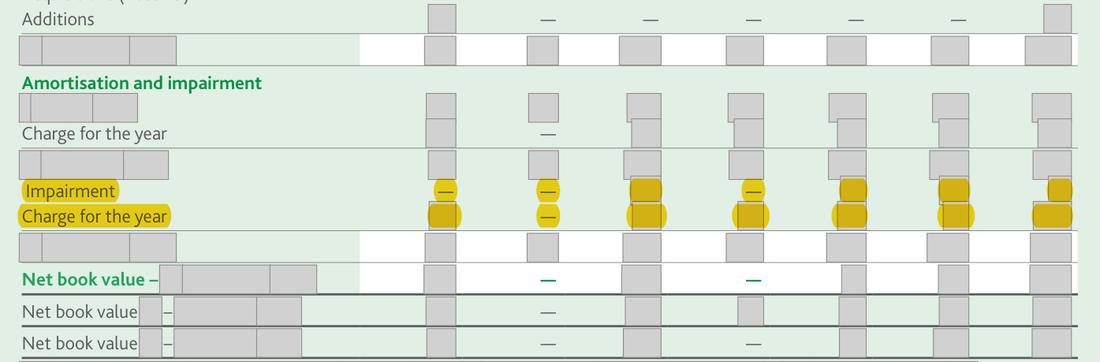
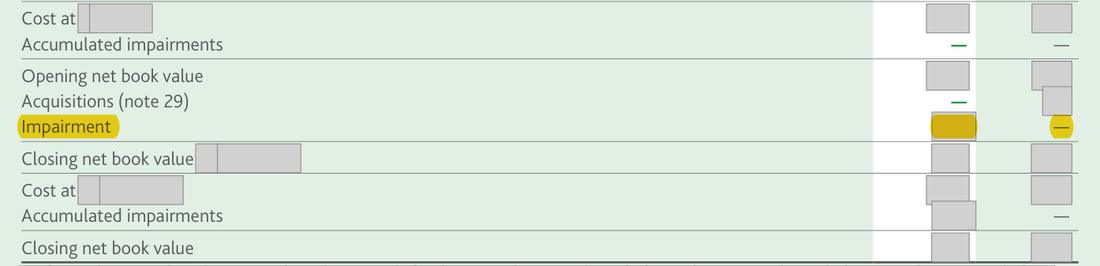
Further pages withheld to protect the company’s identity (two): Annual Report 2025, page 77; Annual Report 2025, page 79. Their wording or layout could lead back to the company even with names and figures masked; the evidence list below records what each page shows.
Names, figures, dates, logos and any wording that could be searched back to the company are boxed out in grey; the point is highlighted in yellow.
What the report shows, and what the rule requires
| What the annual report shows | What the rule requires |
|---|---|
| What the annual report shows Note 5: amortisation and impairment [n]; acquisition costs [n]; total operating costs [n]. | What the rule requires Note 5: amortisation and impairment [n]; acquisition costs [n]; total operating costs [n], agreeing with the income statement and note 4. |
The rule
IAS 1 Presentation of Financial Statements, paragraph 99
Version relied on: UK-adopted international accounting standards (UK Endorsement Board), as in force for financial years beginning in or after January 2025
Expenses in profit or loss must be analysed by nature or by function, whichever gives reliable and more relevant information.
IAS 1, paragraph 97
Version relied on: UK-adopted international accounting standards (UK Endorsement Board), as in force for financial years beginning in or after January 2025
Material items of income or expense must have their nature and amount disclosed separately.
Why it applies here: note 5 was not updated for late changes to two adjusting items; the income statement and note 4 are the consistent pair.
Why it matters
- The audited analysis of the group's largest expense line does not add to the income statement.
- A reader reconciling notes 4 and 5 cannot tell which acquisition-cost figure ([amounts]) is right.
The audited analysis of the group's largest expense line does not add to the income statement, and a reader reconciling the adjusting items between notes 4 and 5 cannot tell which acquisition-cost figure ([n] or [n]) is right.
Exposure
A Corporate Reporting Review enquiry could ask for the analysis to be corrected in the next report; no revision of the accounts is likely as the primary statements are right.
Our workings
the income statement prints operating costs of ([n]) adjusted, ([n]) adjusting items and ([n]) total for 2025. Note 4 lists adjusting items in operating profit totalling [n], including amortisation and impairment of [n] and acquisition costs of [n]. Note 8 also gives [n]. Note 5 repeats the [n] subtotal and the same adjusting-item lines, but with [n] and [n], and totals [n].
the note 5 adjusting lines add to [n] and [n] + [n] = [n], while [n] + [n] = [n]; the gap of [n] is [n] on amortisation and impairment and [n] on acquisition costs. The intangible and goodwill notes support [n]: acquired amortisation [n] - [n] = [n], plus intangible impairment [n] and goodwill impairment [n].
| Test | Figures | Result |
|---|---|---|
| Note 5 adjusting lines | [n] - [n] - [n] + [n] + [n] + [n] = [n] | [n] |
| Note 5 total | [n] + [n] = [n] | [n] printed |
| Income statement total | [n] + [n] = [n] | [n] printed |
| Amortisation and impairment per notes [n] and [n] | [n] - [n] = [n]; [n] + [n] + [n] = [n] | note 5 short by [n] - [n] = [n] |
| Acquisition costs, note 4 vs note 5 | [n] - [n] = [n] | note 5 short by [n] |
| Reported (note 5 total) | [n] | |
| Correct (income statement) | [n] + [n] = [n] | |
| Difference | [n] - [n] = [n] | [n] / [n] = [n]% of profit before tax |
Management’s best defence, and our reply
The company could say that the income statement and note 4 are right, that note 5 is a supporting analysis whose subtotal before adjusting items ([n]) agrees, and that the [n] on amortisation is rounding of a figure close to [n]. It might also say part of the acquisition costs is shown within other external charges. The answer: the same amortisation figure is printed as [n] in notes 4 and 8 and is built up from notes [n] and [n] to [n], so rounding does not explain a different figure in note 5; if [n] of acquisition costs were in other external charges, the [n] subtotal before adjusting items would itself be overstated. Either way the note's total of [n] does not equal the [n] it analyses.
The fix
- Reprint note 5 with amortisation and impairment of [n], acquisition costs of [n] and total operating costs of [n] (or, if [n] of acquisition costs sits in another line, show where and keep the total at [n]).
Evidence relied on
| # | What it shows | Type | Where |
|---|---|---|---|
| 1 | Income statement operating costs: [n] adjusted, [n] adjusting items, [n] total for 2025 | Document | Annual Report 2025, page 65 |
| 2 | Note 4: acquisition costs [n] within adjusting items | Document | Annual Report 2025, page 77 |
| 3 | Note 4: adjusting items in operating profit [n] | Document | Annual Report 2025, page 77 |
| 4 | Note 5: amortisation and impairment [n] | Document | Annual Report 2025, page 77 |
| 5 | Note 5: acquisition costs [n] | Document | Annual Report 2025, page 77 |
| 6 | Note 5 total [n] against [n] in the income statement | Document | Annual Report 2025, page 77 |
| 7 | Note 8 gives [n] | Document | Annual Report 2025, page 79 |
| 8 | Note 14: 2025 amortisation [n], of which [n] internally generated | Document | Annual Report 2025, page 82 |
| 9 | Note 14: impairment of acquired intangibles [n] | Document | Annual Report 2025, page 82 |
| 10 | Note 13: goodwill impairment [n] | Document | Annual Report 2025, page 81 |
Prepared by Pramanex from the company’s published annual reports, without the company’s involvement, to show how an annual report review reads. The company is not named, and nothing on this page is a statement about any identifiable company. Observations are not an audit, review or other assurance engagement, and not legal advice. A regulator-style question is a question, not a conclusion.
Want this on your own annual report, before it is published?
Start with three free findings on your latest published annual report, or talk to us about a fixed-fee pre-publication review.
Your annual report will be in draft before the year-end audit.
Have it read before it is published.
Under NDA, with our reviewer on your insider list under UK MAR.