1.04 Revenue from the USA, which the report itself calls a quarter of group revenue, is not shown separately in the geographical analysis
UK Company C · an AIM-quoted scientific instruments group · Compliance or disclosure gap
In brief
The geographical revenue table groups the USA inside 'North America' ([amount] in 2025, [amount] in 2024). The same report says [wording masked] group revenue. IFRS 8 requires revenue from an individual foreign country to be shown separately when it is material, so the US figure should be given on its own in both years.
The evidence, as filed
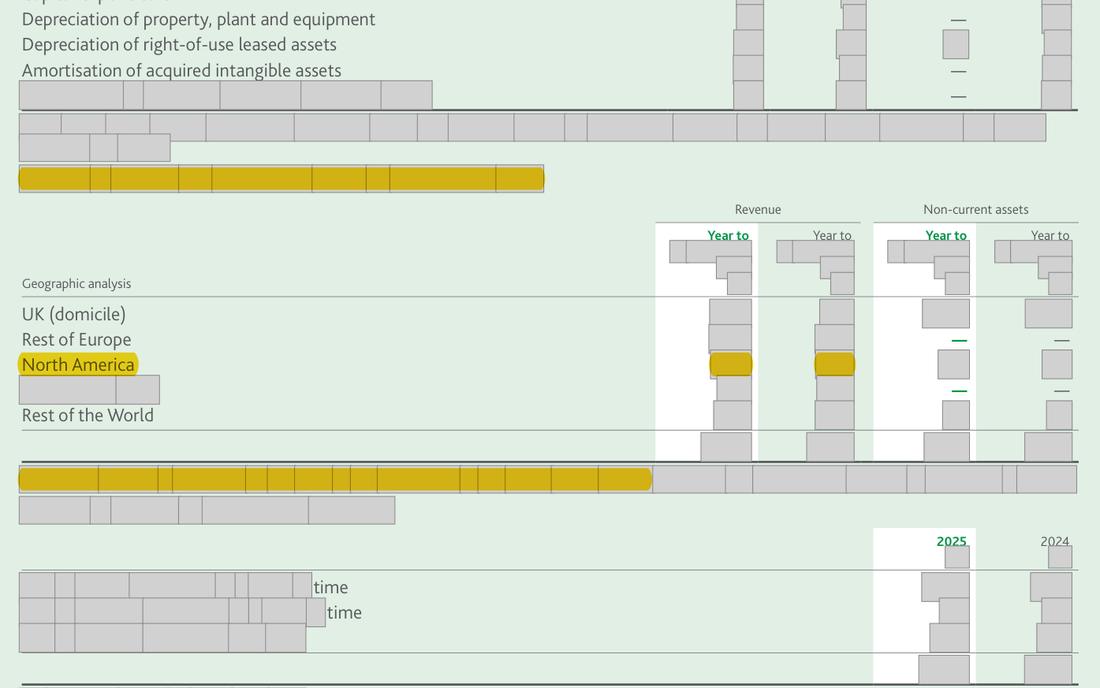
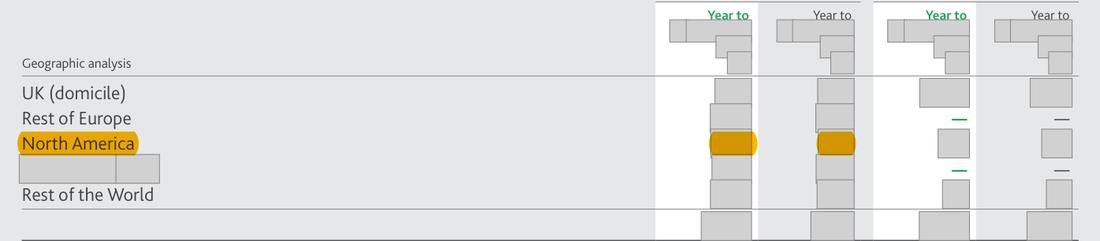
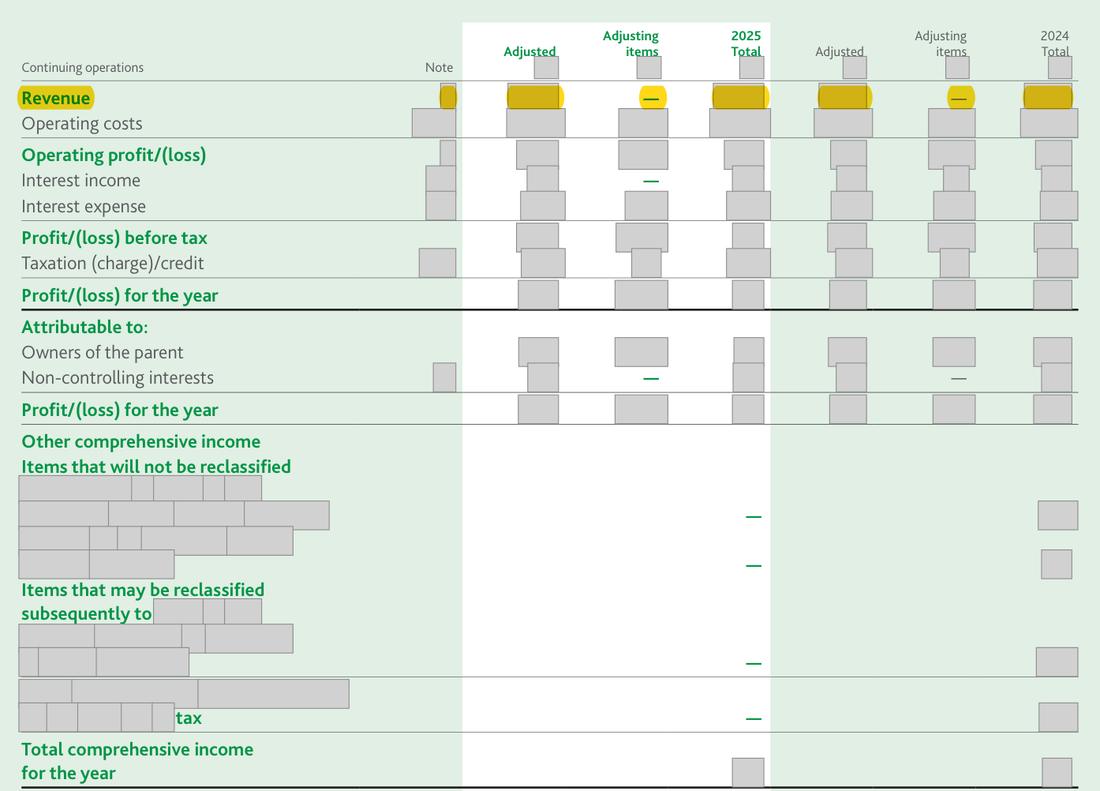
Further pages withheld to protect the company’s identity (two): Annual Report 2025, page 14; Annual Report 2025, page 42. Their wording or layout could lead back to the company even with names and figures masked; the evidence list below records what each page shows.
Names, figures, dates, logos and any wording that could be searched back to the company are boxed out in grey; the point is highlighted in yellow.
What the report shows, and what the rule requires
| What the annual report shows | What the rule requires |
|---|---|
| What the annual report shows Note 3 shows revenue for UK, Rest of Europe, North America ([amount]; 2024: [amount]), China/[place] and Rest of the World; no single foreign country is shown, although the strategic report says sales to the USA are around 25% of revenue. | What the rule requires A separate line for revenue attributed to the USA (and any other individually material foreign country), with the comparative, alongside the basis of attribution already given. |
What we checked: Geographical table in both years; every mention of the USA, US revenue and country-level sales in both reports; the basis-of-attribution sentence.
The rule
IFRS 8 Operating Segments, paragraph 33(a)
Version relied on: UK-adopted international accounting standards (UK Endorsement Board), as in force for financial years beginning in or after January 2025
Revenue from external customers in any individual foreign country must be shown separately if material, together with the basis used to attribute revenue to countries.
Why it applies here: A required country-level revenue figure is missing in both years.
Why it matters
- Users cannot see the size of the group's exposure to its largest foreign market, which the report names as the main source of the 2025 downturn.
- The figure exists (the narrative discusses US sales and order intake), so the omission is a disclosure choice rather than a lack of data.
Users cannot see the size of the group's exposure to its largest foreign market, which the report itself names as the main source of the 2025 downturn.
Exposure
A disclosure gap of the kind the FRC raises in Corporate Reporting Review letters; usually resolved by an undertaking to add the disclosure in the next report.
Our workings
the geographical table on p.76 of each report gives five regions and no individual foreign country; North America is [amount] in 2025 and [amount] in 2024.The Chief Executive's report says [wording masked] 25% of revenue, and the principal risks say [wording masked] revenues.
North America is [n]% of revenue in 2025 and 25% in 2024 (workings).
on the company's own description the USA alone is a material foreign country in both years; IFRS 8.33(a) then requires its revenue to be disclosed separately. The standard's only relief (information not available and cost excessive) is not claimed and is hard to reconcile with a narrative that discusses US sales, US order intake and businesses whose US revenue fell by over 25%. The basis of attribution (destination of goods) is given, so the gap is the country split only.
| Measure | Computation | Result |
|---|---|---|
| North America share of revenue 2025 | [n] / [n] | [n]% |
| North America share of revenue 2024 | [n] / [n] | 25% |
| Company's own statement of US share | around 25% (normal year); a quarter of revenues | material |
Management’s best defence, and our reply
The company could say that the chief operating decision maker reviews performance by region and that North America is a reasonable aggregation, and that IFRS 8.33 leaves materiality to judgement. It could add that the strategic report already tells readers the USA is about a quarter of sales. However, paragraph 33(a) applies whatever the internal reporting, and the company's own words establish that the USA is material; a narrative percentage in the unaudited front half is not the required audited amount.
The fix
- Add a line 'USA £x.xm (2024: £y.ym)' to the geographical table, splitting it out of North America, and any other individually material country.
Evidence relied on
| # | What it shows | Type | Where |
|---|---|---|---|
| 1 | 2025 geographical table: the USA is inside North America, [amount] (2024: [amount]) | Document | Annual Report 2025, page 76 |
| 2 | Basis of attribution is given; only the country split is missing | Document | Annual Report 2025, page 76 |
| 3 | Group revenue used for the share computation | Document | Annual Report 2025, page 65 |
| 4 | The company's own statement that US sales are about a quarter of revenue | Document | Annual Report 2025, page 14 |
| 5 | Principal risks repeat that the US market is a quarter of revenue | Document | Annual Report 2025, page 42 |
| 6 | 2024 report: the same regional grouping, no country split | Document | Annual Report 2024, page 76 |
Absence check
- Document
- Annual Report 2025
- Where it would appear
- [wording masked]
- What is missing
- a separate revenue figure for the USA (an individually material foreign country)
- Pages looked at
- p.1-2, 12-21, [n], 75-76, [n]
- Result
- 'US revenue' hits p.15 (nine businesses' US revenue fell by over 25%) and 'Sales to the USA' hits p.14 (around 25% of revenue): both are narrative percentages, not the revenue amount; 'United States' and 'revenue by country' have no hits.
Prepared by Pramanex from the company’s published annual reports, without the company’s involvement, to show how an annual report review reads. The company is not named, and nothing on this page is a statement about any identifiable company. Observations are not an audit, review or other assurance engagement, and not legal advice. A regulator-style question is a question, not a conclusion.
Want this on your own annual report, before it is published?
Start with three free findings on your latest published annual report, or talk to us about a fixed-fee pre-publication review.
Your annual report will be in draft before the year-end audit.
Have it read before it is published.
Under NDA, with our reviewer on your insider list under UK MAR.