5.09 Auditor's report: the materiality percentages do not match the amounts used (parent company in both years; group in 2025)
UK Company A · a UK-listed medical technology group · Regulator-style question
In brief
Both years; parent company and group. The auditor's report says parent company materiality of [amount] 'represents [n]% [wording masked] 90% of group materiality. On the parent company's total assets of [amounts] is [n]%; [n]% would be [amount]. The [n]% looks like the rate applied before the cap, yet it is printed beside the predecessor auditor's [n]%, which is the rate actually used, and the 2025 report repeats [n]% for both years. In the 2025 report the group materiality of [amount] is also described differently in two places: section 3 gives [n]% of trading profit and [n]% of profit before taxation, section 6.1 gives [n]% and [n]%, while [amount] is 5% of the reported profit before taxation of [amount].
The evidence, as filed
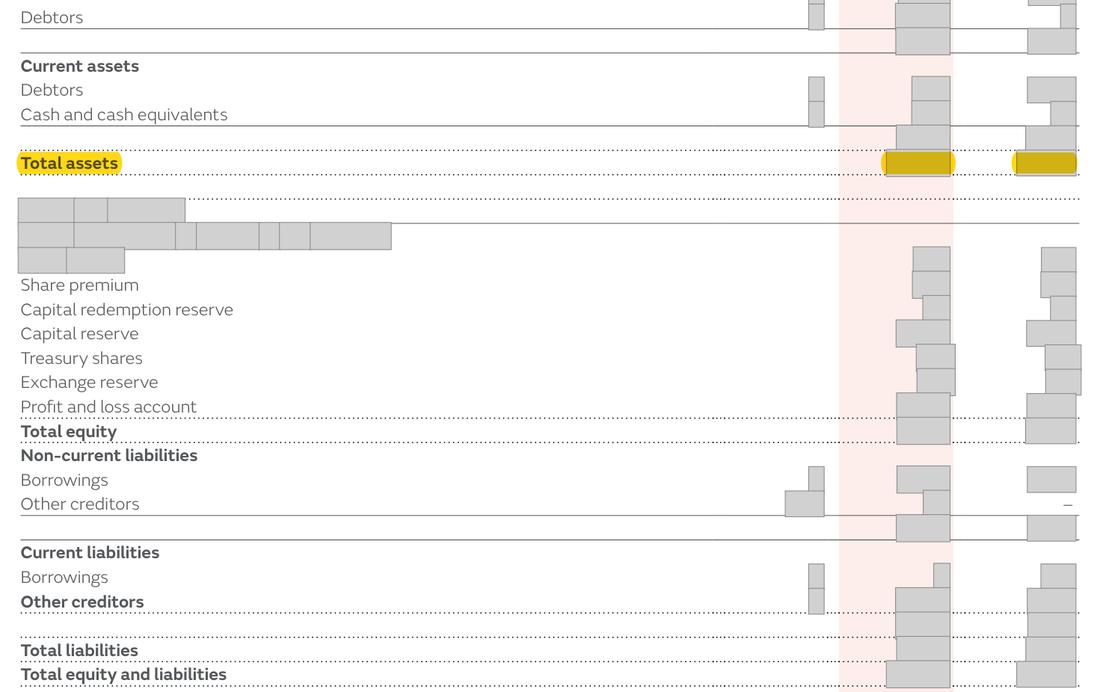
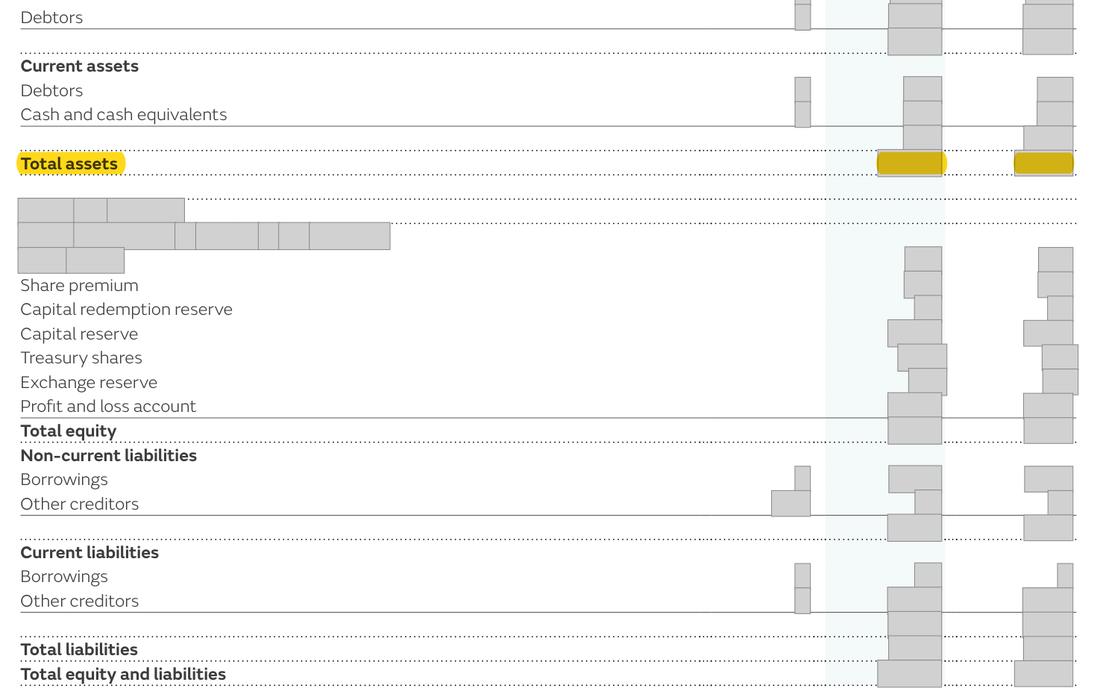
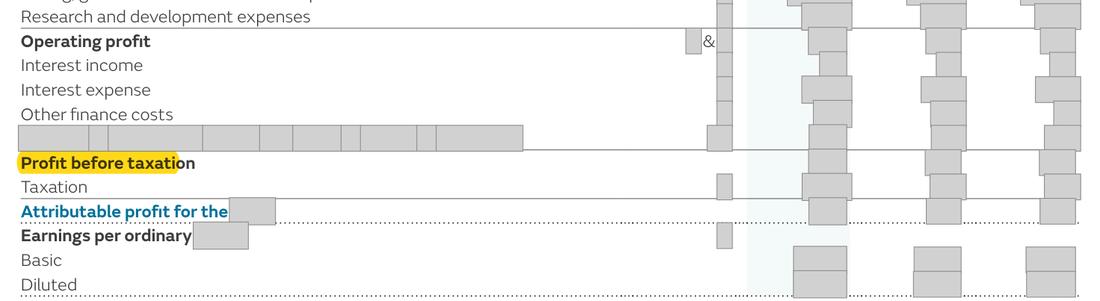
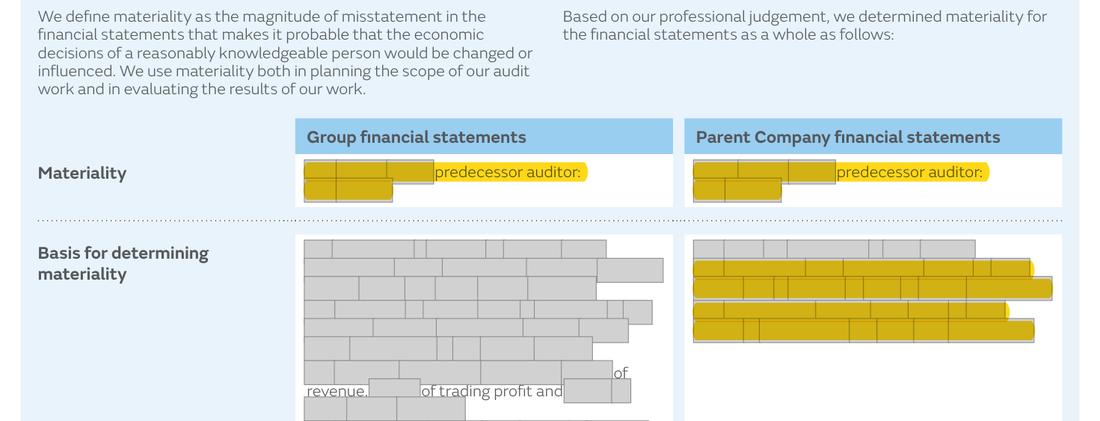
Further pages withheld to protect the company’s identity (two): Annual Report 2025, page 203; Annual Report 2025, page 200. Their wording or layout could lead back to the company even with names and figures masked; the evidence list below records what each page shows.
Names, figures, dates, logos and any wording that could be searched back to the company are boxed out in grey; the point is highlighted in yellow.
What the report shows, and what the rule requires
| What the annual report shows | What the rule requires |
|---|---|
| What the annual report shows Parent company materiality [amount] (2025: [amount]) described as representing [n]% of total assets; the amount is [n]% of total assets of [amount] (2025: [n]% of [amount]), and the predecessor's [n]% beside it is the rate actually used ([amount] on [amount]). Group materiality 2025 of [amount]: [n]% of trading profit and [n]% of profit before taxation in section 3; [n]% and [n]% in section 6.1; 5% on the reported [amount]. | What the rule requires The parent company table states the rate the amount actually represents (about [n]% in 2024) or says that [n]% is the rate before the 90% cap; and the two sections of the 2025 report give one set of group percentages that agrees with the amount and the reported benchmarks. |
Why it matters
A reader comparing the two auditors' parent company thresholds is told the rate rose from [n]% to [n]% of total assets, when the amount used fell from [amount] to [amount]; a reader of the 2025 report gets two different measures of how group materiality relates to profit.
Exposure
No figure in the financial statements is affected; the point concerns the clarity of the materiality explanation in the auditor's report.
Our workings
section 6.1 of the 2024 auditor's report gives parent company materiality of [amount] (predecessor: [amount]), says the basis is total assets, that the materiality used represents [n]% [wording masked] 90% of group materiality, and that the predecessor used [n]% of total assets. The parent company balance sheet shows total assets of [amount] (2023: [amount]). The 2025 report gives [amount] (2024: [amount]) and repeats [n]% (2024: [n]%); the 2025 parent company total assets are [amount]. For the group, the 2025 report describes the same [amount] as [n]% of trading profit and [n]% of profit before taxation in section 3, and as [n]% and [n]% in section 6.1; the 2024 comparatives ([n]% and [n]%) are the same in both places.
[n] / [n] = [n]%; [n] / [n] = [n]%; [n] / [n] = [n]%; [n]% of [n] = [n] and of [n] = [n]; 90% of group materiality of [n] = [n] and of [n] = [n]; [n] / [n] = 5%.
The two 2025 group descriptions cannot both be right; neither profit-before-taxation percentage matches the reported profit, which may mean a different profit figure was used at the planning stage without being said.
| Item | Arithmetic | Result |
|---|---|---|
| Parent materiality 2024 (90% cap) | [n] x 90% = [n]; [n] / [n] | [n]% |
| Parent materiality 2025 (90% cap) | [n] x 90% = [n]; [n] / [n] | [n]% |
| [n]% of parent total assets 2024 | [n] x [n]% | [n] |
| [n]% of parent total assets 2025 | [n] x [n]% | [n] |
| Predecessor rate 2023 | [n] / [n] | [n]% |
| Group materiality 2025 against reported profit before taxation | [n] / [n] (report: [n]% in section 3, 5% in section 6.1) | 5% |
Management’s best defence, and our reply
The auditor would say that [n]% is the benchmark rate it chose and that the same sentence says the result is capped at 90% of group materiality, so a careful reader can see the amount used is lower; the amount itself, [amount], is stated plainly. The auditor's report is the auditor's own text and the explanation of materiality is a matter of auditor judgement. However, the sentence says the materiality used 'represents' [n]%, which the amount does not, and the comparison with the predecessor's [n]% sets a pre-cap rate beside an effective rate, so the table invites a wrong comparison; the reading is defensible, which is why this is put as a question. On the group percentages, the auditor would say the figures in section 3 may reflect a planning-stage estimate of profit and that the amount, [amount], is the same in both places; but the report does not say so, and two different percentages for the same amount and benchmark cannot both be correct.
The fix
- Ask the auditor to word the parent company basis as: 'Materiality is set at [n]% of total assets, capped at 90% of group materiality; the amount used represents [n]% of total assets (predecessor: [n]%)', and to give one set of group percentages in sections 3 and 6.1, stating the profit figure used if it differs from the reported one.
Question for the company
Is [n]% the rate applied to parent company total assets before the 90% cap, and would the auditor state the rate the [amount] (2025: [amount]) actually represents; and which percentages of [wording masked] does the 2025 group materiality of [amount] represent, given that sections 3 and 6.1 differ and neither matches the reported [amount]?
Evidence relied on
| # | What it shows | Type | Where |
|---|---|---|---|
| 1 | Parent company materiality used in 2024 and the predecessor's 2023 figure | Document | Annual Report 2024, page 186 |
| 2 | The report says the amount represents [n]% of total assets | Document | Annual Report 2024, page 186 |
| 3 | The predecessor's rate, printed beside it, is the effective rate | Document | Annual Report 2024, page 186 |
| 4 | Group materiality; 90% of it is [amount] | Document | Annual Report 2024, page 186 |
| 5 | Parent company total assets at [date] and 2023 | Document | Annual Report 2024, page 248 |
| 6 | 2025 group materiality; 90% of it is [amount] | Document | Annual Report 2025, page 203 |
| 7 | 2025 parent company materiality | Document | Annual Report 2025, page 203 |
| 8 | The 2025 report repeats [n]% for both years | Document | Annual Report 2025, page 203 |
| 9 | Parent company total assets at [date] and 2024 | Document | Annual Report 2025, page 266 |
| 10 | Section 3: group materiality given as [n]% of trading profit (2025) | Document | Annual Report 2025, page 200 |
| 11 | Section 6.1: the same materiality given as [n]% of trading profit | Document | Annual Report 2025, page 203 |
| 12 | Section 3 gives group materiality as [n]% of profit before tax | Document | Annual Report 2025, page 200 |
| 13 | Section 6.1 gives the same materiality as [n]% of profit before tax (and [n]% rather than [n]% of trading profit) | Document | Annual Report 2025, page 203 |
| 14 | Group materiality amount | Document | Annual Report 2025, page 203 |
| 15 | Reported profit before tax against which the percentage is stated | Document | Annual Report 2025, page 211 |
Prepared by Pramanex from the company’s published annual reports, without the company’s involvement, to show how an annual report review reads. The company is not named, and nothing on this page is a statement about any identifiable company. Observations are not an audit, review or other assurance engagement, and not legal advice. A regulator-style question is a question, not a conclusion.
Want this on your own annual report, before it is published?
Start with three free findings on your latest published annual report, or talk to us about a fixed-fee pre-publication review.
Your annual report will be in draft before the year-end audit.
Have it read before it is published.
Under NDA, with our reviewer on your insider list under UK MAR.